

Ep 64: Souleymane's Story (L'Histoire de Souleymane) (2024)
Guest: Sharon Weill
Listen Anywhere You Stream
~
Listen Anywhere You Stream ~
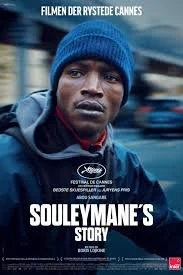
Souleymane's Story (L’Histoire de Souleymane), directed by Boris Lojkine, is anchored by the powerful performance of Abou Sangaré as a delivery worker from Guinea who is seeking asylum in France. What begins as a story of daily survival becomes a story about the legal and administrative processes governing asylum and the often fragile line between recognition and rejection. The film foregrounds questions of identity, performance, and translation, as Souleymane must shape his story to fit the expectations of the asylum system. More broadly, the film invites reflection on the gap between lived experience and legal categories—as well as what gets lost when human stories are filtered through bureaucratic judgment.

25:10 Souleymane tells his story and closes the door
29:32 Enforcement of immigration law
34:37 Abou Sangaré: the actor who plays Souleymane
37:08 The appeals process and limits on asylum
44:15 Giving a human face to migration
0:00 Introduction
2:26 An urban story of 48 hours in a migrant’s life
9:45 Migrant housing
12:47 Separation from home
14:38 The legal categories of asylum
20:38 The asylum hearing
Timestamps
-
00;00;17;24 - 00;00;48;14
Jonathan Hafetz
Hi, I'm Jonathan Hafetz, and welcome to Law on Film, a podcast that explores law through film and film through law. Each episode focuses on a different film to examine the various ways law operates across institutions, society and culture, not just inside, but also outside courtrooms. This episode we look at Histoire de Suleiman, directed by Boris Keane and anchored by Abu Sanger's powerful performance as a delivery worker from Guinea seeking asylum in France.
00;00;48;20 - 00;01;17;12
Jonathan Hafetz
What begins as a story of daily survival becomes a window into the legal and administrative processes governing asylum, and the often fragile line between recognition and rejection. The film also foregrounds question of identity, performance and translation, as Suleiman must shape his story to fit the expectations of the asylum system. More broadly, it invites reflection on the gap between lived experience and legal categories, and what gets lost, potentially when human stories are filtered through bureaucratic judgment.
00;01;17;20 - 00;01;47;01
Jonathan Hafetz
With me to talk about this war to Suleiman is Sharon, while Sharon while is professor of international law at the American University of Paris, where she directs the Justice Lab. Professor Wiles work combines doctrinal analysis with socio legal methods, including trial ethnography, and focus in particular on how legal institutions adjudicate claims of responsibility, security and projection, and expertise that directly engages with questions at the heart of asylum systems.
00;01;47;08 - 00;02;12;00
Jonathan Hafetz
Professor while has served as a judge at the French National Court of Asylum, nominated by the UN, HDR, and on the French National Consultative Commission for Human Rights. Professor while is the author of the Role of National Courts in Applying International Humanitarian Law and coeditor of Prosecuting the President The Trial of His Saint Habré. She's also the author of a book on the ethnography of French terrorism trials.
00;02;12;06 - 00;02;15;21
Jonathan Hafetz
Professor, while, Sharon, it's great to have you on law on film.
00;02;15;28 - 00;02;18;27
Sharon Weill
Thank you. Thank you. I'm really happy to be with you.
00;02;18;29 - 00;02;30;15
Jonathan Hafetz
So just to start, can you briefly tell us what the film lists are to Suleiman is about and what makes its portrayal of one asylum seekers experience so distinctive and gripping?
00;02;30;22 - 00;02;54;05
Sharon Weill
Yeah. So, I want to say at first that this film is a really marking film, and I think that you watch this film, you necessarily see differently not only the the migrants and the process, but even the city of Paris, because I don't know the feeling that you had when you watch the film, but it's a very early film.
00;02;54;05 - 00;03;15;24
Sharon Weill
It's really the story of Paris in Paris, but it's a very different view of what we are used to see of Paris, you know? And it comes to mind, Emily, in Paris, that you have on Netflix and, and many Americans have seen this and, and, you know, and they come back to the city and they want to follow the path of this kind of Paris.
00;03;15;25 - 00;03;39;13
Sharon Weill
And here you have a completely different Paris. So you have a Paris that is gray, that it's dark. A lot of it is, is shot in the, in the night. But not only but it's in winter. So it's very humid, very gray. And the sound of the city is very strong. So this was one of the choices of the director not to have a soundtrack.
00;03;39;15 - 00;04;04;24
Sharon Weill
You don't have music, you have all it's the natural noises of the city. So you will have a film full of ambulances and police and cars and traffic. Right. So this is really you open the gates in a different kind of a city where the other is the French, you know, is is the, the other side of the city.
00;04;04;25 - 00;04;30;13
Sharon Weill
And here it's completely under the prism of a person who is migrant or refugee. Will this is the question in the film, a person from Guinea who is here and who has 48 hours. So this is something that we know from the start of the film. He has 48 hours to resolve all kinds of issues related to his asylum application.
00;04;30;20 - 00;04;58;05
Sharon Weill
So we have 48 hours, which are decisive for him because this interview will be the first step on maybe a longer process in the asylum process, which is very decisive because if is rejected, okay, he has still other ways to apply, but we can understand how important for him is to get the permission, the possibility to stay in France.
00;04;58;07 - 00;05;17;25
Sharon Weill
So in a way, in this film you have like these two tracks of the story. On the one hand, you have the asylum process question and the all the things you need to do in order to get into this interview. You know, you need the shower, you need to be clean and need to have a nice shirt, you know, to look good.
00;05;17;28 - 00;05;42;08
Sharon Weill
He needs to have his document and all kinds of things. But on the other hand, it's also another story. It's a story about the delivery boy. Right. The delivery boy that with Uber Eats you call and you ask to get your hamburger, your pizza. You open the door, you take your pizza and you close the door. Right. And this is the story of the other side of the door.
00;05;42;10 - 00;06;15;27
Sharon Weill
And what happened to those deliveries? Boy, that are working there so we can see his daily life within this, you know, this environment, how it's being done by still as a migrant because he is a delivery boy, but because he does not have papers, he needs to work through the, you know, the application on the phone of his friend who is a bit longer in France, and then he had access to his app and to this possibility of work.
00;06;16;03 - 00;06;41;25
Sharon Weill
Yeah. So you have those two narratives of, on the one hand, the asylum, the other hand of those people who are working at night with all the stress of doing this. And, you know, one way that the filmmaker chose to do this film visually was that it's all the time on movement. So now maybe I'm talking fast, but in the film it's going all the time, very fast.
00;06;41;26 - 00;07;12;04
Sharon Weill
So he's all the time on his bike or on the metro or on the bus or whatever. He's all the time in movement is all the time stress. This other time, the pressure, which shows also his precarity and all this on the background with the noise of the city, with the places which are sometimes very difficult. Yeah. So this gives us the idea of this 48 hours in the life of Suleiman in Paris.
00;07;12;07 - 00;07;28;24
Jonathan Hafetz
Yeah. I really like how you explain the sort of double levels of or layers of vulnerability, right. And marginalization on the one. He's just he's sort of a vulnerable. He's a worker in the gig economy and all the challenges about that as being like a UberEats bike delivery person. And layered on top of that is the insecurity being a migrant.
00;07;28;24 - 00;07;48;13
Jonathan Hafetz
And the other thing that that occurs to me when you say it's not normally what you see in Paris. I mean, I think it's not even really immediately French. Right? I mean, you know, it's French because they're speaking French and they're references, but there's a sense of a almost like a universal. I think that this could be someone in almost any large city to some extent.
00;07;48;14 - 00;07;52;27
Jonathan Hafetz
Right. Like, it seems like there are aspects that are French, but it's really a universal story. It seems to some extent.
00;07;53;04 - 00;08;17;00
Sharon Weill
Yeah, probably. I mean, university, I don't know. But for sure it could be New York. I imagine that it could be in New York, for sure. As a Parisian, I really recognize the places. So it's really interesting because, you know, it's Stalingrad or is the places that you know them. You even know those shops, you know, African shelves where they will sell the, you know, for the hair or the kebabs.
00;08;17;01 - 00;08;48;06
Sharon Weill
So, you know, all those places. It's not that there are like, you know, like foreign places, but it's the prison. It's being seen through his eyes. And then again, that the other are those French. But this is also very nuanced because in his path, in his 48 hours, he will meet hostilities stressed, you know, by policemen or by one of the restaurants that we did very rude to him.
00;08;48;12 - 00;09;13;20
Sharon Weill
But on the other hand, there will be moment of solidarity, you know, when a woman will give him a candy or when he will deliver his pizza on the seventh floor to a very old, solitary French person. And when he gets there and he see this old person, and suddenly he's there to help the person and not the other way around, you know.
00;09;13;23 - 00;09;36;04
Sharon Weill
And this is a strong moment of humanity. So what I liked in this film that you see that despite the very great and very harsh situation, nevertheless you have nuances and moment of solidarity or on the contrary, very rudeness. And this, I guess this is universal as well. Absolutely.
00;09;36;06 - 00;09;55;21
Jonathan Hafetz
Yeah, completely. And one thing, just as we're talking about the daily life, we've kind of where we go into the sort of asylum aspect which I was curious about is he also every day has to Indian to the sort of deadline of the asylum interview or hearing. He has to get back at night to some kind of housing.
00;09;55;24 - 00;10;07;04
Jonathan Hafetz
Right. Like he has to get back to wherever he's staying. And he's always worried about missing, you know, every night he seems to be worried about missing the last train to the place. So what is that? That where he's kind of going to go back and where he's sleeping.
00;10;07;05 - 00;10;36;14
Sharon Weill
So, you know, this is linked again to the question of how many money or funding, you know, the state put in this. So you have like housing, which are fixed housings for the people who are in the process to apply, but usually it's for family or woman or minor. And we can see that men who are alone are, you know, even more in a situation of precarity because you have reduced spaces.
00;10;36;20 - 00;11;06;03
Sharon Weill
So there will be, you know, a selection in who can access those spaces. And there is unfortunately not space for everyone in the fixed housing, let's say, until the end of the application process. So in this situation, he can apply to this. You know what we saw there. There is more the precarity. And we saw how he's running to the bus and running to, you know, in order to get it.
00;11;06;03 - 00;11;27;13
Sharon Weill
And when he got to the bus very late at night, the bus that will take him to this place. So we see a boost full of men, right? Full of men, more or less in the same age, more or less. I'm more young, more, but more or less. And then they will arrive there, and then they will eat together and take a shower and, you know, and then when he will go to sleep.
00;11;27;19 - 00;11;33;12
Sharon Weill
So they sleep in, in bed on two floor. I don't know how you say.
00;11;33;14 - 00;11;34;03
Jonathan Hafetz
Or something. Right.
00;11;34;05 - 00;11;55;08
Sharon Weill
Yeah, exactly. Dormitory. So there was a lot of people, a lot of people there. And then even when you feel these like a moment of 70 stopped, run like in the shower, you know, it takes this moment and take this shower. And I remember this scene because it's like, okay, now we can relax. He's taking his shower and, you know, and we're quiet for one second.
00;11;55;11 - 00;12;23;11
Sharon Weill
And then again, someone knock on the door, you know, so it's continued to the running and then he sleeps. And if you remember, you need to wake up in the morning very early to reserve the bed for the next night. So actually you need every day to reserve this bed. And it's not something that you have always. And indeed sometimes, as in the film, he would find himself in the in the street at the end of the day because, you know, he missed the bus and yeah.
00;12;23;17 - 00;12;38;00
Jonathan Hafetz
Including the night before his asylum interview, which is also when he has this fight with the account holder for the Uber account, you know, whether he's going to get paid after there's a problem with the account. So, like, it really all comes together that last night.
00;12;38;02 - 00;12;40;06
Sharon Weill
Yeah, it's a fiction film, but yes.
00;12;40;08 - 00;12;59;28
Jonathan Hafetz
Yeah. Of course. Right. Yeah. But the one thing is he also has, you know, he's also in, you know, what is going on. He's in communication with his girlfriend who's in Guinea, who is, you know, is sort of like wanting to come over and he's kind of cautioning her against that, I think because of his experience.
00;13;00;03 - 00;13;26;04
Sharon Weill
Yeah, absolutely. So this against you bring us back to those spaces. You know. So as we saw this this all the time biking and very stressing places, there is this place where he sleep and there are those spaces we bring us back to his own life in Guinea. So does the moment when he speak with his mom, for example, or when he tries speak with his girlfriend.
00;13;26;04 - 00;13;53;07
Sharon Weill
And, you know, we can see on the phone so we can see her also on the phone. So those are like moment of intimacy that, you know, they bring him back to his to his other the life and these are moments are also very sad actually, because here you can really see that this person has people who love him and who he loves, but he cannot be with, and he is forced to be here, you know?
00;13;53;08 - 00;14;23;06
Sharon Weill
So it's also a reminder of even if we think about economic migrants, which at the end is his case, and he cannot be a refugee for those reasons, but nevertheless, it's not a real choice, right, to come to Paris. And I think that when we heard those discussions, we can really feel this, you know, and then it can bring our critic about what does it mean, really refugee or not really one and whatever this selection is doing.
00;14;23;08 - 00;14;26;04
Sharon Weill
But maybe we can speak about this a bit later.
00;14;26;12 - 00;14;41;19
Jonathan Hafetz
Yeah. Well, I mean let's let's go to the the interview. Right. He has this interview for asylum. So what's the sort of context for the legal process. You know, what does he have to show in order to be, you know, given this sort of status, this legal status? Yeah, yeah.
00;14;41;19 - 00;15;04;00
Sharon Weill
So here I go back again to your your comment of universality, which I think again, is really relevant here, because here we speak about the UN convention, right, which the US ratified and I mean many other countries ratified and, and are implementing in a way on another. But so this is a kind of quite an old convention, right.
00;15;04;02 - 00;15;28;10
Sharon Weill
It's from 1951. It's within the context of the Cold War after Second World War. So this is what the legislation that we have still today. Right. So, you know, I don't know if today we would need to legislate something, it would be better or worse, I don't know. But those are the categories that we are stuck with. We can say because they are quite old.
00;15;28;13 - 00;15;55;20
Sharon Weill
So, if I go back just to the legal, legal framing, what a person who is seeking asylum and it's an individual process, right? It's not in a context of displacement of population in war. This is something different here. It's an individual process where an individual is asking asylum from another state, and he does serves as a fear of persecution.
00;15;55;22 - 00;16;19;28
Sharon Weill
Right. So he needs to prove, let's say you need to, to convince the state that he will be persecuted in his own country. And of course, the idea of persecution. You need to prove it objectively and subjectively. So you must show that this like an objective situation, that we know that this repression is occurring. But this is not enough.
00;16;20;00 - 00;16;58;17
Sharon Weill
You need to show why you will be cut through this repression. So these are the two elements, objective and subjective. And then the fear of persecution because one of five groups. So because of your race, of your religion, nationality, membership of a particular social group or political opinion, you see, it's only those groups. So this is what you need to to show when you ask your asylum and if your media and this is outside of those categories, if you are a migrant, this is outside those category, etc..
00;16;58;18 - 00;17;20;04
Sharon Weill
Right? So this is it's very straight on. Then we have also protection that derives from the European Convention. So on top of this you can you can have other possibility. But anyway here it was, you know, the story that he was studying by heart was because of political persecution. Yeah.
00;17;20;11 - 00;17;36;13
Jonathan Hafetz
I think so. Develops this story really through. Basically there's a person who he pays for the essentially for the story and some for some support, I think some documentary support for the story, because otherwise he's not going to fit into this legal category.
00;17;36;18 - 00;17;57;24
Sharon Weill
Yeah, exactly. And, you know, this is really interesting what you're saying about this person, right? Coaching him. Of course he need to pay for it. So we see also. The parallel economy that we all the time have. Right. Because first it was for the bike things for the person you know rent him this app in order to be delivery boy.
00;17;57;24 - 00;18;19;22
Sharon Weill
So also he needs to pay €120 a week when he earned like 200. Right. And so this is one aspect of this parallel economy. And here the same he need to pay in order to get the document that he was a member of this party or whatever, you know. So this is really interesting. So I have a few things to say about this.
00;18;19;22 - 00;18;52;10
Sharon Weill
So first of all is the idea of the rumor. So people who apply for asylum are rarely by themselves. They are usually connected to a community here, here in Paris, but probably in New York is the same, you know, so they will have a friend or a brother or whatever. And you say it even in the film, they regroup through communities and then you have a lot of rumors, you know, so we know someone who got asylum because he said this story and suddenly everyone would say the same story, and they're like a little bit in this way.
00;18;52;16 - 00;19;14;03
Sharon Weill
And similarly with the documents, you know, so we know that there is a place where they will issue arrest warrant from Bangladesh with the, you know, with the rubber stamp and everything, and, and every body knows them. And this is really interesting in the film because in a moment it's told, tell the guy, listen, I know nothing about politics.
00;19;14;03 - 00;19;36;03
Sharon Weill
I want to tell another story. And he's like, no, no, you should tell this story. You see, so many times they could be, in fact, victims of those, you know, those rumors and of those community support. While maybe if and it doesn't mean that they don't have a true story that could fit not in this case, but in general.
00;19;36;03 - 00;20;00;18
Sharon Weill
So, you know, so this issue are complex and it's also complex because the judge know this or the official. Right. So at the end of the film, when he's telling his story to the Ministry of Interior and she's like, okay. But you know, we heard this story already so many time. Only this week I heard exactly the same.
00;20;00;20 - 00;20;09;14
Sharon Weill
I don't know what you know. Yeah. So, you know, it can help, but it can be also unhelpful. Those community training, let's say.
00;20;09;16 - 00;20;27;27
Jonathan Hafetz
Yeah. She says that's right. The hearing officer is exactly like, this is like the 20th time I've heard this story. And and so this and the stage in this process. Right. So he's come to, to sort of in terms of where we are procedurally, he's come to France. He's been given some kind of as an applicant for asylum protection under the convention.
00;20;28;05 - 00;20;43;26
Jonathan Hafetz
He's been given some kind of temporary status that allows him to to work and to be in France while his application is pending. And now he's at this before this single hearing officer. Right. It's not a court hearing. It's just like an interview in a room.
00;20;43;28 - 00;21;03;03
Sharon Weill
Exactly, exactly. So this is like, the the first step that I mean, the first step was going to the, the police to ask the papers to fill the documents. So the first thing that he actually did was already to tell his story in written. We don't see it in the film, but in real life you already need to write it.
00;21;03;03 - 00;21;26;16
Sharon Weill
And in French, which is. Yes. So based on this first letter that you will send in handwriting and in French, then you will have this interview. So, you know, a date that you invited to this interview. And again, this interview is very decisive. So by the way, they filmed in the real location. So it's the real place. Yes.
00;21;26;16 - 00;21;50;21
Sharon Weill
I heard an interview with the filmmaker they filmed in the weekend when they were not working. So they were able to shoot two weekends there. Yeah. So it's the the relocation. So in Paris, it's all centralized in Paris from all over France. So wherever the asylum seeker is, he needs or she needs to come to Paris. Yeah.
00;21;50;23 - 00;21;56;16
Jonathan Hafetz
Oh, wow. So if you're anywhere, you have to come. No matter. You're in Marseille or Lyon, you have to come to marry.
00;21;56;18 - 00;22;19;04
Sharon Weill
Yeah. So this is on top of this. Can you imagine the. And if you have kids and blah blah. And what do you do. You know. So this first step you will meet this Ministry of Interior officer. There are usually, you know, young person who study maybe political science who study law. Many times it's the first job. So it's not necessarily good or bad person.
00;22;19;04 - 00;22;41;11
Sharon Weill
It's just people that are doing the job, you know, and they will interview during between 1 to 3 hours. It depends on the complexity of the case. There will be an interpreter usually here. He said he wants to speak in French, but usually there is an interpreter in the room and these are all the person that there.
00;22;41;15 - 00;23;07;19
Sharon Weill
It is recorded. So later when he will appeal, if he or she wants to appeal, the lawyer could access this questioning. But as you've seen at this stage, you don't have a lawyer. Okay? The lawyer will come only after. So at this stage you have a meeting which is recorded, it is typed. And yes or not, you have an interpretive you need in this.
00;23;07;19 - 00;23;34;11
Sharon Weill
They are quite good. They have 160 languages available. So even very small dialect or very certain places you can ask for. And then after this interview, the officer will decide yes or not according to the law, which I just said before, and she will or he will motivate the decision. It will go up to the Hiroshi and then the decision will be communicated to the applicant.
00;23;34;16 - 00;23;57;12
Sharon Weill
From the moment the applicant received the answer, it can appeal. I think you have one month to appeal if I'm not wrong, but I may be wrong with the time and then when you appeal, it will go to this administrative court of asylum, where I was also a judge. So if numbers, it's like almost 90% of the people who were rejected appeals.
00;23;57;13 - 00;24;16;27
Sharon Weill
Okay. Most of the people rejected will appeal because it's for free. You get legal aid lawyers. So why not? I mean, there is absolutely not not the reason to appeal. Maybe there are not appeals if people are not any more in France, actually, sometimes it's not. And that they live, they, they continue you know. Yeah. So they appeal.
00;24;17;02 - 00;24;25;27
Sharon Weill
But in the film what we've seen was more at the first step, right, which was the meeting the officer.
00;24;26;00 - 00;24;45;28
Jonathan Hafetz
I mean and we see so the interview go right. We talked about the interview. He he meets the officer and he starts to tell the story, this kind of, you know, fabricated story, because that's the story he feels he needs to tell to fit into one of the legal categories. And it sort of goes initially. Okay. And then, you know, the officer starts to ask some questions.
00;24;45;28 - 00;25;09;19
Jonathan Hafetz
He starts the story starts to sort of seem inconsistent. You start to see the holes, and then at some point, you know, she sort of basically makes clear that that there are problems. And he's, you know, sort of prompts him to tell her. She prompts him to tell what really happened. And you get this kind of moment of truth where after some he hesitates, but eventually he really does tell his story.
00;25;09;22 - 00;25;33;09
Sharon Weill
Yeah. So, you know, in, in the film, it's like the big moment for the filmmaker, for the film. Right? Because this is and I heard the film director saying, this is the moment of the, of the restorative moment. Right when he's there, he's telling his story and she's before this. She is because I saw it again. Now, before the interview, I watch again in the film.
00;25;33;10 - 00;25;56;26
Sharon Weill
And she there's a moment that she's saying, I'm here to listen to you. Right? And then he come and tell the story. But, you know, this is exactly the moment where she is closing the door, friends to him. Because in reality, if he wants his paper now while telling the truth, this is for sure that he will not get them.
00;25;57;01 - 00;26;20;21
Sharon Weill
Because now this is it. It will it. It will not be able to go back from these words. And even on the appeal, I mean, the appeal will be rejected even without any audition, actually, if it will appeal because, it's a migrant economic migrant and this is categorically outside any hope, you know.
00;26;20;23 - 00;26;38;09
Jonathan Hafetz
Yet his story is really I mean, it's really a movie of economic migrants, right? Right. I think he initially had tried to find work somewhere else in North Africa on the way. And he eventually kind of goes to France. But it's all about he's an economic migrant. He says he needs the money and he needs to support his mother, who has a mental health issues.
00;26;38;12 - 00;27;06;18
Sharon Weill
Yeah. Okay. So here you remind me a very important point again. Thank you. It's really nice discussing with you because you are asking that with like the good point. Yeah. So what he's saying, if you remember when the first when he entered the room with the officer, so she first asked if he has any document. Okay, so he's giving the document and then she's asking, what were the countries that you passed through before coming to France?
00;27;06;20 - 00;27;31;06
Sharon Weill
And he started to saying that he came so the country. So I noted them. It was gaming Algeria, Libya and Italy, all those countries. Right. So we don't know how long it took him. Usually a path like this can take, you know, a few years depends on what happened to you. But when he started to say, yeah, so here we were in the desert and we wanted.
00;27;31;08 - 00;27;59;00
Sharon Weill
And then she cut him immediately and she said, no, no, I just want the name of the countries. And this is another specific of this legal procedure is that when we spoke before about the fear for persecution is only in your own country. The only thing that is interesting for the asylum procedure, for the office or for the court later, is why you left your country.
00;27;59;02 - 00;28;29;11
Sharon Weill
It could be five years ago, but this is where the narrative, where the story should be situated. Whatever happened to you afterwards? And sometimes this is much worse than what happened to you that led you to leave. This is completely irrelevant and why I'm saying this. Because this is a different thing from the US and in Europe. Maybe in the US you have your own problem with Mexico and etc. but here we have the death in the Mediterranean.
00;28;29;16 - 00;28;55;08
Sharon Weill
Here in the last ten years, we have 35,000 people who died in the Mediterranean. We have a lot of people were detained in Libya and torture and, and you know, and leave the raid and excursion and whatever you want in the migration routes. So this entire path is full of danger, full of torture, full of. Okay, also moment of solidarity.
00;28;55;08 - 00;29;05;14
Sharon Weill
I imagine you have everything right, but a woman will be raped, will have kids resulting from these processes. But in a way it's irrelevant, you know.
00;29;05;17 - 00;29;24;23
Jonathan Hafetz
And so it's his journey, which is, you know, you're very difficult. Yeah. And how, although, you know, he's able to make it, as you said, many people aren't. And they, you know, maybe he had a better time and the deaths in the Mediterranean. But there's, as you said, there's this, then there's this. He tells the truth. It is this sort of restorative moment where he really he breaks down, he starts to cry.
00;29;25;01 - 00;29;33;26
Jonathan Hafetz
And yet he's also, as you said, kind of stealing his fate because he's by his own testimony, has excluded himself from the possibility of asylum.
00;29;34;03 - 00;29;57;04
Sharon Weill
Yeah, absolutely. No. You need to know that in France again, I don't know how is it in other country, but from the moment that you get your rejection, I mean, you don't have police waiting you outside to deport you, right? So normally you can even continue to live without your papers, you know, and lots of people without papers in France.
00;29;57;08 - 00;30;30;23
Sharon Weill
So of course it can change depending on the government. So I'm not saying it's easy life, but it's not necessarily ending by the portion it could. I mean, it could be arrested in a random police security thing, you know, and and we saw in the film a moment of discussion with policemen, with which I thought this moment was really interesting in the film, actually, because, you know, in a way, you feel sorry for the policemen that are in the cold eating the food like this, underpaid policemen, you know, they're not very, very far.
00;30;30;24 - 00;30;38;20
Sharon Weill
I mean, of course they are, Lisbon. They have power and etc. but it's not that power neither, you know, in, in the real life of everyday life, anyway.
00;30;38;22 - 00;30;50;09
Jonathan Hafetz
He's delivering the food like it's an Uber delivery to these police who are sitting somewhere. And then he has this sort of interaction, but he does have status. So he's okay. But but like something like that happened and he didn't have any more I presume like.
00;30;50;10 - 00;31;19;28
Sharon Weill
It could be complicated. Absolutely. No, no, absolutely. But my point was that that they could be other ways of trying to get papers, because this is a very particular way of being recognized as a refugee. Right. But the other ways. So you can okay, this is then more more related to, to papers, you know, so you can maybe not for this social profile, but you you can be a student for health reasons for marriage.
00;31;19;29 - 00;31;25;24
Sharon Weill
You know, there are other paths. But for now he will close the path of asylum, let's say.
00;31;25;29 - 00;31;48;00
Jonathan Hafetz
I guess. Do you think that the filmmaker. Right, the interview described as sort of restorative moment when he tells the truth but cuts himself off, but the film itself doesn't say what happens to him. It ends. He walks out of the asylum interview, he sort of on the street, and the film sort of ends there. Right? But I wonder if you read some of the commentary on the movies or reviews, say it was ambiguous.
00;31;48;00 - 00;32;09;14
Jonathan Hafetz
Do you think that the filmmaker intended you to think that that's it? He's going to lose, or is this just something that, you know, lawyers or you is former judge in the asylum court system would know by saying, hey, there's just a mismatch between the story of the economic migrant and the legal categories, because I, I wonder how the broader public would say, well, maybe it's there's a chance to win.
00;32;09;16 - 00;32;28;11
Sharon Weill
Yeah. So the broader public, I don't know. But I think that the one who wrote the script, they are very intelligent because it's very precise what they did, it's really informative. So it's not by chance that they keep it like this. It's not that they thought maybe he could write. I think that they knew and they chose to keep it like this.
00;32;28;11 - 00;32;57;17
Sharon Weill
But for me, it's to trigger a broader reflection of this law in itself, you know, to say, actually, why do we make those distinctions? Right? Why, if he was in Gwynedd saying this story that he said it was. Yes. And now it's not so. So this is the moment of reflection of the line itself. And I think it's an important moment to reflect on this law, because, as I said, it's a very old law.
00;32;57;20 - 00;33;27;23
Sharon Weill
And we should rethink because even a migrant, you know, they contribute for the economy because they themselves by they consume themselves and of course they contribute in their own work. So, you know, it's just a perception, a political perception that we use this notion of crisis and to say we are invaded by people that will take our work and etc. when we look more carefully on numbers, we see that it's not the case.
00;33;27;26 - 00;34;04;29
Sharon Weill
So I think it's an interesting ending in order to put a real reflection on those limits that the asylum is forcing us to being even the judges, you know, because at the end of the day. How will a judge know if the story is true or not true? You know, they all feel that they know, because I did a lot of interviews of people who are working there and they feel that they know, but of course they cannot know because it's all based on narrative, on performance, on those fake documents or real documents or whatever.
00;34;05;01 - 00;34;29;27
Sharon Weill
At the end of the day, you will decide, but you know, you don't necessarily know. You cannot see the truth. Right? So, yeah. So I think I like this ending because of this, you know, because it makes you reflect on this, on this limits of this law and this theater that everyone is playing. Also the judges. Right.
00;34;29;29 - 00;34;47;17
Jonathan Hafetz
Exactly. And the and the pain that he has and he's finally able to sort of release and tell the truth. But then he, as he said, sealing is seeing his face, just looking at the actor to it's, you know, it's reading a little bit about the actor Abu Sanghar, who's fantastic in this role, but he's not. Well, first of all, he's not a professional.
00;34;47;17 - 00;35;03;08
Jonathan Hafetz
He's a nonprofessional actor, but he also has a background close to the experiences depicted in the film. So how did he become to connected to the film, and how does that inform our or add to our understanding of the issues we've been discussing?
00;35;03;10 - 00;35;32;09
Sharon Weill
Yeah. So, you know, I don't know too much about it, so I can't answer it too much. But what I understood when I looked a bit about the filmmaker, what he was saying. So first of all, he wanted only to have nonprofessional actors. So for sure, this actor. But even the policeman, for example, there are members of security, you know, and then you have for sure there is a frontier between his real experience and what he's playing.
00;35;32;09 - 00;35;42;23
Sharon Weill
Right? And this is why it's so strong. But, you know, I can't answer more than this because I don't know specifically about the about his own personal path.
00;35;42;29 - 00;35;59;06
Jonathan Hafetz
Yeah. I mean, basically he had been denied asylum. He had been trying to get it and failed. He'd been trying repeated times. And I think he then came for like an open call to the auditions for the film got the part. He was nominated for a Cesar award in France for one or not, but was not least nominated.
00;35;59;07 - 00;35;59;18
Sharon Weill
He won.
00;35;59;18 - 00;36;13;29
Jonathan Hafetz
He won one. He won the Caesar, where he won the Caesar. Good. And so I don't last. I read he's working somewhere as like a car mechanic in France, but it's amazing that his whole life was so kind of precarious. And and you know, he has he's connected with this film role.
00;36;14;02 - 00;36;33;12
Sharon Weill
Yeah. And perhaps, you know, after you do this role and you go, this is that he probably could get his paper, but then it's always the successful stories, you know, when you have thousands who did not make it right. And it was once we had another story in France a few years ago. I don't know if you remember this.
00;36;33;16 - 00;36;53;04
Sharon Weill
There was a kid who was in like a fourth floor, almost, almost falling, you know, it was written in danger that this kid, a small kid. And then you have a person from Mali who just planned up the building and save this kid. It was a crazy. And someone filmed this, right? So we all saw it and it was crazy.
00;36;53;05 - 00;37;22;23
Sharon Weill
And then of course, the person got immediately his paper and he was involved with the, you know, with the Pompeian everything. But those are successes story. And they don't represent a maybe I can give you some number because I thought that maybe it could be interesting. So if we look on the appeals, I'm speaking. So for example, in 2024 we had like more than 60,000 appeals in this tribunal, which is all in Paris now.
00;37;22;23 - 00;37;47;20
Sharon Weill
It's changing a bit. But so speaking about 60,000 appeal, of which more or less 20% of the are accepted. So this these are more or less steady. Those statistics of course they can change you know, but it's more or less always 20% which are accepted. So if in a day in the Court of Appeal you have 39 cases, normally in a day you need to look at 30%.
00;37;47;24 - 00;38;05;03
Sharon Weill
So you have about 40 minutes that you will question people. Usually it can be three judges or one judge. It depends. Yes. So out of 13 cases, if it's 20%, maybe you will give the statute for two person. This will be the statistics, you know.
00;38;05;06 - 00;38;08;07
Jonathan Hafetz
And this is at the appeal level right. You're talking about now. No it's not.
00;38;08;12 - 00;38;12;27
Sharon Weill
Yes I mean the first level, it's more or less the same. Yeah. It's 18%. Yeah.
00;38;13;00 - 00;38;26;26
Jonathan Hafetz
What was the most as a judge. What was the most sort of common issue error you found that was made at the hearing level, or what was the sort of the bigger issues where you saw when you were sitting on appeal that your role was sort of most significant?
00;38;26;28 - 00;38;52;14
Sharon Weill
The error. Yeah. No, this is this is a very common law approach to see appeals as an error. We just do it again. It's just yeah, I mean, it's not a question of error. You just do the entire thing again. Right? So actually what we did, we were reading the first letter that was written in handwriting. Then you are reading the interview.
00;38;52;14 - 00;39;14;01
Sharon Weill
That is type right. So this is what you prepare then. Sometimes the lawyer in between will inject like, you know, document for the hospital or whatever he will give you. So this is the file that you prepare. And then when you arrive to the hearing. So I obviously would with the three judges because I was nominated by the UN.
00;39;14;03 - 00;39;42;17
Sharon Weill
And the two other are from the administrative court. So it's quite a special system that we have in France that since the beginning, since the 50s, you have one judge that is paid by the UN and imported by the UN. Yeah. So then you are questioning the person and you try to see if there are any inconsistency, but not of the officer, the decision, but in his story in itself.
00;39;42;18 - 00;40;02;27
Sharon Weill
Okay. So we will review everything and you ask questions. And again this is the question of credibility. And you know, and then at midday after we hear like four cases you may get deliberation process. That is a majority vote. And again you will do it at the evening.
00;40;02;29 - 00;40;20;28
Jonathan Hafetz
Oh I see so it's right. So you're taking testimony on the appeal. It's a hearing itself as opposed to just a review of the the record. Right. Absolutely right. And in this case right. Essentially Suleiman would be locked in though to the story he gave. Like he would really can't go back to his old story. Right? So yeah.
00;40;20;28 - 00;40;21;23
Jonathan Hafetz
So he's right.
00;40;21;28 - 00;40;47;19
Sharon Weill
Because this would not be credible at all. And actually even if he will do appeal. So 30% now it's a huge number because this is new as in Covid and like this. But 30% are now going to direct rejection with accelerated procedure that you don't have any hearing and it's only on file. But I think the Dis will go to this because there is no issue here.
00;40;47;21 - 00;41;07;09
Jonathan Hafetz
Any developments or have since the film comes out 2024, obviously migration, forced migration, economic migration is a big issue. There's the new pack on asylum that's entering into force in Europe, in the EU, and later this year that's entering into force 2026. Any sort of thing kind of changes or things that are happening now.
00;41;07;10 - 00;41;29;07
Sharon Weill
Yes. So the new reforms. So we had the reform in the law specifically on the courts. This is what I know the best. Probably it touches more things. But if until now the rule with three judges and the exception was one judge and very rarely it was without hearing, now it's reversed. So now the rule is one judge.
00;41;29;14 - 00;41;54;05
Sharon Weill
The exception is three judges. And we have now on file direct rejection which amount to 30%. So this is a very big change. We see that all the time the procedure is being accelerated. So we still have the laws and we still have the mechanism. Right. But there is this entire it's like him on the bike, you know, big all the time pressure.
00;41;54;11 - 00;42;37;13
Sharon Weill
It's like this in court. You know, you have the feeling that we all need to do fast, fast, fast because there is so many, you know, so all the time this idea of making the justice more accelerated, more efficient, even if it's going, with less, better justice. So the idea is that good justice is a fast justice, you know, and then what we discover in discovery, I don't know, but the result of our research is that this actually is also hard for the people who work there, because some of the people do want to do a good justice in the sense, you know, to have procedural justice.
00;42;37;13 - 00;42;47;23
Sharon Weill
And in this sense, it's not always the case when you need to do everything very fast. So many of the workers there are can feel frustrated in this sense.
00;42;47;29 - 00;43;07;25
Jonathan Hafetz
Yeah, it seems like I mean, it's getting harder with the accelerated process. It's getting more difficult for people like Suleiman and what's not in the movie, but sort of, you know, implicit in terms of his journey. Right. I think there's also the efforts to get the cooperation of a lot of those countries he passed through, like Libya, to help prevent people from ever getting to Italy.
00;43;07;26 - 00;43;08;14
Jonathan Hafetz
Yeah.
00;43;08;17 - 00;43;36;17
Sharon Weill
Yeah, absolutely. And and with Turkey. But these are not new things. I mean, this was already there from 2016 when Turkey is supposed to prevent any movement to Greece and similarly Libya and in Libya, it's terrible because in Libya we have the Frontex, which is the police of the border of European border data, openly collaborating with, you know, with people responsible for crimes against humanity.
00;43;36;17 - 00;44;07;07
Sharon Weill
And they're really sending giving them the boats, right? So they will give them back. And there is not a petition submission for the CC against Frontex by directly saying that those European entities are them selves responsible for crimes against humanity, because they themselves refute the people and give them back to people that we know that are going to be tortured and in human, inhuman prisons.
00;44;07;10 - 00;44;15;22
Jonathan Hafetz
Sharon, any other thoughts about the final thoughts about the movie and sort of its relevance now, and why people should, should see this film?
00;44;15;28 - 00;44;44;28
Sharon Weill
Yeah, I think that, you know, in all those legal discussions, we need to go back to the humanity, you know, and I think that this film really showed the human face of all those questions and all those processes. And I know that, you know, now when you have very populist ideas, and especially in France, for example, in very remote villages where you don't see the migrants, but you will have very strong populist, you know.
00;44;44;29 - 00;45;19;06
Sharon Weill
Idea. So it's really good to see this through the prince of humanity, human beings. And I think this film makes it very, very, very well. And I want to say that I'm happy that in Paris we still won the election and we still have a mayor which is committed. I'm not saying it's perfect, but I'm saying that the city in itself is living with its migrant, and it's accommodating at the city level, but also at personal level.
00;45;19;06 - 00;45;24;18
Sharon Weill
And you can see a lot of moment of solidarity, much more than we can think of.
00;45;24;20 - 00;45;39;19
Jonathan Hafetz
Well, I can certainly say, speaking in the midst of the Trump 2.0 from New York. I certainly think a lot of the moments of the personal solidarity are similar. Right. You would have the same things in New York and some of the personal, most sympathy. But the national policies are diverting wildly.
00;45;39;21 - 00;46;06;07
Sharon Weill
And then you see, the city level can be this. So you have the personal individual, but then you have the city level or local level and then the state level. And I think that so you can see it in Paris and in New York, that the idea of the city is so important, you know, and and maybe at the end of the day, it can really help people at the city level, because this is where people live at the end.
00;46;06;09 - 00;46;14;27
Jonathan Hafetz
Well, Sharon, I want to thank you for coming on the podcast. It's been great to have you on and to talk about this War Day. Suleiman. So thanks again.
00;46;14;29 - 00;46;17;25
Sharon Weill
Thank you so much. Bye bye.
Further Reading
Akoka, Karen, Asylum and Exile: A History of the Refugee/Migrant Distinction (Éditions La Découverte, 2020)
Carpentier, Laurent, "Cannes 2024: Life imitates art for the star of ''L'Histoire de Souleymane,'" The Guardian (May 16, 2024)
Chang, Justin, "The Piercing Immigrant Drama of 'Souleymane's Story,'" The New Yorker (Aug. 6, 2025)
Dezalay, Sara & Weill, Sharon, Asylum Justice: Between Crisis and Crisis Routine: An Ethnography of the National Court of Asylum Law (June 17, 2026)
Kobelinsky, Carolina, The Reception of Asylum Seekers: An Ethnography of Waiting (Éditions du Cygne, 2010)
Lemercier, Fabian, "Interview with Boris Lojkine, Director of 'Souleymane's Story,'" Cineuropa (May 21, 2024)


Sharon Weill is Professor of International Law at the American University of Paris and teaches at Sciences Po in Paris. Professor Weill’s work combines doctrinal analysis with socio-legal methods, including trial ethnography, and focuses in particular on how legal institutions adjudicate claims of responsibility, security, and protection—an expertise that directly engages questions at the heart of asylum systems. She has served as a judge at the French National Court of Asylum (nominated by UNHCR) and on the French National Consultative Commission for Human Rights. Professor Weill is the co-author of Terror on Trial: An Ethnography of French Terrorism Trials (2026). She is also the author of The Role of National Courts in Applying International Humanitarian Law and co-editor of Prosecuting the President: The Trial of Hissène Habré.