
Episode 57: Small Things Like These (2024)
Guest: Sean Patrick Donlan
Listen Anywhere You Stream
~
Listen Anywhere You Stream ~
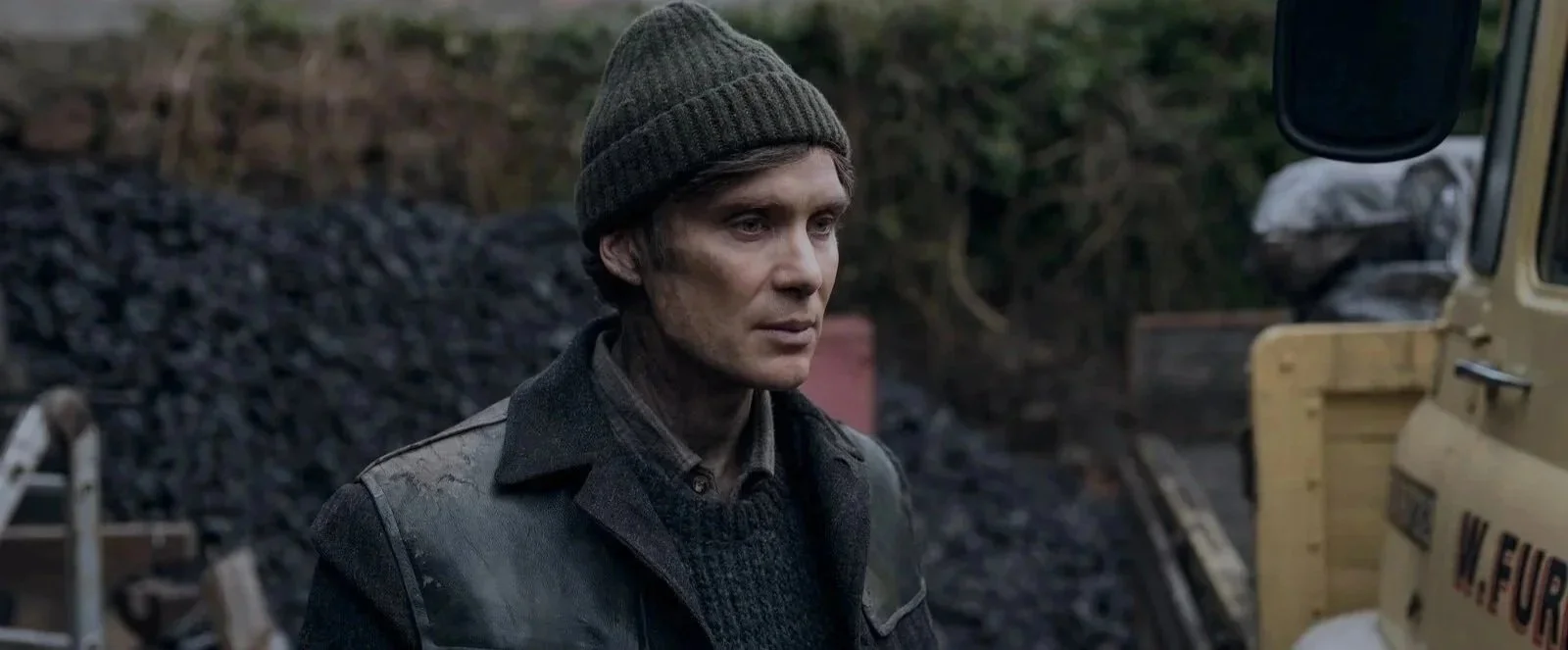
Small Things Like These (2024), adapted by Edna Walsh from Claire Keegan’s 2021 novel, tells the story of how coal merchant Bill Furlong (Cillian Murphy) uncovers disturbing secrets in a small Irish town in the mid-1980s. While going about his job delivering coal, Furlong discovers the truth about the Magdalene laundries—the abusive asylums run by Roman Catholic institutions from the 1820s until 1996. During this period, thousands of girls and women were imprisoned, forced to carry out unpaid labor and subjected to severe psychological and physical maltreatment. Furlong’s discovery about the local convent in his town parallels the story of his remembering and having to come to terms with his own traumatic childhood. The film provides a powerful and moving depiction life in a small Irish town, the role of the Magdalene laundries, and the power of the Roman Catholic Church to enforce a code of silence about the abuses taking place within a community.

20:34 Why the laundries lasted so long
24:00 How they ended
26:02 Inquiries and accountability
28:16 Focus on the laundries in films and popular culture
30:38 The Bill Furlong character
36:20 Ireland in the 1980s
0:00 Introduction
2:14 The Magdalene laundries
6:39 Laundries in a broader social context
13:02 The convent’s power and secrecy
17:18 The absence of guilty men
18:31 The banality of evil
Timestamps
-
00;00;14;23 - 00;00;39;20
Jonathan Hafetz
Hi, I'm Jonathan Hafetz, and welcome to Law on Film, a podcast that looks at law through film and film through law. This episode we look at small things like these. A 2024 film adapted by Edna Walsh from Claire Keegan's 2021 novel. It tells the story of how coal merchant Bill furlong, played by Killian Murphy, uncovers disturbing secrets in a small Irish town.
00;00;39;22 - 00;01;09;19
Jonathan Hafetz
While going about his job delivering Cole, furlong discovers the truth about the Magdalene Laundries, the abusive asylums run by Roman Catholic institutions from the 1820s until 1996. During this period, thousands of girls and women were in prison, forced to carry out unpaid labor, and subjected to severe physical and psychological mistreatment. For Long's discovery about the local convent and his town parallels the story of his remembering and having to come to terms with his own traumatic childhood.
00;01;09;22 - 00;01;34;00
Jonathan Hafetz
The film provides a powerful and moving depiction of life in a small Irish town in the mid 1980s. The role of the Magdalene Laundries and the power of the Roman Catholic Church to enforce a code of silence about the abuses taking place within a community. With me to talk about small things like these is Sean Patrick Donlan. Professor Donlan teaches at Thompson Rivers University Faculty of Law in British Columbia.
00;01;34;02 - 00;01;56;24
Jonathan Hafetz
Professor Donlan previously studied and taught me the United States, Ireland and the South Pacific. While his current research focuses on Irish film, and he's taught a Law on Film course both in Ireland and Canada, his published work has focused on Edmund Burke and Irish history, particularly 18th century Ireland, and on comparative legal history and mixed or hybrid legal traditions.
00;01;56;27 - 00;02;07;13
Jonathan Hafetz
Sean, as a lover of film and especially of Irish film in particular, it's great to have you back on Law and film to talk about small things like these. Welcome.
00;02;07;15 - 00;02;14;17
Sean Patrick Donlan
Great to be back. Thank you. I enjoyed it a lot. The first time, and I was listening to an episode just before we we began talking today.
00;02;14;20 - 00;02;27;24
Jonathan Hafetz
Well, let's start off with just some basic background about the Magdalene laundries or the asylums. What were they? How did they begin? Who was placed in them and how significant were they?
00;02;27;27 - 00;02;48;20
Sean Patrick Donlan
Sure. The the laundries. We'll talk about what they're why they call that in just a moment. But the laundries, the asylums have been in Ireland since at least the 18th century. In fact, they were first run by the Church of Ireland, or what is now called the Church of Ireland, the Anglican Church, and in Ireland. And they lasted until, you know, the late 90s.
00;02;48;21 - 00;03;13;07
Sean Patrick Donlan
They initially focused on prostitutes, on fallen women in that sense. And they were called Magdalene Laundries because the reference was to Mary Magdalene, who in the New Testament sees Christ. And I think after the the resurrection, and who by tradition was interpreted as a prostitute, in fact, that's contested. But but that's been the way she's been interpreted. That's why the name was used.
00;03;13;07 - 00;03;38;03
Sean Patrick Donlan
And the laundries and laundry, because they performed services and often actually did laundry for to to make some money, in part to pay their way, at least in part. But over time, that category of fallen women expanded to include other people as well. Women who were pregnant that were seen to be at risk in different ways or were promiscuous and so were at risk in that sense.
00;03;38;03 - 00;03;58;27
Sean Patrick Donlan
And it probably is important. We'll talk more about it in a moment. But it is important that they arose in a situation where the state wasn't doing this sort of work. And in the Irish context, in a situation in which when the Irish state comes into existence in the 1920s, had to had to suddenly serve different functions without a lot of money.
00;03;58;28 - 00;04;16;21
Sean Patrick Donlan
This was obviously the period just before the Great Depression, and so relied on the church, which had been so important to it culturally and and politically over the previous centuries, but relied on it to handle those functions. We'll talk more about it. I'm sure it is important maybe to say as well that such institutions are not limited to Ireland.
00;04;16;23 - 00;04;50;02
Sean Patrick Donlan
They were very common across Europe and in my experience, as personal experience is, I'm most aware of similar institutions in colonial or post-colonial settings. So there certainly are lots of similar institutions in Australia and Canada with respect to indigenous people, where similar problems have arisen with respect to abuse. But there are also where similar institutions in the states, both Magdalene laundries, but also other types of reform schools we see, like in a movie like Nicole boys, you know, a similar sort of reform institution and that had similar problems.
00;04;50;02 - 00;05;17;00
Sean Patrick Donlan
And then lastly, just because I think it's interesting, I found a movie a few years back called Sami Blood, which is about the Sami people of Scandinavia who were racially and ethnically different than the other people there, and there was institutions there as well. So these sort of institutions often developed for the marginalized. What's one of the things that's interesting about Ireland here is that the marginalized included people who were not who were otherwise part of the vast majority of Irish Catholics.
00;05;17;00 - 00;05;23;14
Sean Patrick Donlan
They weren't, you know, they weren't racially distinguishable. But there are there are parallel institutions, in fact, around the world.
00;05;23;16 - 00;05;31;20
Jonathan Hafetz
Yeah. I think you were like alluding, I assume, to also some of the institutions for Indian or Native American tribes, both in US and in Canada as well.
00;05;31;23 - 00;05;54;09
Sean Patrick Donlan
Well, absolutely. And in fact, I mean, I'm in Kamloops, British Columbia, and there's a there's still physically is a large residential school here, which is where indigenous people were sent to be acclimated into Western society, but and managed in many cases by religious orders, both Catholic but other religions as well. And there was a considerable amount of abuse in those in those institutions.
00;05;54;10 - 00;06;23;10
Sean Patrick Donlan
I think the abuse comes with the institutionalization and not necessarily say, with particular religions or confessions, but it certainly is very similar to what happened here. And it's something that even today in Canada and, you know, in the States as well, but is very much a part of the national discussion, we have a Truth and Reconciliation Day where we talk about those experiences and we try to to ensure that people who maybe who are not indigenous understand what happened to indigenous people and recognize their suffering.
00;06;23;12 - 00;06;39;14
Jonathan Hafetz
Yeah. I mean, it's interesting that given the focus on the laundries in Ireland, but it is, as you say, really the wider pattern that kind of varies in terms of the different subgroups that were brought in and potentially, you know, the different groups or people that were in charge of running the institutions. But there is there's sort of a certain commonality.
00;06;39;15 - 00;06;59;28
Jonathan Hafetz
Well, the film, you know, the film's focus here, right, is into these Magdalene laundries. And, you know, we learn about this through, for example, the young girl who Bill furlong, Killian Murphy character discovers. And so she's been locked kind of the main. You know, one thing we see is that she's been locked in a coal shed and told she'll have to have her baby there.
00;07;00;02 - 00;07;09;29
Jonathan Hafetz
Is this illustrative of some of the treatment that girls and women were forced to endure? And, you know, even as late as 1985 when the film was set?
00;07;10;02 - 00;07;38;25
Sean Patrick Donlan
Yeah. Well, it's hard to say for a number of reasons. I mean, I should say, first of all, that these Magdalene laundries were part of what's been called an architecture or culture of confinement, that they were part of a wider system of institutionalization, institutionalization, excuse me, that including industrial schools, typically for boys, they could be orphans, but they could also be people who committed petty crimes, the laundries themselves, and then the mother and baby homes, which overlap with the laundries in ways that are still confusing to me, to be honest.
00;07;38;26 - 00;08;02;02
Sean Patrick Donlan
This is about a laundry, I think, in the film, but what we see in terms of Sarah's character is obviously that she's pregnant, and so any of it falls within both of those institutions. And in both there are different types of clerical abuse that that have been it certainly did happen that we know has happened, but the evidence is not as clear and obvious as you might like.
00;08;02;03 - 00;08;18;13
Sean Patrick Donlan
And in part, that's because the churches have been reluctant to some extent to participate. The state has not always pressed for those answers in ways that I think we should talk about later on. I do think what the film does, I guess, to say very quickly, I do think the film, in a sense scapegoat is the wrong word.
00;08;18;14 - 00;08;40;14
Sean Patrick Donlan
And it's interesting that scapegoat was a focus of our last discussion as well with the Sweet Drafter, but the church certainly did things that were wrong. But I think what the what the film does is scapegoat in the sense that it puts the the guilt of the culture, the wider society onto the church in doing that, to some extent absolves the state, absolves the wider community.
00;08;40;18 - 00;08;59;05
Sean Patrick Donlan
And in fact, I guess I'll jump in now and say, I mean, we one of the interesting things about the film is that we, we don't hear anything about the men who might have impregnated the women. We don't hear anything about the family who commits Sarah to to the institution. We don't see that now. We do see Bill in this wider context.
00;08;59;05 - 00;09;21;02
Sean Patrick Donlan
And Bill furlong, and we obviously are looking at what he does in that wider context. But the reality is, is that the film doesn't focus much on anything but the convent. Now, we do know that abuse occurred, and I suppose it's not unusual for a film to highlight or focus on sort of the worst of what we might expect in the institutions we know.
00;09;21;02 - 00;09;40;29
Sean Patrick Donlan
This sort of thing did happen. Was it ordinary? It's hard to say because because we simply don't have a lot of evidence. We have a lot of anecdotal evidence, and clearly bad things happen, there's no question. But in terms of knowing whether this was common in 1985, it's hard to say. As I mentioned to you earlier, the film is set in 1980 1985, in New Ross.
00;09;41;05 - 00;10;04;10
Sean Patrick Donlan
There was no institution, in fact, in New Ross in 1985, there wasn't the 70s, so it wasn't that much earlier. But this is fiction. It's not history. Probably wouldn't keep that in mind. What I didn't say earlier, and would also be important, is to say that from the foundation of the state in Ireland in 1922 until the late 90s, when these institutions wrapped up or were wound down, there were at least 10,000 women in them.
00;10;04;15 - 00;10;10;29
Sean Patrick Donlan
There are estimates that that were higher as well. But once again, we don't know with exact numbers were.
00;10;11;02 - 00;10;37;06
Jonathan Hafetz
I mean, it's an important point you make about the sort of focus on the church, the exclusion of sort of the other actors. And I think that's something you talk about in the piece that you've written about this and other Irish films, you know, in thinking about the kind of the background or what, you know, the way that small things like these focuses largely on the church, maybe perhaps to the exclusion, at least to some significant degree of other actors in society responsible.
00;10;37;08 - 00;11;05;18
Jonathan Hafetz
Thinking of another film about the laundries, The Magdalene Sisters, from 2002, directed by Peter Mullan, which kind of gives us, right off the bat one the types of different types of women who were put into these institutions in the variety. Right. There's one who's impregnated by someone who's a family friend, I believe, like a wedding. There's another who's deemed overly flirtatious by the sisters, the nuns at the reform institution in which she is a school in which she's boarding school, in which she's growing up in.
00;11;05;18 - 00;11;27;13
Jonathan Hafetz
And then there's another who has mental health issues. So you get a sense of the wider variety and kind of through them. Also, though, the involvement of some of the other people in society, right, including family members, you know, members of the church, but not the nuns and just sort of other actors. So it does gives you a little bit of a kind of some of the wider perspective that you're talking about.
00;11;27;14 - 00;11;46;20
Sean Patrick Donlan
Yeah, I think that's right. In fact, certainly there are some parents involved there. So we see them and we see them and the way they treat their children as well don't want anything to do with them. In effect. And I think we also see politicians, I think, in that film as well, if, if maybe only in passing, and there is even a public, I think, procession in that film as well.
00;11;46;27 - 00;12;16;15
Sean Patrick Donlan
What's interesting, among other things, is that the actress who played the woman with the mental health issues and I mean, I don't want to get too much away, but it doesn't fare well in the film is also the woman who plays Kelly Murphy's wife in small things like these. In fact, they're longtime friends. They I think they made their I'm not sure it was debut, but they both were in a very successful play called Disco Pigs a long time ago, which is written by the guy who writes the screenplay for Small Things like these as well into Walsh.
00;12;16;15 - 00;12;38;17
Sean Patrick Donlan
So yeah, the interesting connections, and there are some other connections to other films of this type as well. There are other films from that period. The Magdalene Sisters was the same year, I think, as a film called sinners, not the recent vampire film A song for Raggy Boy, which is about Irish borstal or reformatory. And this is the same period that we saw Angela's Ashes and and other films.
00;12;38;17 - 00;13;02;04
Sean Patrick Donlan
And I suppose the films will focus on on the worst excesses, but often will be interpreted as as ordinary. And it's hard, as somebody who deals with history to thread that needle, I want to make sure that we're critical as much as we ought to be of the institutions, but that we also are alert to where we might be relying on feeling rather than fact sometimes.
00;13;02;07 - 00;13;33;09
Jonathan Hafetz
And going back to small things like these. The film does suggest, right, the power that the convent has and the sisters have, or their influence over the town and the members, but also the way that at the same time, the way the comment seeks to shroud everything in secrecy. Right. The sort of secrecy is central. And so we see Sister Mary played, I think, brilliantly by Emily Watson, who runs the convent pressure furlong to stop inquiring about what happens in the convent right after he discovers the young girl in the coal shed.
00;13;33;10 - 00;13;49;17
Jonathan Hafetz
It was kind of a very subtle combination of carrot like cash gifts to the wife, which would help to hide them over in the Christmas holiday time. And the stick. Right? The veiled threats about excluding his young daughters, potentially from the convent school.
00;13;49;19 - 00;14;04;05
So on as well, at home then also and Kathleen has the leaving Certificate this year. And what will she do with herself?
00;14;04;07 - 00;14;08;10
Tries to study and business. Orford.
00;14;08;12 - 00;14;26;27
Oh, she'll do it well. She's a good girl and I've seen Joan in the choir. Sister Carmen says she's as bright as a sister to get an excellent education next door. And you've another two coming to us, don't you?
00;14;27;00 - 00;14;29;09
There. Three.
00;14;29;11 - 00;14;30;26
Three.
00;14;30;28 - 00;14;36;28
Sheila will become in next September. And then? Then there'll be gray simply.
00;14;37;00 - 00;14;56;14
So many trying to get in. It's no easy task trying to find a place for everyone. Well, to worry about. For you guys, what was be a little disappointing on the scene. Were to not have a boy to carry on your name. You know.
00;14;56;17 - 00;15;01;02
On me mother's name, nor have I ever came from that.
00;15;01;04 - 00;15;19;24
Jonathan Hafetz
And then later on, as for long, it's kind of contemplating opposing Sister Mary's request to stay silent. We see a local pub owner who's friendly with furlong try to persuade for a long to drop everything for the sake of his family. Given the power that Sister Mary and the convent have.
00;15;19;26 - 00;15;36;19
Did I hear about what happened in the convent? Did you ever run him or herself? It's no affair of mine. It's not what you'd want to watch. What you'd say about. About what's there. Kick the bad dog. Which in the good dog won't buy you.
00;15;36;21 - 00;15;38;03
Yeah.
00;15;38;05 - 00;16;04;28
Those nuns have a finger in every Bible, and you can be sure about that. Look, you've worked as hard as myself to get where you are. If we've worked damn hard and there's only a wall separating that lease from the school, you go making a nuisance yourself. Now, you might be denying your younger ones an education. I remind how you looked at the rest of the town.
00;16;05;00 - 00;16;09;15
And what's that then? Tell me.
00;16;09;17 - 00;16;13;18
People, can meetings difficult for you?
00;16;13;21 - 00;16;16;23
Modern. I know what people are like.
00;16;16;25 - 00;16;26;14
Then you know to do the sensible thing. Be stuck after your family and your business will be my advice to you.
00;16;26;17 - 00;16;33;13
Jonathan Hafetz
So what do these scenes tell us about the power of the church and in particular the local convent in Ireland in the mid 80s?
00;16;33;20 - 00;16;50;29
Sean Patrick Donlan
Well, it's certainly, I suppose I should say, the most of the films we just talked about very briefly were set in earlier periods. This is set in the 1980s, although you wouldn't necessarily know it. It feels like those earlier films, it feels like an earlier period. These institutions existed. Abuses were occurring in the 80s, but it feels like of a different period.
00;16;50;29 - 00;17;19;02
Sean Patrick Donlan
And we'll talk maybe more about the film making and the director and choices in presenting it. It is absolutely true that the church was important and influential. Having said that, it is interesting in a film that focuses on the gendered mistreatment of people, of women, the young girls, as it rightly should, and as certainly was true about Irish society, there were lots of things that were problematic about it for a long time that were entangled with the church's teaching.
00;17;19;02 - 00;17;35;24
Sean Patrick Donlan
But it is interesting that the villains in this film are also the women. And we see obviously the in particular. More on that just a moment. But we also see the mother committing Sarah to the institution. The father is sitting in the car and, you know, no doubt how to roll. But once again, we don't see the guilty men.
00;17;35;25 - 00;17;55;03
Sean Patrick Donlan
We don't see men generally. We barely see any clergy who are men. And the film puts the nuns so much of the center. I think it is historically inaccurate for the 80s. I mean, we essentially see an undue mass, you know, you know, say give mass in the convent. We see the nun, not the priest at the center of the the public celebrations.
00;17;55;03 - 00;18;17;05
Sean Patrick Donlan
All that's a little odd, but but stranger and I suppose I want to I want to try to get into a discussion about wider problems with this film and films like it, but we we have characters who, in this case don't wear black hats, but where black black garments and who are evil. I mean, it's just they're just they're they're cartoonishly evil in many ways.
00;18;17;05 - 00;18;44;26
Sean Patrick Donlan
And some of the things we see, like the negotiation with furlong, we know that she knows that something has happened and she's lying about it. She's put a pregnant woman in a situation that would be very bad for that woman, and then his lied about it. What I'd like to talk about in a moment is about the banality of evil, about how evil in fact, or the way in which evil is affected, is often in much more complicated ways, not in caricature of a of a very bad person.
00;18;44;26 - 00;19;07;16
Sean Patrick Donlan
I think. I think that the nuns here are this is consistent with the treatment in other films, but there's no sense in which they're struggling themselves with what they're doing. There's no nuns who represent that other current of care and concern, which I think historically is unquestionably there. They're just bad, and the film presents it as if they're bad.
00;19;07;16 - 00;19;30;29
Sean Patrick Donlan
People know they're bad. The nuns are, as you suggest, are repressing or are being secret about that. The reality is, is I think a lot more of this was a lot better known than films like small things like these have suggested. But to suggest that more people knew, I think opens up questions about why people didn't do things like furlong here, but the reality was that it wasn't black and white.
00;19;31;00 - 00;19;55;02
Sean Patrick Donlan
It was in fact much more complicated, and there were lots of other things happening. The film suggests, for example, the sort of physical and social economic conditions of the period which were not entirely untrue in the 1980s, but there was massive unemployment. Immigration was was at an incredibly high level. There was a lot happening that would have that would have distracted people from maybe focusing on, on, on, on these things.
00;19;55;02 - 00;20;14;21
Sean Patrick Donlan
But there was also a greater acceptance that the incarceration of these women was acceptable. That's why the parents are bringing people in. And the film allows us to focus on the convent and not on the community. Despite the fact that furlong is at its center. There's a tension, I think, between his dilemma and what we actually walk out of the film believing.
00;20;14;23 - 00;20;33;24
Jonathan Hafetz
I mean, you can see sort of the fact that wider knowledge, I mean, you have the like with the local, the pub owner saying, don't get involved with his wife, basically Furlong's wife, right, saying don't rock the boat. So there is that wider knowledge. Yeah. I mean, I guess the question why maybe this goes into some of these wider issues and responsibility that you talk about.
00;20;33;24 - 00;20;45;09
Jonathan Hafetz
But, you know, maybe this is why how they lasted so long, right? I mean, they're not closed until the mid 90s. Right? Finally. Right. I mean, they may have evolved over time, but they went on for a very long period of time, right?
00;20;45;10 - 00;21;06;06
Sean Patrick Donlan
Well, again, they served so the Irish state, it's all very complicated. But the Irish state, the Free State, comes into existence in 1922. And it's effectively independent, though it's connected to Britain until the 30s when they have a crisis, a Crown crisis, and Ireland can remove itself from the connection to the Crown. It's in the 40s that it's finally declared a republic.
00;21;06;06 - 00;21;30;12
Sean Patrick Donlan
But the point is, is that the new state was struggling to find its feet. And the church, which had been so important to it in periods where the church was repressed and the vast majority of the Irish people didn't have the vote, for example. And the church was really important part of the sense of national identity. But it was also an important, practical institution, and it handled many things like care to the community, care for the poor and so on.
00;21;30;12 - 00;21;47;20
Sean Patrick Donlan
And so there were institutions. The Magdalene again existed for long before that period, but it filled that gap, especially at a time. Again, just a decade later, we get the Great Depression. So it filled that gap and meant the state didn't have to do things or saw itself as not having to do things that were taken care of by the church.
00;21;47;21 - 00;22;07;08
Sean Patrick Donlan
It was convenient for the state for that to be true, and I think that lasted for a long time. Why bother with this when it's being handled already by this other institution that is so important to our culture and so on? My understanding, and again, there are questions about this. We see the women working and it's often suggested that's to pay their way.
00;22;07;08 - 00;22;26;11
Sean Patrick Donlan
But there was state funding going to the institutions as well. Or at least I know that, you know, in many circumstances they were it meant that they could do things a little more cheaply, not erect new institutions. And it was only over time that some of the things that were occurring in the the institutions made them problematic, but also the state had money to do other things.
00;22;26;11 - 00;22;51;15
Sean Patrick Donlan
And so it's really the 1990s is a critical turning point. It's not that far in the past, obviously, but for Irish generally, you had revelations about clerical abuse. And so that was really important. But you also had the Celtic Tiger, this tremendous explosion of economic potential in Ireland. And so it meant the state could afford to do other things, and Irish people could, could afford to start imagining themselves a little differently as well, maybe not so entangled with the church as they had been.
00;22;51;16 - 00;23;00;07
Sean Patrick Donlan
Now all that feeds into our response to the film as well, but it certainly served a function that was convenient for the state and for the Irish society as a whole.
00;23;00;10 - 00;23;17;01
Jonathan Hafetz
There's an element of the film which I think you kind of touch on in terms of the economic, you know, the money that's generated. There's a sense in this movie in particular that the and this, I think, goes to your point about the vilification of the nuns is that they're running they're basically exploiting the source of free, cheap labor.
00;23;17;01 - 00;23;33;17
Jonathan Hafetz
And, you know, you have a kind of maybe like a Marxist reading would be, you know, this is basically just a money making operation. The film shows a couple of times, I think, or lose a couple of times about the money that they're bringing in. So which is, I guess, you know, maybe adjacent to me, a little bit different than the idea that they're filling this function.
00;23;33;17 - 00;23;39;17
Jonathan Hafetz
The state's not filling, but they're also this kind of profit making center for the convent and maybe the church more broadly.
00;23;39;18 - 00;23;59;00
Sean Patrick Donlan
And certainly I've gotten that sense before in films like these. I just don't know how much that was true. These institutions had existed for a long time. I certainly think state funded, and the money they can make commercially was not unimportant. But no doubt they were also getting money from, you know, collections in the churches and, and many other sources as well as would be true about the church more generally.
00;23;59;06 - 00;24;15;05
Jonathan Hafetz
And so it comes, they come to an end. The mid-nineties. It seems like you're suggesting that the end is as much a function of transformations that are happening within Irish society as anything else about, you know, why they come to an end. And I guess also, how do they come to an end?
00;24;15;07 - 00;24;31;22
Sean Patrick Donlan
Yeah. I mean, again, I mean, I'll be honest and say that I, I my sense would be that they were already sort of on the decline in the 70s and 80s, and it's connected to lots of other things as well. It certainly connected to the liberalization of the society, to the loss in numbers of religious people going into the clergy.
00;24;31;22 - 00;24;50;18
Sean Patrick Donlan
So it was already underway, which is why this seems a little odd for the 80s, at least, you know, it may be more accurate for other periods. But yeah, the economy in Ireland in particular in the 1980s, was a third world level. Immigration was massive. People simply didn't have work and they would leave for the states, Australia, Britain.
00;24;50;19 - 00;25;11;28
Sean Patrick Donlan
There were the problems of the North. There were, you know, there were a lot of serious problems going on at the time the 90s brought, and it's a complicated development, but it brought a much more powerful economy rooted in something, certainly, that were done by the Irish state and society, but also by massive support from the European Union, low tax rates that could encourage people in.
00;25;11;29 - 00;25;32;15
Sean Patrick Donlan
At the same time, the EU was paying for their roads and things, but you got a tremendous explosion of development. You also had revelations, again about clerical abuse, not just in institutions, but not least in institutions, in schools and others. And so there was an important cultural shift that occurred where people were secularized rather rapidly in that period.
00;25;32;15 - 00;25;54;09
Sean Patrick Donlan
But it was built in part, at least I would suggest, on changes in the structure of society economically, you know, sorry. Sound like a Marxist here, although I think there's something to that reading. But it had been petering out. I think it finally just it had exhausted self in the 1990s. Again, it was a period of important social change, the election of Barry Robinson as president, lots of things going on that would explain why that period was so important.
00;25;54;09 - 00;26;01;18
Sean Patrick Donlan
But having said all that, I'm still shocked to think about the fact that it was as recent as as it was that these institutions existed.
00;26;01;23 - 00;26;16;21
Jonathan Hafetz
And then there's also the sort of aftermath. There's a series of sort of truth and reconciliation type process investigations that go on after the closure, kind of coming to terms with that. You talk a little bit about that in terms of how that's played out in Ireland.
00;26;16;28 - 00;26;39;18
Sean Patrick Donlan
Yeah. Again, it is important, first of all, to say that there were a number of institutions that have gone through that sort of scrutiny at different levels, and this was part of that. But I think for a lot of people, especially those who were institutions, it's not enough. A 2013 inquiry did establish state collusion. That is, the state had been saying for a long time, these are private institutions.
00;26;39;21 - 00;27;04;28
Sean Patrick Donlan
We don't have to regulate them in the same way we would regulate other things. They're not our fault or a responsibility. And it's clear that they were deeply entangled. They were sending people the courts were sending people to the institutions guards, Irish police officers were driving people to these institutions. So there was a lot of state collusion, and the state did fail to regulate and inspect in the way that they might otherwise have done had they accepted responsibility.
00;27;05;02 - 00;27;29;12
Sean Patrick Donlan
The report was problematic because it suggested physical abuse wasn't widespread. And for those people who were who were abused or were unhappy about the situation, that wasn't, they thought honest enough. There was too small a sample. It was it was not a fair representation. But in any of it, the Irish state did apologize almost immediately. And again, we could have a discussion about the value of such state apologies their common today and they're not meaningless.
00;27;29;12 - 00;27;46;25
Sean Patrick Donlan
I think certainly the people who have been hurt. But are they meaningful enough? I think it's fair to question, but for many the response has been too modest, not least in assessing something like reparations for what people went through. And then the church. For its part, the church is not always cooperated with those investigations for lots of reasons.
00;27;46;25 - 00;28;16;08
Sean Patrick Donlan
They believe coverage is one sided. They I think legitimately in some cases, certainly try to protect the privacy of people who who might be outed or revealed as people who are in the institutions, not just the clergy, but, you know, they're also on the defensive because of those allegations against starting in the 90s. But there's a lot we don't know, because both church and state haven't done enough to tell us or to show us what happened, assuming that we can get information that would also be objective and meaningful for us in that in that investigation.
00;28;16;09 - 00;28;34;12
Jonathan Hafetz
And certainly one other aftermath is the treatment in popular culture film. Right. We have the number of different films which you've talked about. So there seemed to be a broader cultural, I don't know if coming to terms, but focus on this not to distant part of Ireland's past.
00;28;34;15 - 00;29;05;05
Sean Patrick Donlan
There is and although it's interesting, I mean, there was a wave of films around the turn of the century, you know, Magdalene Sisters was one of them centers and so on. And this is a little late in that process. It's not not saying it's not important, but it is interesting. The film is based on the work of Irish writer Claire Keegan, who actually studied in the States as an undergrad in Louisiana, and she had also written a book called foster that was made into what I think is probably the greatest film Irish film of all time on Colin Kuhn, which is The Quiet Girl strongly recommended.
00;29;05;05 - 00;29;41;09
Sean Patrick Donlan
But she wrote the story here, small things like these a decade later, and I think possibly in response to the fact that she didn't, that she wasn't critical of the period in The Quiet Girl, which is also said in the early 1980s. And interestingly, in writing this book, which I understand started as a focus on the furlong character and kind of grew into something that wasn't intended that it it explicitly mentions the Magdalene Laundries or the Mother and Child homes in its dedication, and it even refers to a document from the 1960 16 rising in Ireland, which is curious.
00;29;41;10 - 00;30;04;29
Sean Patrick Donlan
And so it's a far more political work than her earlier book was. And it is a generation after a lot of these things. A lot of films had already addressed the issues. There are other more recent films as well, that deal with other events in this period, and issues with the church and the state. There's a film called an, which is about the death of a young woman who is pregnant in the 1980s and love it.
00;30;05;01 - 00;30;29;29
Sean Patrick Donlan
And in fact, the woman who plays Sarah in Small Things Like These was the lead character in that film. But it's only a few years old. Also important. And there was a film about what was called the Carrie Babies case, where they were. There was a child discovered on a on a beach in County Kerry. And, well, the short version is just that the guards, the police mishandled the investigation, but it was all in a climate in which, yes, the church was very important.
00;30;30;00 - 00;30;38;12
Sean Patrick Donlan
There were instances of people claiming to see statues of Mary moving, you know, in the period that hasn't entirely gone away. But it was a different age.
00;30;38;14 - 00;31;04;07
Jonathan Hafetz
We should talk to you about furlong character a little bit, the choice by Claire Keegan to place him at the center and obviously, of course, becomes the center of the film, which is adapted from her book. But really, you know, it's about the laundries to some significant extent, but it's really about like sort of furlong and his journey, remembrances, awakening and coming to terms with his own memory of kind of adjacent experiences.
00;31;04;07 - 00;31;15;24
Jonathan Hafetz
So what did you think of the sort of the furlong story in placing him at the center? Because it does really make this film very different, say, than, for example, The Magdalene Sisters, which centers the women's experiences from their perspective.
00;31;15;27 - 00;31;33;29
Sean Patrick Donlan
Yeah. I mean, I think it's interesting because, again, the shorthand version of my view about some of this is that the film suggests it's about this moral dilemma for a large part, and then it does all sorts of things to complicate or undermine that question. And I think it's a critical question, by the way. I mean, again, we could talk about it.
00;31;33;29 - 00;31;52;21
Sean Patrick Donlan
And I was just listening to the episode on The Conformist. You'll be interesting to hear interested here. But, you know, the idea of one's moral responsibility in a climate like ours today in the country of my birth, are very serious questions that should be considered. And I think that the film may have relevance there to the states in ways that are that are interesting.
00;31;52;21 - 00;32;10;25
Sean Patrick Donlan
But the reality is, is that and this is less obvious in the film, in part because the film doesn't handle it well. But the back story is very it's quite detailed. And we get internal monologue in the in the story by Claire Keegan. But in the film we get these flashbacks that probably don't make a lot of sense to most viewers of the film.
00;32;10;25 - 00;32;43;14
Sean Patrick Donlan
They just confusing, especially if you follow up and read the book, which I mentioned. I think when we talked about The Sweet Hereafter, I made the mistake of looking at the screenplay. I made the mistake of reading the novel because then I, I had all sorts of questions about the relationship between them. That's true here as well. At the end of the day, Clear Keegan and the makers of the film have created a character whose actions may seem heroic to us, but are also explained away by their unique individual background, and so they effectively exonerate everyone else.
00;32;43;20 - 00;33;04;19
Sean Patrick Donlan
Bill loses his mother early in life, she was an unwed mother. Her name is Sarah, by the way. He's a little heavy handed there, but same name as the rather as the girl he rescues. And it's less clear in the film, but Sarah, his mother, becomes pregnant through a person she worked with a farmhand on this property run by a Protestant widow.
00;33;04;22 - 00;33;23;13
Sean Patrick Donlan
That creates all sorts of interesting dynamics as well. But it's unclear why they don't marry. But her? Her mother, sorry, her family doesn't let her return. It's unclear why they don't marry. And in fact, Bill furlong doesn't know that Ned's father for a long time. Then his mother dies young, and the Protestant woman who is Wilson takes him in.
00;33;23;13 - 00;33;46;13
Sean Patrick Donlan
But the suggestion is almost that you had to have those specific experiences to be brave enough to do what Bill does in the end. And and so the effect of that, to me at least, and maybe I'm overanalyzing it, is to give a pass that everybody else that didn't have those unique experiences. And there were a lot of other questions that aren't answered about that background and its relationship to where Bill is today, because Miss Wilson took him in and was caring for him for a long time.
00;33;46;14 - 00;34;05;04
Sean Patrick Donlan
But we're not clear what happened in his earlier life when he was getting married and so on. He clearly has a business, although he's, you know, no doubt just making it as a as a businessman. He's not a wealthy person who had he means. But it creates a strange dynamic for the later actions, it seems to explain them, but also, again, to give everyone else a pass.
00;34;05;04 - 00;34;06;01
Sean Patrick Donlan
As a result.
00;34;06;07 - 00;34;31;21
Jonathan Hafetz
One of the moments that really triggers him and pushes him to sort of stand up to Sister Mary from his past is his remembrance of this time when he was young and he asked for a jigsaw puzzle, and he ended up getting some item of clothing or code or something. Maybe he needed but didn't want. And he sees all around Christmas time, emotional time, and he sees jigsaw puzzle in the window of a shop.
00;34;31;21 - 00;34;49;04
Jonathan Hafetz
And that really sets him off. And but it was it was a little it was hard to talk about what his experiences were in the house. She wasn't his, you know, the Protestant woman who was his mother, and he wasn't able to be with his father, he didn't know was his father. I guess it was sort of the power of the larger deciding the institutions.
00;34;49;04 - 00;34;53;16
Jonathan Hafetz
But it wasn't clear like what he had really endured or what to set this off, I don't know.
00;34;53;22 - 00;35;16;04
Sean Patrick Donlan
Yeah. And, you know, again, I mean, I really do think I'm Calling is the best Irish movie ever made. I think it's based on a fantastic novella, and I think a lot of her work, I've nearly all of it, if not all of it. At this point, I think the story is more heavy handed. And I think if you, for example, have the dedication to the book, a reference to a political document, you know, maybe you're not doing what you need to do as a writer.
00;35;16;05 - 00;35;37;16
Sean Patrick Donlan
Like in my personal view it seems a bit much. But yeah, I think that the backstory is not clear there. They're significant gaps and one explanation, and I'm only guessing, but one explanation is that it was to emphasize the Kinsey in nature of Irish society in the period. And so to make this again, I don't know when this I don't know when Keegan decided this would be a Christmas story in some sense.
00;35;37;16 - 00;35;57;23
Sean Patrick Donlan
But at some point that became true. And it's sold and marketed that way, but also so that allows us to reference A Christmas Carol. And in fact, he reads Bill reads from A Christmas Carol in the film. That doesn't happen in the book, but there's a reference to The Christmas Carol to David Copperfield, which is about this young fellow who is supported by a wealthy woman.
00;35;57;23 - 00;36;20;07
Sean Patrick Donlan
And so there are all these different potential implications to having that built into the story. I'm not sure how productive or fruitful they are. And as I say, especially in the film, I think it's just confusing. I mean, people forget about it. I don't think they hold it against the film, but I think if people were pressed as they left the film about what happened in those flashbacks, I think they would really struggle to make sense of what they were shown.
00;36;20;10 - 00;36;38;26
Jonathan Hafetz
You know, one of the strengths of the film is also its invocation of, as far as I can tell, right. It wasn't. I live in Ireland in mid 1980s, but it does really give you a kind of like a real sense of place at the time. Putting aside everything else, in addition to the performances which I think are are strong, I Murphy's is quite strong.
00;36;38;26 - 00;36;44;11
Jonathan Hafetz
But there is that real sort of, I don't know, you do get a feeling of time and place in the movie.
00;36;44;13 - 00;37;15;22
Sean Patrick Donlan
Well it's interesting. Yeah. And again, I can't pretend to be entirely objective, I guess, but it doubles down on a particular view of the period that is one of many respectable views about it. The director, Tim Millets, who had worked with Kelly Murphy on Peaky Blinders and has made other films himself, including one about policemen in the in the period of Nazi occupation in Belgium, which is really interesting, but they really doubled down on making the film as gray as possible, as dark as possible, and in fact, it can be.
00;37;15;23 - 00;37;39;00
Sean Patrick Donlan
It can be beautiful, a darkness that's beautiful at times, but it can also be difficult, in fact, to see it's that dark. It's a little heavy handed in that sense. I would say it evokes a feeling about that period more than it evokes that period, and one that no doubt Kelly and Murphy shares. He's talked about the period as being the Dark ages, and his character, in my view, is, you know, he's brooding constantly throughout the film.
00;37;39;01 - 00;37;56;05
Sean Patrick Donlan
We don't get sense of a person. He's just. And in fairness, I mean, for Keegan and for the filmmakers, he is undergoing a crisis and the crisis is beyond, I think, just this question about the convent. It's about his life and where he is in it and so on. And I think that's probably what fueled Keegan initially to make the film.
00;37;56;05 - 00;38;22;05
Sean Patrick Donlan
But from my point of view, he just broods constantly. There's no to my mind, since he seems simple rather than rather than somebody struggling with with ideas. And I think that's unfair, by the way. But I think that's what comes across to me. And then finally and it's just it's so obvious and it's in the book, but the washing of the hands constantly, which it's such a complicated idea anyway, he clearly has to wash his hands.
00;38;22;05 - 00;38;38;06
Sean Patrick Donlan
He's a coal and timber merchant. He's filthy when he comes home. He has to. But he's also washing away the sins of the society in some sense. Or is he like, is he going to continue to do that? And obviously there's a deeper, more complicated sense of washing the hands with respect to Christ and Pontius Pilate and so on as well.
00;38;38;06 - 00;39;04;05
Sean Patrick Donlan
So it's a strange image, one repeated throughout the film. But again, for me at least, combined with the sound design, the darkness of the, the, the images, the film wasn't comfortable enough to present the story without putting a finger on the scale even more. It creates bad guys and good guys. And my sense is, and I, I really want to maybe I should have started with this, but the institutions were terrible.
00;39;04;06 - 00;39;26;16
Sean Patrick Donlan
They did awful things. I'm getting emotional talking about it, but I'm not sure that the best way to explore those situations is to create good guys and bad guys, rather than something with more moral nuance. And insofar as the book had it and it didn't have a lot of it, but the film removes it. You know, you went in thinking church bad, you come out church bad, but you don't really understand that.
00;39;26;19 - 00;39;47;05
Sean Patrick Donlan
What was it about the society that made that possible, that allowed those things to happen, and that might now allow us to do things that are also problematic? You know, with immigrants and others in our society, it's the banality of evil, you know, argument again, Hannah Arendt, and it may be that my background is historian is complicating that as well.
00;39;47;08 - 00;40;03;28
Jonathan Hafetz
I mean, they really do center the locus of the bad on this. Sister Mary is this Machiavellian figure with kind of a tremendous amount of power, which she exercised. And it really does kind of create that dualistic image and this kind of struggle between. Right.
00;40;03;29 - 00;40;21;27
Sean Patrick Donlan
I should say, I read one article or one review that said, if we're going to have another overbearing cliche nun, could she at least not have been Irish like instead of picking an Englishwoman to do it can at least make her an Irish woman who's overbearing and don't. Yeah, it's a trope or a kind of a cliche. At this point.
00;40;21;27 - 00;40;29;08
Sean Patrick Donlan
It doesn't mean it's not true, by the way. It doesn't mean it doesn't reflect something that's real. But it's also easy to dismiss it because of that.
00;40;29;08 - 00;40;44;19
Jonathan Hafetz
The way she used her power was more subtle than, say, and other films, you know? I mean, there was some overt violence done to the young girl, right? But it was very sort of subtle the way she kind of the way she used the levers that she had in terms of access to the school and, and things like that.
00;40;44;19 - 00;41;00;13
Jonathan Hafetz
But she was a very powerful figure in a way which I think, you know, which is interesting in a within a country, or at least certainly with an institution where a lot of the powers is located with men. And maybe that's the problem is by kind of putting too much on her.
00;41;00;15 - 00;41;23;19
Sean Patrick Donlan
You mentioned it earlier, but the film might have been very different if there was a female character at its center, even if the female character wasn't in the convent, but in society. Imagine, for example, the bartender, I think the pub owner, the publican who's talking to to to Murphy late in the film saying, you know, they're powerful. And, you know, we've seen the clip or heard the clip, imagine that person at the center of the film like that might have been a much more interesting story.
00;41;23;19 - 00;41;43;16
Sean Patrick Donlan
Or if we saw more again of the wider society, there were a lot of things that don't make this an ideal case for examining the reality of what went on. Which is, again, my own bias, maybe, is that that's what we need to do. We need we need stories that show how how good people do bad things rather than bad people doing bad things.
00;41;43;18 - 00;42;07;23
Sean Patrick Donlan
I think for me at least, it's an interesting period of Irish history, one I lived through in part and so want to understand even better from this distance. I think there is a lot more to be done in understanding the way that these institutions functioned, both in fact, but also in film. And it's a well-made film. I think there are problems with it, but it's well made.
00;42;07;23 - 00;42;16;13
Sean Patrick Donlan
I think people will, I mean, enjoys maybe the wrong word, but people will benefit, I think, from seeing it. It's a film worth engaging with whatever you take from it.
00;42;16;19 - 00;42;27;27
Jonathan Hafetz
Sean, I want to thank you for coming on again. It's been great to have you talk about small things like these Irish cinema and the host of associated issues. So thanks again for coming on. Thank you.
Further Reading
Seán Patrick Donlan, “Screening for Help – Irish Care and Confinement," Film Ireland (Nov. 21, 2025)
Keegan, Claire, Small Things Like These (Faber & Faber 2021)
McGourty, Courtney, “Not Merely a Shameful Past: The Case for State Responsibility in the Magdalene Laundries,” Opinio Juris (Aug 11, 2023)
Report of the Inter-Departmental Committee to Establish the Facts of State Involvement with the Magdalene Laundries (2013)
Walton, John, “Film Mystery as Urban History: The Case of Chinatown,” Cinema and the City (M. Shiel & T. Fitzmaurice, 2001)


Sean Patrick Donlan is a professor at Thompson Rivers University (TRU). Previously, Professor Donlan previously taught at the University of Limerick in Ireland and the University of the South Pacific (Vanuatu and Fiji). Professor Donlan also taught in programs in Canada, France, Ireland, Italy, and Malta, and served as TRU Law’s Associate Dean from 2018-2022. Professor Donlan was a founding member of the European Society for Comparative Legal History, the Irish Society of Comparative Law, and Juris Diversitas. Professor Donlan is also an elected Associate Member of the International Academy of Comparative Law, a member of the Osgoode Society for Canadian Legal History, and a member of the Canadian Association for Irish Studies. Professor Donlan's research interests include legal history, comparative law, legal theory, film, and Irish history and politics. He has written on these topics, especially on comparative legal history, mixed legal traditions, Edmund Burke, and Irish history. Professor Donlan created and edited Comparative Legal History (2013-2016) and the Juris Diversitas Book Series (2013-15). Professor Donlan's most recent publication is A Companion to Western legal Traditions: From Antiquity to the Twentieth Century (2023, edited, with R.H. van Rhee, A. Masferrer, and C. Heesters).