
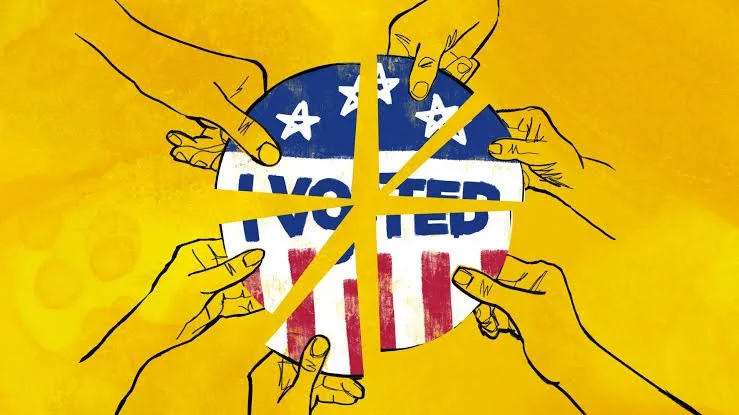
Episode 65: One Person, One Vote? (2024)
Guests: Paul Finkelman & Maximina Juson
Listen Anywhere You Stream
~
Listen Anywhere You Stream ~
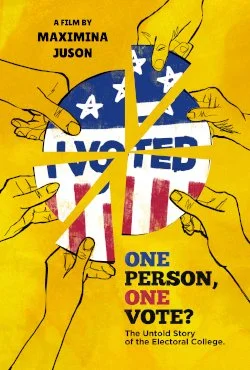
The Electoral College is one of the most consequential—and perhaps least understood—features of the American constitutional system. Americans often think of themselves as voting for president, but technically they vote for electors, through a system created at the founding that was deeply intertwined with slavery and that continues to shape where candidates campaign, whose votes matter most, and even whether the candidate who receives the most votes becomes president. Those questions became especially pressing after the elections of 2000 and 2016 and, in a very different way, in 2020, when the machinery of electors and congressional certification became central to an effort to overturn the election. This episode we discuss the 2024 documentary One Person, One Vote?, which aired on PBS’s Independent Lens and which explores the electoral college through its history and through the experiences of four actual electors during the 2020 election. Joining me are Professor Paul Finkelman, one of the film’s main expert historians, and Maximina Juson, the film’s director.
Guest: Maximina Juson
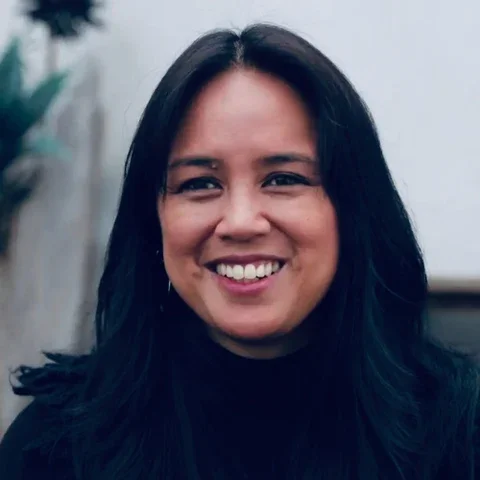
Maximina Juson is an award-winning multidisciplinary artist and filmmaker, and the founder of Humans Understanding Machinery (HUM), a creative studio dedicated to interrogating the machinery of our times while illuminating stories of the misunderstood, overlooked, or erased. A National Endowment for the Humanities grantee, Juson directed the PBS Independent Lens documentary One Person, One Vote?, which reached millions of viewers nationwide and resonated across both pop culture and academia. The film was featured on The Daily Show and covered by Forbes and Deadline, sparking a broader public conversation about democracy and presidential elections. Juson is also a civic educator and founder of Civics Is Sexy, a culture-driven initiative that uses art, storytelling, film, and media literacy to make civic participation accessible and actionable, particularly for young adults. With roots as a longtime performing musician, Juson brings rhythm, musicality, and deep cultural fluency to her work, creating projects that are emotionally resonant and accessible without sacrificing complexity.
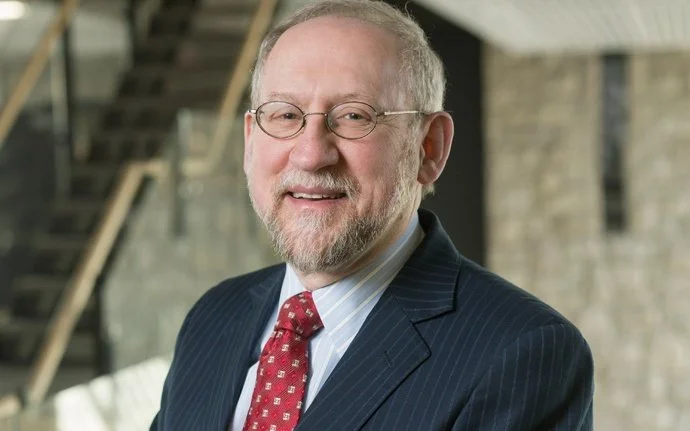
Paul Finkelman is a Scholar at Residence at Western New England University School of Law and President William McKinley Distinguished Professor of Law and Public Policy, emeritus, Albany Law School. He is a specialist in, among other things, American legal history, constitutional law, the history of slavery and the American Civil War. Professor Finkelman is the author or editor of more than fifty books and more than 225 scholarly articles. The U.S. Supreme Court has cited his work in seven decisions, and he has been cited by many other federal and state courts. His most recent major book is Supreme Injustice: Slavery in the Nation's Highest Court (Harvard University Press). He has taught at numerous universities in the U.S. and around the world. In 2026, he was ranked as the 8th most cited legal historian in American legal scholarship.
27:58 What makes the Electoral College such an anomaly
33:36 The 2020 election
43:12 The National Popular Vote Interstate Compact
52:46 Why Electoral College reform should be nonpartisan issue
56:53 Looking ahead to 2028
0:00 Introduction
3:45 The origins of the Electoral College
7:12 Telling the story of how the Electoral College works
10:32 Past controversies over the Electoral College
21:53 Slavery, race, and the Electoral College
Timestamps
-
Jonathan Hafetz
Hi, I'm Jonathan Hafetz, and welcome to Law on Film, a podcast that looks at law through film and film through law. Each episode examines a different film to explore how law operates across institutions, society and culture, not only inside courtrooms but outside them as well. The Electoral College is one of the most consequential and perhaps least understood features of the American constitutional system.
00;00;41;26 - 00;01;15;29
Jonathan Hafetz
Americans often think of themselves as voting for president, but technically they vote for electors through a system created at the founding that was deeply intertwined with slavery. And that continues to shape where candidates campaign, whose votes matter, and even whether the candidate who receives the most votes becomes president. Those questions became especially pressing after the elections of 2020 16, and in a very different way in 2020, when the machinery of electors and congressional certification became central to an effort to overturn the election.
00;01;16;02 - 00;01;51;02
Jonathan Hafetz
This episode, we discussed the 2024 documentary One Person, One Vote, which aired on PBS Independent Lens and which explores the Electoral College through its history and through the experiences of four actual electors during the 2020 election. Joining me are Paul Finkelman, one of the film's main expert historians, and the film's director, Maximina Juson. Paul Finkelman is a scholar in residence at Western New England University School of Law and President William McKinley Distinguished Professor of Law and Public Policy, emeritus, Albany Law School.
00;01;51;03 - 00;02;11;26
Jonathan Hafetz
He's a specialist in, among other things, American legal history, constitutional law, the history of slavery, and the American Civil War. Professor Finkelman is the author or editor of more than 50 books and more than 225 scholarly articles. The U.S. Supreme Court has cited his work in seven Decisions, and he's been cited in many other federal and state courts.
00;02;12;00 - 00;02;44;13
Jonathan Hafetz
His most recent major book is Supreme Injustice Slavery in the Nation's Highest Court by Harvard University Press. He's taught at numerous universities in the U.S. and around the world. In 2026, he was ranked as the eighth most cited legal historian in American legal scholarship. Maximina Juson is an award winning multidisciplinary artist and filmmaker, and the founder of Humans Understanding Machinery, a creative studio dedicated to interrogating the machinery of our times while illuminating stories of the misunderstood, overlooked, or erased.
00;02;44;17 - 00;03;23;21
Jonathan Hafetz
A National Endowment for the Humanities grantee, Max directed the PBS Independent Lens documentary One Person, One Vote that We're Talking About Today, which reached millions of viewers nationwide and resonated across pop culture and academia. The film was featured on The Daily Show and covered by Forbes and Deadline, sparking a broader public conversation about democracy and presidential elections. Maximin is also a civic educator and founder of Civics and Sexy, a culture driven initiative that uses art, storytelling, film, and media literacy to make civic participation accessible and actionable, particularly for young adults.
00;03;23;23 - 00;03;40;11
Jonathan Hafetz
With roots is a long time performing musician. Max brings rhythm, musicality and deep cultural fluency to our works, creating projects that are emotionally resonant and accessible without sacrificing complexity. Paul. Max. Ameena, it's great to have you on law on film.
00;03;40;13 - 00;03;42;08
Paul Finkelman
It's a delight to be here.
00;03;42;11 - 00;03;44;28
Maximina Juson
Thank you for having us, Jonathan.
00;03;45;00 - 00;03;57;28
Jonathan Hafetz
So let's start, Paul, just with a little bit of a primer, right. We're getting into some more details about the Electoral College. How does it work? And when Americans cast a ballot president, what are they actually voting for? And why do we have this system anyway?
00;03;58;01 - 00;04;33;17
Paul Finkelman
The why we have is necessary for the beginning of this answer. At the Constitutional Convention, the delegates debated over and over again how do we choose a national executive? They obviously didn't want a hereditary king. That's what the revolution was about. They were fearful of someone who might use the office to become a dictator. And they were also concerned about how you elect this person, because it was never been done before, and nobody knew quite how to do it.
00;04;33;21 - 00;05;08;04
Paul Finkelman
There were also, of course, sectional conflicts. Southerners were concerned that if it were a popular vote, they would always lose because a substantial portion of their population were enslaved people who couldn't vote and who were not, in fact considered people, but were considered to be property under their laws. Northerners, on the other hand, thought it was absurd to give political power to the South based on the number of slaves they owned, because slaves were under southern law.
00;05;08;06 - 00;05;39;22
Paul Finkelman
Property. The compromises reached that. What we will do is allow each state to have a certain number of presidential electors. The electors are based on the number of representatives in the House of Representatives plus the two senators. So the minimum number of electors would be three, and the people would elect the electors. Or originally, actually, state legislatures chose the electors.
00;05;39;27 - 00;06;07;27
Paul Finkelman
And so the electors are allocated on the basis of representation in Congress. But of course, by this time, the convention had also concluded that representation in Congress would be based by the whole number of free people and 3/5 of all others, meaning the slaves. So the South got a bonus for its slaves in the number of electors. Even though the slaves did not vote.
00;06;08;00 - 00;06;36;13
Paul Finkelman
That system continues to exist today. And so when you go into the voting booth, you're not voting for an individual. You're voting for a slate of electors pledged to an individual. In many states, those electors are bound by law to cast their electoral votes for the candidate they are pledged to. But in some states they are not. And the Constitution has an enormously complicated process.
00;06;36;16 - 00;07;11;15
Paul Finkelman
If nobody gets a majority of the electors. So that's the some of it. But the real issue is this that somebody can win the popular vote by huge numbers. Hillary Clinton won the popular vote by more than 3 million votes, but she lost narrowly a few states and thus did not get a majority of the electoral votes. So this is the only office in the United States, and it's the only office I know of in a democracy where the person with the most votes may not win.
00;07;11;17 - 00;07;24;16
Jonathan Hafetz
Maxima. What drew you to the Electoral College? Just a pause. Describing as a filmmaker, what did you hope fewer would take from the film? And you know, what choice did you make in telling the story?
00;07;24;18 - 00;07;46;01
Maximina Juson
Well, actually became a filmmaker because I wanted to tell the story. I have a background in tech, and one of the things that they teach you in tech, when you're thinking about an app that you might want to create, what problem are you solving? If you're solving a problem that many people are experiencing, you're more likely to have a successful app or digital experience.
00;07;46;04 - 00;08;18;01
Maximina Juson
And it really was fascinating to me that despite the fact this is how we elect our leader aka, you know, our national office at highest national office and leader of the free world, most people in America and the world don't understand how the Electoral College works, nor do they know why we have it in the first place. And given that this is our, you know, one national election, I just thought, you know, the more I learned about the Electoral College, the more stunned I became that as Americans, we don't know this information.
00;08;18;03 - 00;08;43;14
Maximina Juson
And I thought that, you know, because this was such a pervasive problem that making a film about the Electoral college was going to be of great service to many people. And that's why I decided to make the film, and that's why I chose this subject matter. And what I wanted to do was make a film that people could relate to, that it wasn't this kind of film that would make your eyes glaze over because it's just too academic.
00;08;43;14 - 00;09;06;22
Maximina Juson
And that's why I chose to tell the story through real world electors to put a human face on this institution that's really vague. And somewhere away over there from, you know, our mental consciousness and putting human face on the process. And in telling the story of the Electoral College, also tell the story of our country.
00;09;06;24 - 00;09;25;04
Jonathan Hafetz
Well, so I guess just to follow up, I mean, why these electors? Right? So we have the sort of Kanye West elector, right? And then we have Derrick Wilburn, the black conservative Republican. So in choosing them and focusing on them, you know, what were, you know, your choices in terms of the story, that kind of poor outline a little bit about at least at the beginning.
00;09;25;04 - 00;09;29;28
Jonathan Hafetz
And we'll come back to more modern times. But race, politics and the Electoral College.
00;09;30;00 - 00;09;53;03
Maximina Juson
I wanted this film to be a film that no matter what side of the aisle you happen to sit on, that you know, this was going to be representative to of America and all the different perspectives and positions. And so we had electors who had very noble, noble motivations and electors that had motivations that were absurd, like the West electorate.
00;09;53;03 - 00;10;19;09
Maximina Juson
But I think that these are all real electors. These are all electors that are recognized by the Secretary of state in that state, which was Colorado at the time. And this is our real process. And I really wanted to show, you know, a very diverse set of voices, not just from a partizan or party perspective, but, you know, from a philosophical perspective as well.
00;10;19;11 - 00;10;29;07
Maximina Juson
And I thought that would be the best way to tell the true story of America, which is a country where we all don't have to think the same.
00;10;29;09 - 00;10;58;24
Jonathan Hafetz
I think that really comes through in the in the film. Paul. Well, you sort of got to the point about where probably the most recent glaring example of the president, which was the 2016 election with Hillary Clinton and Trump in terms of the margin of popular vote versus Electoral College votes with Clinton, Hillary Clinton, Trump, just going back in time, sort of take us through some of the prior controversies around the Electoral College.
00;10;58;29 - 00;11;06;10
Jonathan Hafetz
I contested elections Jefferson in 1800. You know, Hayes told in 1876. Sarah. Well.
00;11;06;13 - 00;11;39;12
Paul Finkelman
Backing up the first one, you run into his 2000. Al Gore beats George W Bush by about a half a million popular votes. He loses the Electoral College because he is effectively one state shy of winning a state and getting the electoral votes. One of the weirdness of the Electoral College is that, with the exception of Maine and Nebraska, every state is winner take all.
00;11;39;14 - 00;12;16;22
Paul Finkelman
So the Electoral College cancels out the votes of numbers of people, and makes it almost silly to vote in some states. If you are a Republican in Hawaii, which always votes Democratic. Why bother? Vote in the presidential election? And if you're a Democrat in Oklahoma, where I once lived, why vote in the presidential election? Your vote isn't going to count because the other side is going to win big.
00;12;16;25 - 00;12;41;15
Paul Finkelman
On the other hand, if you had a popular vote, then every vote counts and therefore every vote has to be counted. So al Gore won the popular vote, lost the Electoral College vote. And of course, it was further complicated by a very weird system of voting in Florida, where it seemed very clear that many ballots were not properly evaluated or counted.
00;12;41;17 - 00;13;11;02
Paul Finkelman
Whether Bush would have one or more would have won Florida. We don't know if there would be no electoral college. No one would have cared because Gore would have won. Okay. In 1960. It is not clear whether Kennedy or Nixon won the popular vote for a variety of reasons. It was a very close election, but Kennedy overwhelmingly won the most states, the most electoral votes.
00;13;11;05 - 00;13;38;21
Paul Finkelman
And therefore, there was no question that he was elected president. Nobody contested it, even though there were some Republican partizans who said that Nixon should have contested the vote in 2 or 3 states. The myth is that Mayor Daley stole the election for for John Kennedy. And therefore, if Illinois had gone for Nixon, Nixon would have won.
00;13;38;22 - 00;14;10;28
Paul Finkelman
But in fact, that's not the case. Because if Illinois goes for Nixon, Kennedy still wins in the Electoral College. So it's complicated backing up from that. The next time you have an issue like this is when Grover Cleveland one runs for reelection in 1888, and he clearly wins the popular vote, but loses the electoral vote to, Benjamin Harrison.
00;14;11;00 - 00;14;46;15
Paul Finkelman
Again, it's an example of where if you believe democracy is the person who wins the most votes, then it matters. Similarly, in 1876, there is a series of violent acts in the South. White supremacist terrorists prevent blacks from voting. Three southern states submit different ballot totals. And ultimately, the Congress has to decide which set of ballot totals we we take.
00;14;46;17 - 00;15;18;01
Paul Finkelman
Congress accepts the Republican ballots, which gets Ruthie Bas, a former anti-slavery lawyer and Civil War general, is elected president. Sometimes it's seen as selling out African Americans, because one of the things Hayes promises to do is to withdraw troops from the South. But by 1876, there were only federal troops in three states and in a number of other states.
00;15;18;04 - 00;15;48;23
Paul Finkelman
White supremacists were already preventing blacks from voting. To give you an easy example. A majority of Mississippi was made up of African American voters. They all voted for Hayes. Hayes doesn't win Mississippi. The Democrat does, because blacks are scared off from voting. Same in South Carolina. If it had been an honest election in both states. Both states would have been overwhelmingly Republican.
00;15;48;25 - 00;16;16;27
Paul Finkelman
That's the beginning of the end of reconstruction. And reconstruction collapses after that. Although blacks continue to hold public office in the South until the end of the century, the last black elected to Congress in this in that century has elected in 1898. He leaves in 1901. The next time an African American will be elected to Congress, it will be from Chicago, not from the South.
00;16;16;28 - 00;16;48;26
Paul Finkelman
Even though the majority of African Americans live in the South. Other contested elections are similarly uncertain. In 1824, John Adams John Quincy Adams is running against three other candidates, so they're split ballots everywhere. Nobody gets the majority of the Electoral College, and it goes to the House of Representatives. And here's where it gets odd, because in the House of Representatives, each state gets one vote.
00;16;49;02 - 00;17;29;23
Paul Finkelman
So if you think about that today, if it went to the House today, Delaware or Wyoming, where you only have, you know, like 500,000 people maybe would have the same political power as California with almost 40 million people. Texas and California and Florida and New York, the four biggest states with huge populations could be outvoted by tiny Delaware, tiny Wyoming in terms of population, tiny South Dakota, tiny Rhode Island, and tiny North Dakota.
00;17;30;00 - 00;17;58;26
Paul Finkelman
So states with almost no populations could outvote millions of Americans in the House of Representatives in the House of Representatives. Andrew Jackson loses to, John Quincy Adams. Jackson screams foul because he says, I won the most electoral votes and I won the popular vote. Nobody actually knows who won the popular vote because, for instance, there was no popular vote counted in New York.
00;17;58;29 - 00;18;30;13
Paul Finkelman
The New York legislature chose the electors. So it's really complicated. The most important of all of these is probably 1800 John Adams, running for reelection as Jefferson. And under the original Constitution, which is different today because there's an amendment after the 1800 election under the original constitution. The candidate with the most electoral votes was president. The candidate with the second most electoral votes was Vice president.
00;18;30;16 - 00;19;03;13
Paul Finkelman
The election of 1788 Washington gets a unanimous Electoral College vote. Adams is the runner up and becomes vice president. And the election of 1792. Washington is again the unanimous winner in the Electoral College, and Adams is the runner up and becomes vice president in 1796. Adams and Jefferson are competing. Adams gets the most votes. He's elected president, but Jefferson gets the second most votes.
00;19;03;16 - 00;19;37;17
Paul Finkelman
So you have a situation where the president and the vice president ran against each other. They dislike each other. They have very different political views. Jefferson never is invited to a cabinet meeting. He is basically shunted off by Adams, 1800. Same two people are running. Different outcome. Jefferson gets the most electors and all his electors stupidly vote for Jefferson and for Jefferson's running mate, Aaron Burr.
00;19;37;19 - 00;20;02;28
Paul Finkelman
So there's now a tie in the Electoral College. Bear and Jefferson have the same number of votes. Adams is no longer in the running because if nobody got a majority of the votes, then the top three candidates would go to the House. But in fact, Jefferson got a majority and they're tied. So it goes to the House of Representatives between these two people.
00;20;03;05 - 00;20;35;01
Paul Finkelman
And each state gets one vote. And in the House of Representatives. There are more than 30 votes. And the 30 votes are always the same. There are 16 states, which means Jefferson needs nine congressional delegations to win. For more than 30 votes. Jefferson gets eight states, Burke gets six states. And two states have an equal number of birds and Jefferson supporters.
00;20;35;02 - 00;21;13;10
Paul Finkelman
And so they can't vote because they're tied. And it seems like an endless process. Finally, Alexander Hamilton, who despised Jefferson but who even more so despised Aaron Burr. They were both from New York. Hamilton persuades a couple of her supporters not to show up. And so the tide states could vote for Jefferson. Jefferson gets elected president. The weird thing is this the Electoral College was based on representation in Congress.
00;21;13;13 - 00;21;54;08
Paul Finkelman
Jefferson would not have beaten Adams in the original vote if it were not for the electors created by counting slaves for purposes of representation. So one of the oddities is a man who owns about 150 slaves or more in 1800, becomes president by counting slaves for representation, which leads to counting them for presidential electors. Those are the major issues where the Electoral College leads to a results that the person with the most votes doesn't get elected.
00;21;54;10 - 00;22;00;14
Jonathan Hafetz
Trying to sort of distill all of this history into, you know, roughly hour and.
00;22;00;14 - 00;22;01;15
Maximina Juson
A 78 minutes.
00;22;01;17 - 00;22;23;10
Jonathan Hafetz
78 minutes. Yeah. Okay. Who's who's counting? Right. 78 minutes. So how do you know? So do you choose sort of what to focus on? You know, in terms of details and then themes? I do think one of the great things about documentaries is a really way you, you focused on sort of race and not just for, you know, leading up to the founding of the Civil War, but continuing.
00;22;23;12 - 00;22;45;18
Maximina Juson
Yeah. Well, there's so much history and facts about the Electoral College. I would say that while I was making this film, I learned something new about the Electoral College every day. And, you know, deciding what went in the film versus what didn't was definitely a dance. You know, there was more that I had in my outline that, you know, I was going to include.
00;22;45;18 - 00;23;18;02
Maximina Juson
But, you know, once you get into the details of editing something and having to create something that's not just filled with facts, but filled with visual entertainment, visual poetry, you have to focus. And when I first met with Paul Finkelman. So the way I started this project was I flew Finkelman out to LA. And, you know, I had read his articles and saw some of his videos talking about the Electoral College and its origins with slavery.
00;23;18;04 - 00;23;42;12
Maximina Juson
And I asked him the question. And over the course of four days, you say that the driving force for the creation of the Electoral College was slavery. Prove it to me. And so he, in detail, as you hear him speak, went over the history so that I could be informed and educated and also start to crystallize in my mind what the outline of this film would be.
00;23;42;14 - 00;24;06;23
Maximina Juson
And so when I arrived to the nuts and bolts of making this film, I knew that I needed to focus. And so the lens of race and slavery was the focus that I chose because it was really, I think, the most profound and the most buried of the history of the Electoral College. So, you know, that's how I came to that decision.
00;24;06;25 - 00;24;17;07
Jonathan Hafetz
In the film, I think this, if I'm remembering correctly, is mentioned briefly that without the 3/5 compromise or some some form of deal. Right. But never have had. Southern states. Right?
00;24;17;08 - 00;25;03;10
Maximina Juson
Well, yeah. I mean, it was so impactful, right, that the slavery component and the impact of slavery in our Constitution was extremely impactful in ways that Americans no longer remember or never even learned in the first place. The idea that Thomas Jefferson, right, rode into the Temple of Liberty on the backs of slaves. That was published in a newspaper, the Boston Palladium, after Jefferson's election, because Americans were waking up to the fact, like, oh my gosh, you know, this 3/5 compromise is actually really changing the results of an election and really upholding this institution of slavery that was beginning to phase out in different parts of the country.
00;25;03;12 - 00;25;29;13
Maximina Juson
I mean that to me, it was a mind blowing thing to learn. And that's what I learned in that four days of of discovery with Professor Finkelman. I mean, why don't we know this? You know, Thomas Jefferson is upheld as this, you know, beacon of liberty writing the Declaration of Independence, you know, being eloquent in his words and and his words and his actions were two different things.
00;25;29;15 - 00;25;56;18
Maximina Juson
And I thought that it was, you know, really, really important. And to hear the words of the framers themselves as well, and to hear the words that were being spoken and written at that time to me, you know, the story of America, especially at its origins, is intertwined with the story of slavery. You can't separate the two. And so there's, you know, there's no way that you could really get around it.
00;25;56;20 - 00;26;09;03
Maximina Juson
And so once you start uncovering that history, it quickly becomes, you know, something that really needs to be interrogated. And I thought it was really important for that to be thematic throughout the film.
00;26;09;05 - 00;26;24;01
Jonathan Hafetz
It does make you sort of look at the Virginia dynasty and the you know what, Jefferson, Madison, Monroe really is the beneficiary of this. And the slave power, which is really rooted in the 3/5 clause.
00;26;24;02 - 00;26;50;14
Maximina Juson
Right. And then to think that, you know, at the time of the Constitutional Convention that almost a third of our population were enslaved. And those are really big numbers. And, you know, there's no no getting around those numbers. And the South understood that. And they went into the Constitutional convention knowing that they had to fight hard right, to advocate and to make sure that slavery wouldn't be taken away from them.
00;26;50;14 - 00;27;10;02
Maximina Juson
And they were willing to concede, you know, from the union, if they didn't get what they wanted and what they needed. And they were very clear about that. And so that's why in the film, I thought it was important to feature the words of the framers themselves, because when you hear the actual words as they were recorded, you know, at the Constitutional Convention, there's no nuance there.
00;27;10;03 - 00;27;35;11
Maximina Juson
Right. It's very clear what they're talking about. And that's a history that belongs it's not black history, its history that belongs to all of us in America. It's a history that's written into our Constitution. If you read the Constitution, those words are still there. And, you know, it's really important for us to really understand, you know, we hold this document, you know, as the beacon of what our country represents.
00;27;35;13 - 00;27;55;10
Maximina Juson
But do we really understand it? You know, from beginning to end. You know, when you think about, like, what an originalist interpretation of the Constitution is. For me, it's really hard to be an original list of the Constitution when you have these words, these clauses that tie directly to enslavement of a people in our country.
00;27;55;12 - 00;28;20;13
Jonathan Hafetz
The Electoral College is sort of, as you're both describing, sort of unique, right? You talked about that, Paul. Right. The only office where you're not really the person with the most votes doesn't win. It's an aberration among sort of, you know, democracies generally. It's unique, but not completely anomalous, because there are other ways in the system where we're sort of democracy is filtered or watered down.
00;28;20;16 - 00;28;45;12
Jonathan Hafetz
You know, you have the direct election of the senators, right? Two senators from each state, regardless of the population. You mentioned the rule that the person with the first past the post know proportional representation. So your vote is not counted if you if you lose. I mean, that's replicated in, you know, in congressional and state elections. So I'm just wondering if you view the Electoral College as sort of part of a larger Democratic deficiencies in the US.
00;28;45;14 - 00;29;17;09
Paul Finkelman
I think it's different in a couple of ways. One is, yes, the Senate is undemocratic because Wyoming gets two senators and so does California to use the largest contrast. And that's a function of the fact that the states, initially under the Articles of Confederation, each had one votes in the articles Congress. And so to have representation based on population in the House was actually a major step forward.
00;29;17;16 - 00;29;53;11
Paul Finkelman
Terms of democracy at the Constitutional Convention, because the House is essentially based on population. It is true that in any election, somebody is going to lose and somebody is going to win. So if three people are running for city council and the person with the most votes wins, the other two candidates and their voters are encountered, but with the presidency, it's a little different because the person with the most votes may not win.
00;29;53;12 - 00;30;16;23
Paul Finkelman
And that's because we don't count all the votes in the same way. In other words, if we took all the votes from all the states, how to dim up person with the most votes wins, then everybody who voted for the other candidates said, that's what an election is all about. We didn't get as many votes as the other person or person lost.
00;30;16;25 - 00;30;55;28
Paul Finkelman
But with the Electoral College, our person can have the most popular votes, overwhelmingly the most popular votes, and still lose because it's rigged against the people actually electing their leader. It is rather a weird system of allocating electors in a state by state basis. And and of course, the the Supreme Court ruled many years ago that in state legislative districts, the districts must have what they call one person, one vote.
00;30;56;04 - 00;31;34;04
Paul Finkelman
So for a state senators district in new Jersey, each district has to be more or less the same size. You can't have a tiny county having one state senator and Newark also only having one state senator. It has to be allocated on the basis of population. And we don't do that with the Electoral College because in part, the Senate skews it, but more importantly, because the votes are counted only in a state by state and way.
00;31;34;06 - 00;32;03;09
Paul Finkelman
Let me give you an example. Let's suppose you have a governor's race in new Jersey, and one candidate carries a third of the counties by a very large vote, enough to have the majority of the votes in the state, and the other candidate carries the other two thirds vote. Counties which are much smaller counties. Tiny counties and is a much smaller popular vote under the Electoral College method.
00;32;03;12 - 00;32;25;20
Paul Finkelman
The person who carried two thirds of the counties win because that person got the most counties, even though the person didn't get the most votes. City election would be the same thing if it's precincts. You don't win each precinct and then see who won the most precincts. You see who won the most votes. Only the presidency. Do we do it this way.
00;32;25;21 - 00;32;56;14
Paul Finkelman
And by the way, no other country in the world does it like this. No other democracy does it like this. I mean, maybe, maybe Russia does because Putin declares he's won and nobody can stop him. But in a democracy, nobody runs their democracies like this. Now, some countries run their democracies by a parliamentary system so that if you win enough representatives, then you have the majority in the legislature and you choose the Prime minister.
00;32;56;20 - 00;32;59;09
Paul Finkelman
But we're not even doing that.
00;32;59;11 - 00;33;23;17
Jonathan Hafetz
It seems, you know, the Electoral College, it's always been there, but it really seems the problems, I guess the problems of the Electoral College go more acute, become more prominent in these last recent elections for maybe different but related reasons, I don't know. We have, you know, in 2016, right. The popular vote was never the gap was never as large right between the Electoral College winner Donald Trump and the popular vote winner, Hillary Clinton.
00;33;23;22 - 00;33;42;05
Jonathan Hafetz
Then we had the election 2020, which you focus on in the film, you know, with the attempt by Trump to overturn the results. Right. Which put renewed attention on the Electoral College. Let's talk a little bit about the 2020 election and what you're sort of approach to that was.
00;33;42;07 - 00;34;11;10
Maximina Juson
Yeah. So I went into this film saying that I wanted to put a human face on the Electoral College, make it relatable so that we're not just talking about this vague process, teach how the Electoral College process works through real world electors. And I set out to do that in 2020. Unbeknownst to me, there would be lots of things that would crop up around the Electoral College.
00;34;11;12 - 00;35;07;15
Maximina Juson
For example, the sitting president calling a state to say, find me X number of votes, fake electors casting votes in various swing states, and Connie West on the ballot in Colorado, and learning that he was can was placed on the ballot by political operatives who thought that if they put Kanye on the ballot, that it would siphon votes away from Biden simply because Kanye is black, and assuming most black people would vote for Kanye over Biden and thereby changing the winner of the popular vote in that state to another candidate to try and convince the vice president to object, send back electoral votes to the states and various representatives objecting to Electoral College votes to
00;35;07;17 - 00;35;32;25
Maximina Juson
citizens of this country descending upon the Capitol to stop the vote. And all of this is Electoral College motivated, right? The reason why we have January 6th is, you know, we had that venue was to count the Electoral College votes and certify all the Electoral College votes from all the states. And so a lot of folks said that a reason why the Electoral College is good is because it helps us.
00;35;32;26 - 00;36;05;22
Maximina Juson
It fights against mitigate fraud. Right. But yet we saw fraud take place almost every step of the Electoral College process in 2020, culminating in our first non peaceful transfer of power right in our nation's history. And where I happen to be on the ground filming that day. And you know, as a filmmaker who spent years researching the topic, researching the history of the topic, to then see the history unfold before my very eyes was absolutely stunning.
00;36;05;27 - 00;36;45;15
Maximina Juson
It's not something that I planned, but it was one of those things where right place, right time, not necessarily the right things, where I was able to basically document from on the ground perspective these things unfolding. So, you know, to say that the Electoral College prevents fraud was proven wrong time and time again in 2020, as we saw that, you know, when you have a difference of 7 million votes, but you only have to find 15,000 votes in one one state, 11,000 votes in another, you know, 45,000 votes in three states, as opposed to 7 million votes across the country.
00;36;45;22 - 00;37;03;13
Maximina Juson
That makes it a much lower hanging fruit. And we saw that happen, and we saw it created this low hanging fruit that created all of these instances of trying to change the outcome of the election through manipulating the Electoral College process.
00;37;03;15 - 00;37;29;26
Jonathan Hafetz
It's interesting. And the way you how you put it that way about the ways in which the Electoral College and the closeness in some states makes them more vulnerable, potentially to fraud. I guess one counterargument remains a counterargument or alternative perspective, right? That the problem, you know, the Electoral College and maybe in some sense was just the media, but if you had a, you know, someone like Donald Trump that was determined to contest an election, they would have found a way to contest it.
00;37;29;26 - 00;37;53;20
Jonathan Hafetz
And some people would say that maybe it's more dangerous to have a nationalized system right now. This is the point, maybe about decentralization and not the Electoral College specifically, like the more control right or more national system, even if it was the sort of one person, one vote system that someone like Donald Trump would be able to subvert it.
00;37;53;21 - 00;37;57;14
Jonathan Hafetz
Right. I mean, the problem with 2020, really? Well.
00;37;57;15 - 00;38;13;20
Maximina Juson
I mean, I guess think about this. If he had to find 7 million votes all around the country versus 45,000 votes in three swing states, which one is sounds more difficult to you, objectively and numerically speaking, which one sounds more difficult or more easy to you?
00;38;13;22 - 00;38;25;18
Jonathan Hafetz
Certainly the the 7 million is difficult, but you could have a closer popular vote, right? You could have had I mean, it aligned in 2024 from having to win both. Right. But it could have been white closer one right where one.
00;38;25;23 - 00;38;45;12
Maximina Juson
One one can say that. But think about Florida, right. Florida. You know, we knew the results of that election, you know, that night. But because of Florida and because Florida was a swing state and because one state could change the outcome of the election, you know, that created delays for months until the Supreme Court had to settle it.
00;38;45;12 - 00;38;46;08
Maximina Juson
Right.
00;38;46;11 - 00;38;49;02
Paul Finkelman
And so you're talking about the 2000 election.
00;38;49;03 - 00;39;12;03
Maximina Juson
The 2000? Yeah. The 2000. Yeah, the 2000 election in Florida. And so, you know, I think there's always going to be complications, you know, one way or the other. But, you know, to say, I guess, to say that it's important to have Electoral College in order to prevent fraud to me was proven wrong. And, you know, being on the ground watching this very closely, experiencing it firsthand.
00;39;12;06 - 00;39;37;21
Maximina Juson
That claim is is false. And of course, there's if there are opportunities for fraud and if there are corrupt people out there, they're going to try to commit fraud in order to change the outcome. But, you know, Electoral College made it very easy to find opportunities to to manipulate the election, like I said, from many different perspectives from, you know, Georgia and finding 11,000 votes from, you know, somehow there's only fraud in the swing states.
00;39;37;21 - 00;39;58;22
Maximina Juson
And so that's why we had to, you know, create alternate electors and just the swing states, everything, all of that, all of those things that you saw, that we saw in 2020 that culminated in the events of January 6th. All of that, all of those opportunities were made possible by our electoral college system, our process.
00;39;58;25 - 00;40;50;09
Paul Finkelman
Jonathan, let me let me add to that for just a second. If you think about the presidential election. It is not a single polling place somewhere in the United States. It's thousands and thousands of polling places, and it's 50 states with election systems at the precinct level. It's very, very difficult to corrupt a system that is that decentralized, especially when all of the local electoral systems have a great incentive to have an honest election in their city and their town and their precinct, because it is not just a presidential election that's taking place.
00;40;50;11 - 00;41;20;23
Paul Finkelman
If you have literally millions of votes all over the country, you can't corrupt it the way you can. If a mob could charge into the Congress and hang my pants, as supporters of Trump were screaming to do and prevent the election of the president. And so if it were a popular vote, you wouldn't need Congress to meet to certify the election.
00;41;20;24 - 00;41;32;28
Paul Finkelman
Everybody would know who had won. And it could be done without the kind of circumstances that you got in 2020.
00;41;33;00 - 00;42;01;24
Maximina Juson
Yeah. And to Paul's point, moving towards a national popular vote doesn't mean a centralized election. You're still going to have the states overseeing and a secretary of state of each state overseeing the elections. You're still going to have members of both parties and each of the, you know, the districts counting the votes. You know, there isn't just like a one wand of corruption that you can wave across the country to make it corrupt.
00;42;01;26 - 00;42;35;28
Maximina Juson
You know, this is a very intricate system of rivers and streams and, and lakes. And so, you know, I think to argue in that way that, oh, well, the Electoral College protects against this, and that's why we shouldn't have it. It's all really just conjecture when you know, the real reason why we have the Electoral College is because the founders needed to come up with an indirect method of voting so that they could count and slave people for purposes of representation and votes in the Electoral College.
00;42;36;00 - 00;42;52;01
Maximina Juson
There would be absolutely no way to count enslaved populations and not make them citizens without an indirect method of voting that made it no path forward, other than some kind of indirect method of voting solution.
00;42;52;03 - 00;43;23;16
Jonathan Hafetz
I think you can have I think what you're both saying is going to have decentralization, which a system. We have each state voting without the Electoral College, right? I mean, they don't. I mean, yeah, so they're not the same. That's just a form of decentralization, but it's one that you lose the political equality, which is a key point that you're making in the film, which I guess is a Segway a little bit to the National Popular Vote Compact, which you focus on considerably in the film as an alternative short of amendment, which I think we should also talk about.
00;43;23;16 - 00;43;28;14
Jonathan Hafetz
So what's the national Popular Vote Interstate compact? And where does that stand?
00;43;28;16 - 00;44;15;04
Paul Finkelman
The National Popular Vote Compact is an agreement among states that when enough states have agreed to it so that there are votes collectively would provide a majority for a candidate, that those states would direct their electors to vote for the person who got the popular majority in the country, rather than the majority in a particular state, so that if you are living in Oklahoma and Oklahoma were part of the National compact, which it's not, and the country voted for a Democratic candidate, even though Oklahoma may have gone Republican, its electors would vote for the Democrat.
00;44;15;06 - 00;44;44;09
Paul Finkelman
Similarly, if you're living in Hawaii, which is almost always a Democratic state and a Republican wins, the electors from Hawaii would vote for the Republican, even though Hawaii voted for the Democrat. And if you had that, it would be very seamless and smooth. But the important thing would be this every vote in every state would matter. Every vote and every county, every vote in every precinct would matter.
00;44;44;11 - 00;45;16;19
Paul Finkelman
So that the Republicans in Hawaii might say, we're not going to carry the states, but if we can produce a few more thousand voters than we did last time, that might help us nationally. That would make everybody have greater incentive to go out and vote, and it would reduce what we now call flyover country. So presidential campaigns these days are limited to 15 or 20 states at the most.
00;45;16;22 - 00;45;52;03
Paul Finkelman
I lived in Oklahoma through two presidential elections when I taught at University of Tulsa. There was no presidential campaign in Oklahoma. There were no road signs. There were no speeches. Nobody cared. Now there were local elections. There were local candidates governor, state legislature, Congress. But in terms of a presidential process, George Bush, I doubt, spent $0.25 in Oklahoma in either 2000 or 2004, and the Democrats probably spent less.
00;45;52;05 - 00;46;22;29
Paul Finkelman
Why waste your money when you know how the state's going to turn out? But if you can turn out a large minority vote in your state for your candidate, that's going to help overall. So what it would mean is more democracy. It would mean greater voter participation, and that would matter a great deal in terms of legitimizing the person who gets elected president and incentivizing people to become involved in politics.
00;46;23;01 - 00;47;00;12
Paul Finkelman
I want to say one other thing about voting in the local neighborhood. I have been an election judge. I know people who have been, you know, at the precinct level. And when the voting is all done, you count up all the votes and you count up all the ballots that were handed out. And if there's a discrepancy, I was talking to somebody who said we had an election where there was a one ballot discrepancy between ballots handed out and votes counted, and they spent three hours going through everything to find out where the mistake was made.
00;47;00;12 - 00;47;28;23
Paul Finkelman
And it was made mistake because somebody checked the box by accident. And by the way, it wasn't about who won. It was about the people are dedicated to having a fair and clean and honest election and counting every balance and not counting something that isn't a legitimate ballot. And that's true for most people who work in elections. They're dedicated to getting it right where they are.
00;47;29;00 - 00;47;41;00
Paul Finkelman
They're not looking at the big picture. They're not trying to cheat for their candidate or cheat against a candidate. They're doing their civic duty. Those people should be honored for the work they do.
00;47;41;02 - 00;47;43;15
Jonathan Hafetz
They certainly were key in the 2020 election. Sorry, Max.
00;47;43;21 - 00;48;10;27
Maximina Juson
Yeah, I wanted I wanted to add something to just the idea of the National Popular Vote Interstate Compact and why that compact is possible. And time back to the film as well. In the Constitution, when we kind of go over this in one person, one vote, there's no actual right to vote for president in the Constitution. What's in the Constitution is that states have the sole authority to decide how to allocate their electoral votes.
00;48;11;00 - 00;48;34;07
Maximina Juson
Right now, 48 out of 50 states have in time, even though it didn't start out this way. But now, today, 48 out of 50 states use the winner take all method, wherein the popular vote winner in that state takes all of the Electoral College votes. However, Maine in Nebraska do it differently, right? They split their electoral votes by congressional districts.
00;48;34;07 - 00;48;58;16
Maximina Juson
So today we have states that are doing it differently because that is how the Constitution was written. And so the National Popular Vote Interstate Compact basically builds off of that idea that states have the sole authority to decide how their electoral votes are allocated. Once upon a time, not every state gave people the right to vote for president in their states.
00;48;58;19 - 00;49;31;28
Maximina Juson
You know, the winner in that state was decided through other means. Right now, 48 out of 50 states do the winner take all method. Well, now, these states that are currently in the compact have agreed that if enough states join that equal or exceed 270 electoral votes, which is what you need to win the presidency, then they will activate the Electoral College Interstate Compact and award their votes to the popular vote winner in the country, rather than in their state.
00;49;32;00 - 00;49;43;00
Maximina Juson
The reason why that is possible is because that is how our Constitution is written, where states have the sole authority to decide how their electoral votes are allocated. And we go over that in the film.
00;49;43;02 - 00;49;49;12
Jonathan Hafetz
And you introduce the people in that part of that. I don't know if it's the right word and it's grown to I think it's now 18, right?
00;49;49;14 - 00;50;09;27
Maximina Juson
Yeah. And so again, you know, my role as a filmmaker is to be a fly on the wall of history. I'm not here to tell people what how they should think. I'm here to just present the history as it occurred. And so that's why I follow the grassroots movements both for and against the National Popular Vote Interstate Compact in the state of Colorado.
00;50;09;27 - 00;50;34;18
Maximina Juson
And what was unique about Colorado was Colorado had passed because they had a Congress and a governor that voted to join the compact, and a governor that was willing to sign to join the compact. But then, because of the laws in Colorado or the constitutional laws in Colorado, they were able to start a petition to say, hey, you know, we want to put this on the ballot.
00;50;34;19 - 00;50;53;28
Maximina Juson
We want the people to decide whether or not the people of Colorado to decide whether or not Colorado participates in the compact, which is the first time that people, you know, voters had had the opportunity to vote for it in all the other states where it's been not implemented, but where they have agreed to, where they have joined the compact.
00;50;54;00 - 00;50;56;27
Maximina Juson
The state Congress basically passed it.
00;50;56;29 - 00;50;58;01
Paul Finkelman
The state legislature.
00;50;58;03 - 00;51;21;00
Maximina Juson
Yes. State legislature, sorry. The state legislature again, has the sole authority to decide. But because of how a Colorado's constitution, state constitution is written, they were able to create a petition getting enough signatures to put it on the ballot where people could vote. And I thought that was an incredible opportunity to again put a human face on the subject.
00;51;21;05 - 00;51;44;27
Maximina Juson
And what was incredible was that, you know, we see the origin story of Lauren Boebert, who, you know, was a very successful signature gatherer who, through her grassroots participation in getting the National Popular Vote Interstate Compact on the ballot, learned how well she was at interacting and talking to people. And that inspired her to run for Congress.
00;51;45;03 - 00;51;58;23
Maximina Juson
So no matter, you know, whether you like Lauren Boebert or not. She's a great example of how to take grassroots organizing and participation to a national stage, which I thought that was really fascinating.
00;51;58;26 - 00;52;06;09
Jonathan Hafetz
And the only reason that this national popular Vote Interstate compact comes up is because it's so difficult to amend the Constitution. Right. So this.
00;52;06;09 - 00;52;36;01
Maximina Juson
Is it's so difficult to amend the Constitution. Yes. And what's what's interesting is that the guy, John Koza, who initially wrote or at least organized the writing or oversaw the writing of that bill, I was because he was the inventor of the scratch lottery ticket, and he already he had experience of going state to state to get his new, I guess, his new method of lottery ticket implemented in each of those states, and doing advocacy for it in various state legislatures.
00;52;36;09 - 00;52;46;06
Maximina Juson
And so he used that experience to then create the National Popular Bill and organize around it to get it passed in the various states.
00;52;46;08 - 00;53;20;20
Paul Finkelman
Let me add one other thing. People think that opposition to the electoral college is Partizan, and they say it's Democratic states that are opposed to the Electoral College. But if this were 1961, it would be Republicans who were furious over the Electoral College because they thought Nixon had won the popular vote. And in fact, at various times in our history, Republicans in our lifetimes, Republicans have opposed the Electoral College.
00;53;20;24 - 00;53;57;25
Paul Finkelman
Democrats loved it. Then Democrats deposed it, and Republicans loved it. It's not a Partizan issue unless you are only looking at whether you're going to win the next election, which is all you care about. But if you care about the civics of it and maximin is new program of civics is sexy. If you care about civics, about civic responsibility, then you have to look very closely at why we have an electoral college and how it damages political participation.
00;53;57;27 - 00;54;29;16
Maximina Juson
Well, yeah, I interviewed John Koza. He didn't actually end up in the film, but he talked about how, you know, their group is their bipartisan set of folks who believe that a national popular vote is really important. And really prominent Republicans like Newt Gingrich actually support or I know he did at one point. One thing that John Koza said that after the election of Trump, all of the Republicans that supported the national popular vote ran for the Hills, because before then there was this perceived blue wall, right?
00;54;29;16 - 00;54;59;20
Maximina Juson
Really big states who, you know, almost very reliably vote blue to them. There was this blue wall that they felt that they led to college empowered. But then when Trump was elected, then they realized maybe it wasn't as powerful as they thought. So at the end of the day, and John Koza speaks on this, the people who espouse the Electoral College are usually the ones that are benefiting from it at the time, but that has changed over the course of history.
00;54;59;23 - 00;55;23;04
Maximina Juson
You know, whether Republicans see it as a boom to them or Democrats see it as a boon to them. You know, there there was a time where Democrats supported the Electoral College because they thought it empowered this blue wall. So it becomes very partizan. And so that's why with with one person, one vote, I really wanted to approach it from a nonpartisan perspective and really just present the history as a filmmaker.
00;55;23;05 - 00;55;28;24
Maximina Juson
Me again, being that fly on the wall of history and just sharing what I, what I found along the way.
00;55;28;26 - 00;55;55;01
Jonathan Hafetz
And the perspectives of the people that you interview were so interesting. I think there was one other perspective, which wasn't so much Partizan, you know, whether they were benefiting as Democrat or Republican from a system. But I guess for those that lived in, you know, if you live in a battleground state, so, as it were, especially, you know, a smaller one, you do benefit from the electoral college system, right, that you get attention that you might not otherwise get because you're standing well.
00;55;55;01 - 00;56;15;12
Maximina Juson
You see, voter turnout is much higher in swing states, right? Because they know that their votes can actually swing the election one way or the other. And, you know, we talk about how in California, there's no real motivation for a Republican to go to the polls, but it also just, you know, makes it less urgent for Democrats to go to the polls.
00;56;15;12 - 00;56;35;15
Maximina Juson
They're like, oh, well, our state's going to go blue anyway. So let me just stay home and, you know, watch my basketball game or or eat my barbecue. You know, there's no real urgency for I live in California. There's no real urgency for me to go to the polls to change the outcome of the presidential election, whether you're Democrat or Republican.
00;56;35;23 - 00;56;49;13
Maximina Juson
What ends up happening is that, you know, all the down ballot initiatives and candidates. You know, since we have lower turnout, we have lower participation in deciding, you know, our local politics in the direction that our local politics goes.
00;56;49;15 - 00;57;00;08
Jonathan Hafetz
So has these like, ripple effects as well. Yes. Right. Yeah. So looking ahead to 2028. What are your thoughts? I mean it's hard to know, but we'll be talking about the Electoral College a lot.
00;57;00;11 - 00;57;21;17
Maximina Juson
Well I mean what 2020 taught me was expected and expected. And I think we should continue to do that. You know, the problem with the amount of non education around the Electoral College is that when something goes wrong, it's too late to do anything about it. And so you know, when people ask me, well what do you think?
00;57;21;18 - 00;57;38;11
Maximina Juson
You know, do you think we should abolish it or do you think we should keep it? I mean, right now, I think we need to get educated on it because the vast majority of Americans aren't educated around the Electoral College. How it works, why we have it in the first place, that we can't even begin to have a true national conversation about the Electoral College.
00;57;38;17 - 00;58;01;12
Maximina Juson
So my and, you know, the work that I'm doing through civics is sexy is to really elevate or help invite people to expand, you know, their civic IQ and to really understand government, to understand our history and put it into the context of history so that we can understand why we have, you know, certain institutions like the Electoral College in the first place.
00;58;01;19 - 00;58;26;03
Maximina Juson
Only then can we really, as a country, start to begin what the next phase should look like. But right now, for example, what happens in 2028? Who knows? We've seen some unprecedented things happen, you know, in the past several years. And I think that we should expect to continue to see things that we haven't anticipated, expected or or seen before.
00;58;26;05 - 00;58;50;25
Maximina Juson
And the only way that we're going to be prepared for those things, if we take the time to understand how our government works and to encourage other people to understand how our government works, and not only understand how our government works, find how you as a citizen. Because remember, all of the elected officials work for us. We pay them with our taxpayer dollars.
00;58;51;01 - 00;59;21;21
Maximina Juson
We vote them in, you know, with our votes. Understanding the power and reclaiming the power that we have as a people and as an electorate, and being educated enough to do that and civically literate enough to do that to me, is the imperative that, you know, we face today so that we're prepared for whatever might, you know, might, might happen and know what mechanisms are in place, you know, to protect us or to mitigate or to resolve.
00;59;21;24 - 00;59;27;09
Jonathan Hafetz
Any additional thoughts about the Electoral College or the film you want to add.
00;59;27;11 - 01;00;00;09
Paul Finkelman
I was just going to say that one of the things about this film, I've been in many documentaries, I've been on PBS, the History Channel, a couple of films that weren't on TV. What makes this film so different is that maxim to put together a collection of approaches that includes songs, cartoons and graphs, people who you wouldn't expect.
01;00;00;15 - 01;00;26;19
Paul Finkelman
Speaking about it. I mean, one of the interesting things about the film is it has a brief clip from an unknown congressman from Louisiana named Mike Johnson talking about how we have to have an honest accounting of the Electoral College. This, of course, is before he becomes speaker of the House. We have Mitch McConnell denouncing the attempt to overthrow the election results.
01;00;26;20 - 01;00;52;18
Paul Finkelman
And in addition to that, there is film about what happened outside the Congress that day that Max Ameena took that no one else has. I mean, she has film in this movie that nobody else has seen and isn't anywhere else. And for that reason alone, it's a film that people should watch because they'll be astounded by some of the things they see.
01;00;52;21 - 01;01;00;08
Maximina Juson
Thank you. I'd love to hear what you thought about it. Jonathan, what did you think of one person, one vote? How did it strike you and what did you learn?
01;01;00;11 - 01;01;25;22
Jonathan Hafetz
I thought it was, you know, outstanding film. And I thought just the way you condensed a lot of the extensive history, I kind of broke it down into sort of understandable but not oversimplified presentation. Particularly, I thought the way you sort of tied this to America's history with slavery, the 3/5 compromise. And then also just to notions of, you know, modern political equality.
01;01;25;23 - 01;01;47;09
Jonathan Hafetz
Right. And just the intention, you know, I think been through a number of different elections, lived through a number of different elections between 1960, which when I wasn't there for. And then up until 2016, it was sort of always like lurking in the background and people knew about it. But because the popular vote and the Electoral College vote aligned, people sort of forgot about it.
01;01;47;09 - 01;02;09;27
Jonathan Hafetz
But it seems right. It didn't. It didn't seem so pressing. But I think obviously it has become more pressing, especially as the as the gap has grown so potentially so consequential. In addition to all the other points you make in the film about people, you know, thinking that their vote doesn't count. And I don't think it's the only cause of people being alienated from the political process, but it's certainly one of them.
01;02;10;00 - 01;02;41;08
Maximina Juson
I will say that I had an amazing partner and Paul Finkelman, who took time and effort to really educate me on the subject matter in a way that's very objective, right and and accurate. And so that commitment, you know, to accuracy and to leaving your own personal opinions, you know, out of the storytelling and to tell that the story as a public service rather than as a way to espouse, you know, what my own personal opinions are?
01;02;41;08 - 01;03;12;17
Maximina Juson
I really wanted this to be a film for all of us, all Americans, no matter what side of the aisle they sit on. And, you know, I was really, really lucky to have a lead historian like Paul Finkelman, his level of caliber, as you said, the eighth most cited scholar and and also an incredible group of scholars that are able to really speak about this subject in a way that people can not just intellectually process, but emotionally feel as well.
01;03;12;19 - 01;03;42;10
Paul Finkelman
Was also a wide range of political views among the talking heads. So you had somebody who's on the editorial board of National Review, which is a very conservative publication, and who's a very good scholar, and talking thoughtfully about these issues. You had law professors, historians, political scientists from Texas A&M. I mean, it was a wide range of people all sort of saying, we have a problem.
01;03;42;10 - 01;03;43;26
Paul Finkelman
We have to think about it.
01;03;43;29 - 01;04;02;17
Maximina Juson
Yes. George Edwards, the third, is a distinguished professor at Texas A&M who's responsible for establishing of the Bush Presidential Library at Texas A&M. You know, so I worked hard to include politicians from, you know, all various aspects of the political spectrum.
01;04;02;20 - 01;04;23;00
Jonathan Hafetz
Yeah. It's an outstanding film. As I said, I think it's something that, you know, everyone should see. And I, I hope especially as we kind of gear up towards 2028, that, you know, just renew attention on the, on this sort of issue that's there and that's been there from the start of the country's founding. And that really, you know, needs to be addressed.
01;04;23;02 - 01;04;30;26
Jonathan Hafetz
And importantly, for those who haven't seen this and want to see it back. You know, where can people watch one person, one vote?
01;04;30;28 - 01;04;59;27
Maximina Juson
So right now, one person, one vote is streaming on PBS passport. So it's there a subscription member portal, I think for $60 a year. For the year, you can get access to PBS passport and not only watch one person, one vote, but watch some incredible content that PBS has to offer. And they do it. Not for ratings, but to serve the American people.
01;05;00;02 - 01;05;23;24
Maximina Juson
I really think that we should do everything we can to support PBS. It's really important that we continue to have PBS in existence, because it is serving the people and bringing stories that Netflix won't bring you, that Hulu won't bring you, that HBO won't bring you. Their main priority is creating and distributing and including content that serves Americans.
01;05;23;26 - 01;05;38;14
Jonathan Hafetz
Yeah, 100%. Get PBS passport support PBS and watch one person, one vote. Well, I want to thank you both for coming on, Paul, for your work on the film as well and for making this film and giving us this gift. So thank you both.
01;05;38;16 - 01;05;38;29
Paul Finkelman
Thank you.
01;05;38;29 - 01;05;40;21
Maximina Juson
Thank you. Thanks for having us.
Further Reading
Cohen, Alex, The National Popular Vote, Explained (Brennan Center for Justice, 2020)
Finkelman, Paul, “The Proslavery Origins of the Electoral College,” 23 Cardozo L. Rev. 1145 (2002)
Juson, Maximina, Director’s Statement: One Person, One Vote?
Keyssar, Alexander, Why Do We Still Have the Electoral College? (Harvard Univ. Press, 2020)

Guest: Paul Finkelman


