
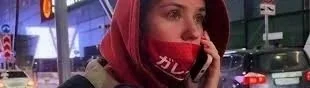
Episode 58: My Undesirable Friends: Part I—Last Air in Moscow (2024)
Guests: Rachel Denber & Anna Nemzer
Listen Anywhere You Stream
~
Listen Anywhere You Stream ~
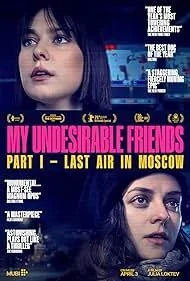
My Undesirable Friends: Part I—Last Air in Moscow (2024) is Russian-language American documentary film written and directed by Julia Loktev (with co-director Anna Nemzer). The film describes the effort to maintain press freedoms in Putin’s Russia in the period leading up to the full-scale invasion of Ukraine in February 2022. The documentary provides an intimate portrait of independent Russian journalists—mainly young women—who risk everything to pursue truth and accountability amidst escalating repression under the Putin regime. Filmed in late 2021 and early 2022, the documentary captures how the legal machinery of censorship, surveillance, and state-harassment converged to crush internal dissent and incapacitate civil society. It not only provides a profoundly disturbing account of what has occurred in Russia but also serves as a broader warning about the fragility of press freedoms and in a time of rising authoritarianism worldwide.
Guest: Anna Nemzer
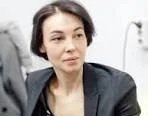
Anna Nemzer is a Russian-born journalist, writer and documentary filmmaker whose work focuses on the historical memory of wars in the post-Soviet space. She has served as a presenter on the independent Russian television channel TV Rain (also known as Dozhd), now operating in exile. In addition, she is a scholar at Bard College in the United States and is co-founder of the Russian Independent Media Archive (RIMA), a project dedicated to preserving independent Russian media as a historical record. Nemzer also appears prominently in the documentary My Undesirable Friends: Part I — Last Air in Moscow (2024), where she features as a talk-show host at TV Rain and as a central figure in the film’s exploration of the mounting pressure on independent journalists in Russia. Anna served as a co-director of the film, with Julia Loktev.
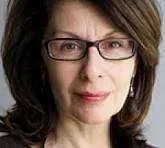
Rachel Denber is an expert on human rights in the Central Eurasia region. Until recently, she was deputy director for Human Rights Watch's Europe and Central Asia division, where she oversaw research and advocacy on the region's countries researched and published reports about numerous human rights issues.
36:30 Identifying the pivotal moment
43:36 How the film captures the elimination of press freedoms
48:26 Courts and lawyers
53:27 The Kremlin’s public mobilization to support the war in Ukraine
58:53 Independent journalism in exile
1:02:17 Parallels to the United States under Trump
0:00 Introduction
2:45 How the film came about
5:25 A primer on Russian censorship and repression
15:15 “Foreign agents” and “undesirable organizations”
23:32 Social marginalization through the creation of an enemies list
28:46 State persecution of TV Rain and other independent media
32:45 The manipulation of language
Timestamps
-
00;00;15;22 - 00;00;44;09
Jonathan Hafetz
Hi, I'm Jonathan Hafetz, and welcome to Law on Film, a podcast that looks at law through film and film through law. This episode we look at my undesirable friends. Part one last Air in Moscow, a 2024 Russian language American documentary film written and directed by Julia. The film describes the effort to maintain press freedoms in Putin's Russia in the period leading up to the full scale invasion of Ukraine in February 2002.
00;00;44;10 - 00;01;22;13
Jonathan Hafetz
The documentary provides an intimate portrait of independent Russian journalists, mainly young women, who risk everything to pursue truth and accountability amidst escalating repression under the Putin regime. Filmed in late 2021 and early 2022, the documentary captures the moment when the legal machinery of censorship, surveillance and state harassment converged to crush internal dissent and incapacitate civil society. It not only provides a profoundly disturbing account of what's occurred in Russia, but also serves as a broader warning about the fragility of press freedoms in a time of rising authoritarianism worldwide.
00;01;22;16 - 00;01;46;07
Jonathan Hafetz
My guest for this episode are Rachel, Denver and Anna. Rachel Denver is an expert on human rights in the Central Eurasia region. Until recently, she was deputy director for Human Rights Watch as Europe and Central Asia Division, where she oversaw research and advocacy on the region's countries and researched and published reports about numerous human rights issues, including censorship in Russia.
00;01;46;12 - 00;02;12;20
Jonathan Hafetz
Anonymous is a Russian born journalist, writer, and documentary filmmaker whose work focuses on the historical memory of wars in the post-Soviet space. Anna serves as a presenter on the independent Russian television channel TV rain, now operating in exile. In addition, she's a scholar at Bard College in the United States and is co-founder of the Russian Independent Media Archive and also of Kronika, a civic tech project.
00;02;12;27 - 00;02;32;06
Jonathan Hafetz
Anna also appears prominently in the documentary film that we're covering today, My Undesirable Friends, part one, Last Air in Moscow, where she features as a talk show host at TV rain and is a central figure in the film's exploration of the mounting pressures on independent journalists in Russia. Anna also serves.
00;02;32;06 - 00;02;35;07
Jonathan Hafetz
As a co-director of the film with Julia. Lockdown.
00;02;35;13 - 00;02;40;26
Jonathan Hafetz
Rachel. Anna, welcome to Law on Film. I'm delighted and honored, as I said, to have you on the podcast.
00;02;41;01 - 00;02;43;17
Anna Nemzer
Hi. Hello. Thank you. Hi.
00;02;43;19 - 00;02;52;00
Jonathan Hafetz
So can you just tell us a little bit, Anna, maybe I'll start with you with this, how the film came about and how it was made, because I think that's a story unto itself a little bit.
00;02;52;02 - 00;03;21;17
Rachel Denber
So it was summer 2021, I believe, when Julia, how I call her, we were friends before that she called me. She was listening to the podcast I made by two of my colleagues and friends, Sonya Grossman, and All Over it was called hello, I'm a foreign agent and Julia is a native Russian speaker since she was born in Soviet Union and she immigrated when she was nine.
00;03;21;17 - 00;03;49;14
Rachel Denber
So she's an American, but she speaks Russian fluently, and through this podcast, she was understanding that something very unpleasant is happening in Russia. But she was worried that for the American audience, it's it's something very far away from them. And they don't understand what was happening in Russia at that moment. And she definitely saw a lot of very unpleasant signs and signals.
00;03;49;14 - 00;04;18;03
Rachel Denber
And she called me and she said, I am not sure what I'm suggesting you, but maybe we should try to film it. Maybe we should just start and we see how it goes. And that was the moment when I, being an independent journalist myself and seeing all my colleagues being declared foreign agents, organizations declared undesirable and so on.
00;04;18;05 - 00;05;08;12
Rachel Denber
I had this feeling that something really bad is happening and something worse is going to happen. And my like just instinctive response was issue, let's do it. We should make a record, we should see it, and then we'll figure out what it is and what it is about and how it might work, and so on. And so we started filming in autumn 2021, and I was like some kind of a guide for Julia in the world of Russian independent media, because these people, they were my friends and colleagues and I just introduced Julia to them, and she started filming, and we had a lot of questions to ourselves about what we are filming, actually.
00;05;08;13 - 00;05;12;17
Rachel Denber
But then the history gave us all the answers, I'd say.
00;05;12;17 - 00;05;36;22
Jonathan Hafetz
So you get a sense of the background repression that you started, and then you move forward into what, culminating right in the 2022 invasion of Ukraine and the complete crackdown. So, Rachel, that film takes place over, you know, over this period, we see censorship and repression rise. I mean, I think it actually starts the censorship and repression starts even well before the filming started.
00;05;36;22 - 00;05;57;01
Jonathan Hafetz
And that's indicated in the documentary, the reference to that. And you've been tracking and researching and reporting previously in Human Rights Watch on repression and censorship in Russia. So, you know, can you give like a little bit of a historical overview of the trajectory? I mean, we kind of start I mean, I'll put aside we'll put aside the, you know, the past and the and the Soviet era.
00;05;57;02 - 00;06;07;10
Jonathan Hafetz
But what was the relative openness of relative press freedoms in the glasnost and early post-Soviet period? Relative, I guess, to where we kind of the trajectory to get up to where the film.
00;06;07;10 - 00;06;43;07
Anna Nemzer
Story and I mean, Ana really also is an expert in this. So I also completely defer to you on and you should jump in and correct me or even take take things back further. Then I'm going to start. You know, we could start with a late glasnost where I think actually, you know, the late, the very end of the glasses there, like, you know, before the collapse of the Soviet Union, I'd say, like, you know, 89, 90 probably was the, the golden age of press freedom because really, you could I mean, anything, you know, there was there was a lot of press, a lot of press freedom and probably fewer, fewer constraints.
00;06;43;11 - 00;07;14;14
Anna Nemzer
Of course, there was much less development, though, of the independent media. It was just it was just starting. I would rather like start with the 1990s. So after the Soviet Union has collapsed, Russia is now and, you know, independent. It was certainly freer than the Soviet era. We had a kind of continuation of glasnost, and I should say that at the very end of the glass period, you had some really dark moments after, you know, some military crackdowns against independence movements in Lithuania and also in Georgia.
00;07;14;17 - 00;07;36;14
Anna Nemzer
You know, you had some real dark moments there. But so, again, like in the 1990s, I think things were obviously freer than during the Soviet era, but also with a and independent media developed. But, you know, there was kind of a hard edge so you could find a real wide range of content, a wide range of editorial lines, a lot of the media.
00;07;36;17 - 00;08;02;01
Anna Nemzer
You know, media outlets were owned by oligarchs, by wealthy people who had a particular editorial line. But you still could find there was definitely there was media pluralism, even if though the media outlets, you know, were owned by people who had specific interests. But at the same time, journalists who did hardcore reporting that threatened the interests of powerful people or, you know, we're looking into organized crime or business.
00;08;02;03 - 00;08;19;03
Anna Nemzer
You know, the lines were very blurred. You know, there were journalists who did those kinds of investigations, faced threats. Some of them, several of them, some of them were murdered. They were very, very high profile. Journalism was a very dangerous profession. So we had some, you know, so some pretty high profile murders of journalists like Paul Clinicos and Dimitri Holiday.
00;08;19;10 - 00;08;47;03
Anna Nemzer
And then, you know, the government tried to control did its best to try to control political coverage, particularly like in the mid 1990s when Yeltsin was running for reelection in 1996. You know, that threats to, you know, limit exposures and the like. But but generally, there could be pretty you know, there was a very wide diversity of, of coverage, lots of critical, great investigative journalism and alike.
00;08;47;03 - 00;09;11;02
Anna Nemzer
So it wasn't a perfect record of media freedom. It was mixed. And probably the darkest mark was, you know, over the First Chechen War that started in 1990, the, you know, started in 1994. But even then, you know, the government tried to control the media, but there was some quite critical coverage and lots of investigative reporting about abuses during the first of two wars in Chechnya.
00;09;11;02 - 00;09;38;15
Anna Nemzer
And then 1999 hits, Putin comes to power. There's the second Chechnya war. This is when we start to see the first, you know, most serious moves towards censorship. So Putin brings the what was probably the leading independent TV channel to heal. I think this was mentioned in the film. They, you know, they he had the, the head of the a very powerful media conglomerate medium.
00;09;38;15 - 00;10;04;13
Anna Nemzer
Most had the head of it. Someone called Vladimir had him arrested eventually, you know, released him, but only kind of a kind of mafia gangland move. It rested him and then released him after he pretty much agreed to give up his, you know, holdings in this powerful media conglomerate to a state to Gus, which is a state owned gas company and I think ended up, you know, taking up residence in Israel.
00;10;04;15 - 00;10;16;25
Anna Nemzer
So that was the first big, big move, I think, against the independent media. And then he also like, you know, the was it 2000, 2001 on the sinking of the 2000.
00;10;16;28 - 00;10;20;00
Rachel Denber
The demolition of NTV 2001?
00;10;20;03 - 00;10;40;27
Anna Nemzer
Right. So there was in 2000, there was also the sinking of the course, which was actually Putin's first, I think, encounter with, you know, with, with the tough media. This is a submarine tragedy. You know, the submarine sank and took the lives of over 100 sailors. And there was a lot of criticism about how the government handled the tragedy.
00;10;40;28 - 00;11;04;02
Anna Nemzer
And it sort of took place over a number of days. And it was just agonizing, was agonizing for the families. It was agonizing for the public. I remember very clearly. And during this time, Putin was on vacation in Sochi, and people and people were really upset about that. And when he came, when he finally came back to Moscow, you know, he faced a very tough, very tough press that was 118 sailors who died, actually.
00;11;04;03 - 00;11;29;08
Anna Nemzer
So this is when you first started to hear him really rail against the non-state about non-state media, about the independent media calling them lying and ruining Russia's farming fleet. So you could sort of see his first venom, I think, in that episode. And then, of course, we saw the dismantling of events, but we also saw more threats. And there were other critical points when we saw threats, harassments and killings of journalists.
00;11;29;08 - 00;11;59;21
Anna Nemzer
Obviously, the murder of, like the star investigative reporter for Nova Gaceta on a political who was murdered in in her apartment building in 2006, right, in 2006. And meanwhile, we also saw, you know, this isn't directly press freedom, but it's, you know, about the conveyance of information. Meanwhile, we saw the security services, the FSB start to force internet, telephone page and other providers throughout the country to install surveillance hardware.
00;11;59;21 - 00;12;27;10
Anna Nemzer
So you could see, like the the architecture start to start to impose itself. Then there were other, you know, critical moments. Obviously, the Second Chechen War was, you know, that started in 1999 and sort of lasted for several years before it turned into a counterinsurgency campaign. And the Beslan hostage, hostage atrocity. After that, you saw the Kremlin take even stricter measures with the press, informal censorship.
00;12;27;16 - 00;12;54;14
Anna Nemzer
And then I'd say the next, you know, key points were after the big wave of protests in 2011, 2012, these big protests called the Bologna protests, named after the square where they took place in 2011 that were sort of following the the exposure of Putin's plans to sort of switch places with the person, with Dmitry Medvedev, with the time was prime minister.
00;12;54;14 - 00;13;21;27
Anna Nemzer
So Putin's presidency ended in 2008, from 2000 to 2008, and then his terms ended. And then he had the prime minister run for reelection in 2008, and Putin became prime minister, so they switched places. Medvedev, who had been prime minister, became president. Putin became prime minister for four years, and after that interregnum was over, the question, you know, was out there, who's going to be president next?
00;13;21;28 - 00;13;51;25
Anna Nemzer
Is Putin going to run again or or isn't again of going to, you know, run again? And they basically agreed behind the scenes that that they would switch places again. And then people got very upset about that. And there was a lot of public outrage about the the 2011 parliamentary elections, which were, you know, this is probably the first election where people had smartphones and could actually, you know, take video or easily take video shots of ballot stuffing, of carousel voting and the like.
00;13;51;26 - 00;14;16;12
Anna Nemzer
And so there were these huge protests, you know, starting that started out about protesting the election manipulation and protesting Putin coming back. It was like the first really big nationwide protests. And after that was over, after the protest got snuffed out and Putin came back to the Kremlin, then we saw, you know, this is 2012 already, and this is when we see Putin really taking at the independent media.
00;14;16;19 - 00;14;39;12
Anna Nemzer
And there were just there was step after step after step. We saw the reintroduction of insult laws, the reintroduction of criminal penalties for libel or for defamation. And then then we saw it in 2014. That was the first Russian invasion of Ukraine with the invasion and occupation, stealth invasion and occupation of Crimea, and then the stealth invasion of eastern Ukraine.
00;14;39;12 - 00;15;07;10
Anna Nemzer
And then we started to see more censorship laws. Then we started to see the kind of a floating of of a couple or like editorial changes at a couple of key independent outlets, which basically changed their force. There were ownership changes that eventually forced a new editorial line. And then at the same time, we 2012, 2014 is when, you know, we saw both the introduction and the harshness of the foreign agent laws.
00;15;07;11 - 00;15;14;24
Anna Nemzer
So let me stop there, because I realized that I'm starting a whole other conversation about about foreign agents.
00;15;14;26 - 00;15;39;03
Jonathan Hafetz
Well, foreign agent laws. Yeah, we'll pick up on that because that's one of the ones, I think, that's centered in the movie. The foreign agent classification used against you and and your colleagues at TV and other independent journalists. So what is the foreign agent law and how was it used to suppress freedom of speech and present? You know, I mean, you can speak from both looking at and studying and experiencing it.
00;15;39;05 - 00;16;09;02
Anna Nemzer
So the foreign agent law, the foreign agent concept, started out in 2012 as part of this repressive wave that happened after Putin returned to the Kremlin in 2012. And it started out as a, in my view, in our view, as a pernicious, toxic effort to undermine and demonize non-governmental organizations, NGOs, which Putin blamed for all of the ills in Russia and claimed that there were foreign funded and out to sow instability.
00;16;09;02 - 00;16;49;29
Anna Nemzer
And he sort of blamed all the color revolutions of 2005, revolutions in public uprisings in Ukraine, Georgia and in Kyrgyzstan that took place in 2004, 2005 and 2003. Land all those on NGOs that were foreign funded. So this was an effort to, you know, to demonize not just NGOs, but really to demonize dissent. What it was was a amendments to the to Russia's law and non-governmental or noncommercial organizations that required all NGOs to register as, quote unquote, foreign agents if they received any amount of foreign funding and engage in broadly defined political activities.
00;16;49;29 - 00;17;16;12
Anna Nemzer
So it didn't matter if you got a penny or a kopecks or $20,000, if you got any amount of foreign funding, didn't matter if it was from a government, didn't matter if it was from, you know, a foreign individual or if it was from a charitable organization, didn't matter was foreign. If you're gauged in any kind of political activity, you have to register yourself as a foreign agent and mark yourself as a foreign agent in any materials that you distribute.
00;17;16;12 - 00;17;40;00
Anna Nemzer
And you had to submit additional quarterly and semiannual and annual reports. So in addition to all the other paperwork that NGO had to do, they had to do all this other additional paperwork. So the government tried to say it was just an effort to, you know, more, you know, financial transparency. They tried to equate it falsely, equate it with the US Foreign Agent Registration Act or Fara.
00;17;40;00 - 00;18;12;19
Anna Nemzer
But, you know, it really was just an effort from the very beginning to demonize dissent and an effort to try to, like, equate any activities or speech that was very, quite independent of the Kremlin's line and especially critics of the government as something foreign, something alien about it, something subversive about it. And then over the years, there were successive rounds of amendments that expanded the law, expanded who could be tagged a foreign agent, what's considered foreign funding, you know, amendments that made the penalties harsher?
00;18;12;22 - 00;18;35;22
Anna Nemzer
What activities are considered political? So with each successive round, the whole foreign agent concept became more and more absurd. So I could go on and on about it. It started out to be just about organizations, but by 2017, it was not just about NGOs. There was another law that created this concept of foreign agent foreign media. So foreign media could suddenly be foreign agents.
00;18;35;22 - 00;18;54;29
Anna Nemzer
Individual journalists could be foreign agents. By 2019, any individual could be a foreign agent. And it got so absurd that with every successive round of amendments that by 2022, you didn't have to have foreign funding, you just had to have some kind of foreign influence, and you could get designated as a foreign agent.
00;18;55;02 - 00;18;58;20
Jonathan Hafetz
And so, Anna, how did that affect you and how you operated?
00;18;58;21 - 00;19;19;21
Rachel Denber
So first of all, I have to mention I'm not a foreign agent. Surprisingly, I'm a proud member of two undesirable organizations. But I don't know how people were declared foreign agents based on the fact that they had a talk with me, they had a conversation with me, and that fact made them foreign agents. But I'm still not a foreign agent.
00;19;19;22 - 00;19;48;12
Rachel Denber
That's, again, a question of the logic of Russian state. I can't explain it, but just to add a few things to what Rachel brilliantly described. So yeah, first of all, we have to understand that what happened when they introduced these laws about foreign agents and undesirable organizations. I think that till that moment they were dealing with each case of their opponents, like inventing some methods to deal with it every time.
00;19;48;13 - 00;20;14;08
Rachel Denber
What can you actually do with your opponent? You can fire your opponent. You can fire the whole editorial team. You can kill a journalist. But it is difficult to to make it systematically, although they were quite successful in that. And so these laws, as I understand it. But Rachel definitely knows better about that. As I can see this situation, the same thing happens in Hungary or in Bulgaria.
00;20;14;09 - 00;20;48;26
Rachel Denber
You have to make laws, you have to make this thing systematic. And there is a bunch of laws about foreign agents or some law that is protecting, I don't know, children or our sovereignty or anything else. And this idea of protection, protection, the nation from its enemies and these laws, they just give the opportunity to deal with your opponents properly, systematically, and maybe not killing them, like following them in their flats and apartments, but in other way.
00;20;48;27 - 00;21;27;03
Rachel Denber
And regarding personal experience, I think yes, I think Rachel described it very well. So there was a bunch of bureaucratic requirements which wasn't possible to it was impossible to follow these rules, to obey these laws because they were written specifically to make you uncertain and to make you guilty. For instance, a foreign agent is required to label all their materials with a special disclaimer 24 words, essentially stating that the author or the distributor of this material is a foreign agent.
00;21;27;04 - 00;21;59;26
Rachel Denber
The law doesn't explain what kinds of materials this applies to. Are you supposed to label your Instagram posts or stories? Your personal messages? Are you supposed, I don't know, chatting with parents in your kid's school group? Do you have to label every message of yours? What do you have to do? And none of this is clear. And this is designed in such a way specifically that you are always wrong and you are bound to break the law.
00;21;59;28 - 00;22;32;10
Rachel Denber
Again, a foreign agent must also submit regular financial reports. No one knows anything about the form of this report, how it might be filled out. But two mistakes lead to a fine, and three mistakes lead to a criminal case. So you constantly live in this feeling that you are guilty, and you will definitely have some concept. And I like to add that this is what I'm describing from the point of view of a foreign agent from inside.
00;22;32;11 - 00;23;01;14
Rachel Denber
The thing is, there is another crucial part this creation of atmosphere, of fear and kind of contagion because you never know what you'll be held guilty of. And I remember how some of us were declared foreign agents, okay. But others didn't know whether it is contagious, whether it is dangerous to keep working with a foreign agent, or especially if it's an undesirable organization.
00;23;01;14 - 00;23;32;11
Rachel Denber
It is specifically told that you can't even communicate with undesirable organization, and it might have very bad consequences for you. And this feeling that everything is contagious and it spreads around the world somehow it creates this atmosphere of fear and uncertainty. And that was one of their main goals, I think. And that was important because people are afraid to interact with each other because they don't know what might happen with them.
00;23;32;14 - 00;23;53;19
Anna Nemzer
Can I just add something else about this? I absolutely agree with Anna about how we aim. Well, I don't know if it was the aim, but certainly the consequences of spreading, of fear, uncertainty. And I say I'm not sure about, you know, I think that the aim is definitely to spread fear, but I just I hate to think that the folks in the, in the Kremlin, the security services who think of these things, really think about them.
00;23;53;21 - 00;24;25;04
Anna Nemzer
I don't know how much they actually plan to have these impacts, but they're certainly happy to have them. I think the other planned aspect of it, as the years were on and the repression, you know, ratcheted up, I think another planned outcome was the social marginalization of people designated as foreign agents. So I think I said they wanted to sow fear among spreads, fear among the whole community of journalists, critics, dissidents, thinkers, academics, spread fear among them, but also create an enemies list.
00;24;25;06 - 00;24;46;06
Anna Nemzer
Because I think that's what this is all about, is about I mean, eventually it became about creating an enemies list and to shun them as a cast, almost the penalties that on a mention that, you know, they're fines, but also prison. But there's another level of penalties. And those are the restrictions that kind of the social restrictions on foreign agents.
00;24;46;06 - 00;25;08;03
Anna Nemzer
And so these social restrictions are, you know, increased with successive rounds of amendments. But there were about isolating people designated as foreign agents from the society. So first it was about well, you can't you can't run an elections. Well first it was about you have to expose if you've if you've been designated a foreign agent, you have to expose that.
00;25;08;10 - 00;25;29;01
Anna Nemzer
If you want to run for election, you have to put it on your candidacy or whatever. And then it was, of course, you can't run on elections, then you can't serve on, you know, in public councils or in other sort of public roles. You can't be a civil servant. You can't have conversations with official conversations with the public, with government officials.
00;25;29;01 - 00;26;06;14
Anna Nemzer
And then then it gets, you know, a lot worse than it became. You can't work in a, you know, in any education, whether it's, you know, you can't teach children, you can't teach extracurricular activities and can't conduct any kind of education related activities. Then it became, you can't dispose of foreign agents, can't dispose of intellectual property income. So any any income that they might, might earn because they're their artists are their musicians or their writers, they have to open special bank accounts for all of the whatever royalties or income they might get from their artistic production.
00;26;06;20 - 00;26;28;12
Anna Nemzer
They're not allowed to dispose of that income. It has to stay in the special account, and they can't dispose of income from renting or selling property. And they also can't at just the most. One of the most recent legislative innovations was to strip so-called foreign agents from socially oriented. They lose their eligibility of socially oriented status and municipal municipal financial support.
00;26;28;13 - 00;26;42;20
Anna Nemzer
They're really trying to create a surpassed of of people to isolate from the public. And that's people who, you know, who are government critics in any way, or creatives or people who aren't in line with the, you know, with the Kremlin line.
00;26;42;22 - 00;26;59;17
Jonathan Hafetz
For those who are not foreign agents. Right. In the film that one of the journalists, the person they were married or in a relationship with, had been designated and was in a prison. Right. But for for the other, like you and her colleagues weren't classified as foreign agents. There were classifications, right. There's one of your colleagues who had to account for our money.
00;26;59;18 - 00;27;06;24
Jonathan Hafetz
Right. And there also had TV reign, right. You always had to include that kind of disclaimer at every broadcast.
00;27;06;26 - 00;27;32;26
Rachel Denber
Yeah, sure. We had to do that. And it was disturbing. It was nothing compared to personal, I don't know, the personal stuff when people felt like really vulnerable. So yes, we had to we had these limitations. It was very unpleasant. But yeah, we were dealing with that till it was possible. Yeah. But again, it was a very it didn't come to that because the full scale invasion started.
00;27;32;26 - 00;28;03;27
Rachel Denber
But they had if they had a little bit more time, they had a brilliant way to just bankrupt us because they could start this fine, this line of fines, and they could just bankrupt us because TV never was a rich TV channel, and we were always suffering and we were living under subscription, and we were operating just because we weren't allowed to have any other money and we weren't allowed to deal with.
00;28;03;27 - 00;28;16;22
Rachel Denber
Advertisement. And so we were operating by subscription model, and they definitely were going just to bankrupt us with these fines. But the full scale invasion started and the situation changed.
00;28;16;25 - 00;28;29;24
Anna Nemzer
Just a background point, Jonathan, is that they that the authorities had stripped TV reign of being able to be included in cable packages. To reign used to be part of the standard cable package. It used to be included in a cable package. I think until.
00;28;29;27 - 00;28;31;03
Rachel Denber
2014.
00;28;31;05 - 00;28;32;18
Anna Nemzer
To 2014.
00;28;32;19 - 00;28;49;15
Rachel Denber
It was a part of this huge special campaign before the annexation of Crimea, when the editor in chief of Leon was the most important media outlet was fired and the whole editorial team left, and it was a part of this campaign.
00;28;49;16 - 00;29;14;12
Jonathan Hafetz
One of the things that comes away from the film, even before we'll get to the invasion, right, February 22nd, invasion. Before that, just the increasing difficulty of operating as an independent journalist in Russia, right? With censorship, with the financial pressures, you know, how you had to distribute your broadcast, right? I mean, just it's just like the space seem to get smaller and smaller and harder and harder to operate.
00;29;14;13 - 00;29;17;26
Jonathan Hafetz
The other thing is that.
00;29;17;28 - 00;29;44;24
Jonathan Hafetz
In addition to the repression, right, is that you had there was also the government manipulation of language and use of of disinformation. Right? I mean, that really picks up after the invasion, but everything is labeled differently, like frame becomes it's not an invasion, special military operation, right? Ukrainians or nasties and fascists. Right. So in addition to the government repression and the repression, you had the whole campaign of misinformation and disinformation to deal with in civil society.
00;29;44;24 - 00;29;46;10
Jonathan Hafetz
And there's journalists.
00;29;46;12 - 00;30;15;06
Rachel Denber
The problem with the narratives and with the word started when military censorship was introduced in Russia. It was a week after the full scale invasion began. And I think that this problem goes even further beyond the words, because Pruden has practically destroyed independent media or forced them to operate under drastically reduced and constrained conditions. And so we were constantly losing.
00;30;15;06 - 00;30;47;04
Rachel Denber
And it's even before the full scale invasion do the enormous number of pro-Putin propaganda outlets that spread lies both about the war in Ukraine and the situation inside Russia? So except for words, except for manipulating and trying to spread lies all over the internet and everywhere, what's truly terrifying is the sheer scale of it. Because these narratives, the wrong narratives, they affect the entire online space, actually.
00;30;47;04 - 00;31;21;21
Rachel Denber
And for example, I don't know, I'm running this experiment lately. I've been running this experiment lately. I asked the same question about Russia twice, once in my regular GPT chat and once which knows me and knows my search history and so on. And also I use the the incognito mode, and the answers turned out to be very different because the internet space is very much poisoned by these narratives because it's just too much of them.
00;31;21;21 - 00;31;47;06
Rachel Denber
There is a lot of different outlets, and the funny thing is that we are not quite sure who is watching it, reading it, listening to it. We don't know anything about the real specific audience, but we know that they are dealing. The audience is not their specific goal. Their goal is to poison the narrative and they are dealing with it very well.
00;31;47;09 - 00;32;08;14
Rachel Denber
And so it is not only about the words seem like a small and very like a very vivid part of that, because we can describe how they bid to call this war a war and how they use some euphemisms and so on. But the sheer scale is something that because we are constantly losing to them.
00;32;08;17 - 00;32;39;14
Anna Nemzer
And just one thing to add about the sheer scale is this is where you need to also look at what the authorities have done to remake the internet in Russia, through both through internet architecture and through censorship and blocking, while at the same time they just manipulating search engines and other manipulations. The authorities are sucking out, blocking information through censorship and blocking and the like, and flooding the zone with disinformation.
00;32;39;14 - 00;33;17;07
Anna Nemzer
And that's a kind of a separate conversation. But there's a lot that's happening in the tech world to facilitate that. And then in addition to not calling and just to look at some of the content of the manipulation of language, I think I'm really glad you asked that question, Jonathan, because, I mean, language language is power. And this is how this is how Putin is how the Kremlin, the security services are trying to, you know, another way that they assert their power is by using, trying to appropriate the language of Nazism and fascism and to use it inappropriately or use it falsely to signify basically anybody who doesn't follow the Kremlin line.
00;33;17;07 - 00;33;43;02
Anna Nemzer
Now with on Ukraine, if you don't do that, you're fascist. Any questioning of Russia's dominion over basically, if you question Russia's narrative about who invaded Ukraine and why they invaded Ukraine, then you're a fascist. I think by manipulating the language of fascism and nuts, they're trying to I don't know if they're actually trying to persuade the public, but they're trying to cosplay like they're fighting World War Two all over again.
00;33;43;04 - 00;34;11;29
Anna Nemzer
This is the way they try to make they say black is white and they, you know, they say the black is white. And then they also try to, you know, to force the extreme that there's the enemy and then there's us. And then if you're not with us, you're against us, and you're the enemy and you're fascist. And, you know, they're trying to say that the falsely they're trying to assert this argument that Russia is fighting Ukraine because Russia is defending itself, which is completely absurd, versus the war of aggression.
00;34;11;29 - 00;34;32;20
Anna Nemzer
Russia invaded Ukraine because it, you know, it doesn't accept Ukraine sovereignty, and it wants to have, you know, wants to control many Ukraine security policy. But it's absurd to say that this Russia is trying to, you know, is trying to project this absurd notion that this is a war of self-defense. It's completely upside down. I mean, you can't get more Orwellian.
00;34;32;20 - 00;34;48;04
Anna Nemzer
And so this is why they the way they try to argue this to the public or present it to the public in ways that they think the public will understand, is that, you know, they'll say, well, this is you know, this is the motherland where we're fighting World War Two. And and we were and we're fighting, so we're fighting fascism.
00;34;48;04 - 00;34;59;12
Anna Nemzer
They have this completely false, twisted, distorted claims about Ukraine and Ukrainian history. And so they. Yeah, if you don't take the criminal view of history, you're fascist.
00;34;59;14 - 00;35;35;23
Rachel Denber
Yes. And the sheer scale, like I keep saying that because, well, I'm sorry for pronouncing obvious things, but a society without independent media is not a free society. And it's no surprise that all autocrats seek to create this atmosphere of isolation amongst people. And they aim to destroy people's capacity for reflection and self-understanding. And so if they had all the infrastructure to spread these lies and false news and fake news and so on.
00;35;35;25 - 00;36;06;20
Rachel Denber
They had all this infrastructure prepared. They had to erase the independent media, which was done like properly, and they had to to make the situation, like we said in Russian, every, every kettle is telling this. So yes, it is everything and this propaganda is everywhere. And the society doesn't have these tools for reflection, for self-understanding, for keeping their memory, for, I don't know, for protesting.
00;36;06;20 - 00;36;19;27
Rachel Denber
I don't even say that. And now but they don't have the capacity for protest thoughts that what frightens me the most, because the infrastructure for this propaganda was prepared very well.
00;36;19;29 - 00;36;40;21
Jonathan Hafetz
Yeah. And you can see that in the movie. I think the way the propaganda and the way they just try to marginalize independent voices, like voices for you and your colleagues and project brain and just it just gets harder and harder to operate. One of the things that I thought was sort of really interesting and striking and watching the film was there's a couple of times when they say, or it's your colleague.
00;36;40;24 - 00;37;03;21
Jonathan Hafetz
Your colleagues, you know, this is all before the invasion of Ukraine, the 2022 invasion of Ukraine. It's still not North Korea, right? It still hasn't yet become a true totalitarian state. And so it just seemed like the way that you just were, you know, the sort of authoritarian and faster or something on a continuum and the ground is, is shifting underneath.
00;37;03;21 - 00;37;18;10
Jonathan Hafetz
But again, it seems to get closer. I just wonder if you could just talk about that because it you know, it's sort of like there was still some space and just kept getting narrower and narrower in what you had to operate. And you could still, you know, earlier pre 2022, you could point say, hey, we're not North Korea yet.
00;37;18;10 - 00;37;26;17
Jonathan Hafetz
We can still kind of do our jobs, albeit amid incredible challenges. And but anyway, I want to hear what your thoughts were about that.
00;37;26;19 - 00;38;01;18
Rachel Denber
You know, and we kept asking each other about some pivotal moment. And I think that there wasn't one single pivotal moment. And I think that if we look closely at Putin's actions, we can see that by 2004, by the end of his first presidential term, the entire like foundation, the full infrastructure for dictatorship was already in place because the legislative, the executive and the judicial branches of power had been efficiently destroyed.
00;38;01;18 - 00;38;41;04
Rachel Denber
And I mean, the judicial reform in 2001. Then in 2001, he brought parliament under his total control. In 2004, he abolished the direct elections of governors. So in a way, everything was ready for a dictatorship. But he was pronouncing all the right words till 2007, when he came out with his. It was his Munich speech, and it was like first moment when he openly changed his discourse and he started speaking like a dictator, actually.
00;38;41;04 - 00;39;08;10
Rachel Denber
And before that, everything was ready. We were just not able to believe in it. We weren't able to truly believe it, and we weren't able to not to ignore very unpleasant signals, because it happened gradually and we couldn't believe because, you know, and that was another question about when you understand that you have to leave, when you understand that it is over.
00;39;08;10 - 00;39;53;03
Rachel Denber
And for me personally, this moment didn't happen till the full scale invasion. And I kept thinking myself, why? Why? Because as a historian, I knew that everything that was happening was very, very bad. I didn't have any illusion. And at the same time, this feeling that I'm surrounded by my colleagues, independent journalists, by human rights activists, by brilliant people who not only were there brilliant, they were working systematically and institutionally, and they were building institutions, and being around them was an honor itself and being around them.
00;39;53;06 - 00;40;25;04
Rachel Denber
Yes. That was the place where the hope was born. Like, you know, you wanted to be near these people because they had hope, and that's why you had hope. And at the same time, it was the process of constant double thinking because you had no illusions. Maybe. I couldn't imagine the full scale invasion of Ukraine. I couldn't imagine the full scale invasion of Ukraine, but I definitely I didn't think that something will change one day, something will change and we will live in some bright future.
00;40;25;05 - 00;40;46;15
Rachel Denber
No, I didn't have any illusions. But at the same time, there is no pivotal moment. There is no like except for the war, actually. And this feeling that there are a lot of people near you, brilliant, decent people, and you want to be around them. Well, for me, it just made me stay till the last moment.
00;40;46;17 - 00;41;05;28
Jonathan Hafetz
I mean, I think also one of your there's one of your colleagues who says, I don't recall her her name, but one of the journalists says, you know, I love Moscow. Moscow is my home. I'm not leaving like there's right. And there's a question, you know, when do you have to go? When do you need to leave that I think, you know, people face everywhere they face in Russia and.
00;41;06;00 - 00;41;18;10
Jonathan Hafetz
Well, I might get to this later at the end. They face it in the United States now. Right. But like, when is it so that you have to go and but also there's the like this is my country. I don't I don't want to have to leave. But then you have to go, right. There's no no choice.
00;41;18;11 - 00;41;40;27
Rachel Denber
Yeah. Well, for me, first of all, we have to mention that there is no longer a dilemma about whether one can be a journalist in exile. Because unfortunately, the reality is you can't be a journalist in the country right now. You can be an independent journalist and work openly in Russia. You can work anonymously on the cover. And I know a few people.
00;41;41;00 - 00;42;04;00
Rachel Denber
They are heroes. They are trying to do it this way. But you can't stay in Russia and work as an independent journalist. And so you had to we had to to leave. And my brilliant colleagues managed somehow to, to restart their work, to keep working, to relocate and keep working. And this is incredible. So this dilemma is no longer in question.
00;42;04;00 - 00;42;29;19
Rachel Denber
And in terms of personal feelings, well, for me it was always not it is my country. But what does it mean? My country? My country is my my people. People I love, people I respect, people I admire. And so yes, and I partially described it in my previous answer. But the thing is that when the war started, you just don't ask any questions anymore.
00;42;29;24 - 00;42;54;12
Rachel Denber
You just know. And a lot of these people leave as well in the you understand, I wasn't actually in Moscow when all this happened, but I thought I was going back in a week, and then I understood that I have nowhere to go. I just don't know what's left there. And it was as simple as that. And most of my, of these people that I love, that I admire, that I respect, had to leave.
00;42;54;13 - 00;43;25;09
Rachel Denber
Some of them stayed because they had some very special circumstances. But I, I don't know what my country means actually, because even this term, even this idea of my country, I don't know, it was so poisoned by Russian authorities that I prefer to I prefer to be very, very specific. And I prefer to talk about people, about institutions and about organizations and so on.
00;43;25;09 - 00;43;36;05
Rachel Denber
And I don't know what my country means, actually, I, I felt that I had no country more after the day of the full scale invasion.
00;43;36;07 - 00;44;02;27
Jonathan Hafetz
It seems like, as you both explained, kind of happened gradually. Yes. Happened all at once. Right. And the film, I think does this amazing job about what that what that was like. Right. When you know, you're filming your your broadcast or news broadcasts and the Russian authorities are outside and everyone has to leave all of a sudden, and you can see with the camera it really takes you there into the total kind of fear and chaos of that moment.
00;44;02;28 - 00;44;10;29
Jonathan Hafetz
I think it's very powerful to see that captured on film and to have lived. It must have been, you know, something else for your colleagues who were there at the time.
00;44;11;01 - 00;44;33;22
Rachel Denber
Yes. Well, thank you so much. And I have to say, well, it's just the greatest Julia's achievement that she managed being at the same time inside the situation and knowing all of us and knowing the context, and at the same time keeping her distance and being able to film because none of us was able to film anything at that moment.
00;44;33;22 - 00;44;52;17
Rachel Denber
And it was just incredible ability to combine these to to feelings inside of her, because she was definitely also very emotional about that, these feelings and these qualities, which let her just film it just to make this record.
00;44;52;19 - 00;45;01;16
Jonathan Hafetz
Did she face problems up until in filming it? Even up until then? I mean, how difficult was it to make this film for her director?
00;45;01;19 - 00;45;31;14
Rachel Denber
Well, it was definitely very difficult because we had, first of all, it was very difficult, like just technically because we made this decision not to film it on Julia's iPhone. It was a deliberate decision because we realized that using someone with a camera, using a big, heavy technique, we will just equipment, I'm sorry, equipment. We won't be as quick and mobile as we need.
00;45;31;14 - 00;45;59;11
Rachel Denber
And so we decided that Julia will film it on her cell phone. And so it was just on her just to film it, just technically. And it was it was a very hard work. And she was following us in all countries. We had to fly, fly through and so on, and we couldn't count. I tried to count how many countries she visited during this period of time, and it's like, I don't know, something like 20 or even more.
00;45;59;11 - 00;46;22;00
Rachel Denber
I don't know, we have to we have to check it with her first. It's just the dizzying part. Then, of course, it was very emotional for her because she wasn't like an independent observer. And at some point she was very frightened because they denied the demolition of TV rain. The night they get this warning to leave the premises immediately.
00;46;22;01 - 00;46;51;15
Rachel Denber
She was there and she was filming and she was like properly frightened. And of course, this I think that it is emotional, but also from the point of view of the creator. I think it's really difficult, it's exciting and it's inspiring, but at the same time it's very difficult to work without any scenario. And we discussed it from the day one, that we don't have any scenario, we don't know what what was going to happen.
00;46;51;15 - 00;47;20;00
Rachel Denber
And you have to be in such a constant mobilization to be ready to to run, to fly, to, to, to follow someone. And also, there is a question about the end of this movie because we still don't know. And it would be wonderful, just wonderful to end it with Putin's death or I don't know, with something as pleasant as that, but we we don't think it's happening anytime soon.
00;47;20;00 - 00;47;22;05
Rachel Denber
So yes, it's, it's a challenge.
00;47;22;12 - 00;47;24;15
Jonathan Hafetz
Or before the ICC he's been.
00;47;24;16 - 00;47;29;06
Anna Nemzer
Yeah. I think I think it would be really pleasant to end it with Putin and in jail. That's my dream.
00;47;29;09 - 00;47;30;08
Rachel Denber
Yeah, that's my dream.
00;47;30;14 - 00;47;33;13
Anna Nemzer
And that is done. Yeah. Jail. I think having him.
00;47;33;18 - 00;47;36;09
Rachel Denber
Jail is definitely better than this. Yeah.
00;47;36;12 - 00;48;09;20
Anna Nemzer
I was really struck when I watched the movie just by how it conveys the stress of the moment, the chaos of the moment. And at the same time you said you have no scenario. But it struck me that you're documenting history. This is how history happens. You know, I think now when when students of history look at, you know, how the first Russian immigration happened after the Bolshevik revolution, so many people have told the story that we tend to think that it happened in some linear.
00;48;09;21 - 00;48;25;00
Anna Nemzer
It's tempting to think that, oh, I guess it happened in some linear way, and it's all very neat. And this is how it all unfolded. But almost certainly it was as individually chaotic as as Julia's film conveys for for you.
00;48;25;03 - 00;48;26;26
Rachel Denber
Yes. Yeah.
00;48;26;28 - 00;48;45;20
Jonathan Hafetz
The only thing that's so terrifying when you think about it, there's, you know, you have the check of independent media, right? And there's efforts to repress what you do. And you mentioned this before, and I think Rachel is probably something, you know, you had looked at. But the decline of any other institutions, right, where like the courts, right, I think was mentioned of the judicial reforms, there's nowhere else to go.
00;48;45;21 - 00;48;55;08
Jonathan Hafetz
Right. I mean, there's protests in the street, but those are limited and repressed. There's no political opposition and there's no judicial check. And it's not in the movie.
00;48;55;10 - 00;49;17;10
Anna Nemzer
No. Exactly. I mean, it's almost said I couldn't agree with her more. I mean, the by 2004, 2005, all of the elements were there for there to be no parliamentary opposition. The parliament already became a pocket parliament. The courts had been brought to heal the conviction rate in Russian courts. I mean, the acquittal rate is infinitesimal. I mean, it's just so tiny.
00;49;17;12 - 00;49;35;09
Anna Nemzer
You don't stand a chance. And the judges, the prosecutors, obviously, but the judges are, you know, they are the handmaidens of all this repression. The only hope you can have is for your case to be returned for further investigation or for the charges to somehow be qualified. And this is a law broadcast. So I thought I would add this.
00;49;35;16 - 00;50;19;28
Anna Nemzer
You can hope to have maybe the charges were qualified or, you know, get a less serious charge or with a milder sentence, or you can hope for maybe a milder prison regime. But I think it's important to focus on this for a moment, because there are court cases happening and obviously with a pure ordained outcome. But there are, you know, many lawyers who are doing the courageous work of defending not just the dissidents and journalists and, and others accused of involvement in cerebral organization or on foreign agent charges, but also the many thousands of Ukrainians from occupied areas, areas occupied by Ukraine that have, you know, that have fallen into the the hands of security
00;50;19;28 - 00;50;51;02
Anna Nemzer
services on all kinds of false charges, who also need legal defense, whether they've already been transferred into Russia or whether they're still on in occupied territories. And there are lawyers who are doing this incredibly courageous work. I think we need to to bear that in mind. I also think it's important to remember that courtrooms are still places where people still go, like people can still get into trials of government critics when they go on trial, and they are still locus of conflicts between the state and the individual.
00;50;51;03 - 00;51;11;15
Anna Nemzer
I mean, it's less and less, but probably fewer and fewer people are going now. But you still see, when these cases happen, they bring the defendant through the corridors. You hear people shouting or puzzle like for shame, for shame that the state is doing this. There's also a moment at the end of these trials when the defendant can make a final statement.
00;51;11;15 - 00;51;48;00
Anna Nemzer
And sometimes, particularly in the cases of more prominent dissidents and, you know, who have kind of an oratory tradition, they make very powerful personal statements at the end of their trials. So this doesn't quite answer your question, Jonathan, about, you know, what do people where do people go? What can they do? But I think it is important to note that there are still voices inside Russia that are that are trying to tell the facts that are that are trying to provide some, even if it's palliative assistance for people who are being, you know, who have tried to speak the facts of what is happening in Ukraine or other elements of dissent.
00;51;48;00 - 00;52;09;19
Anna Nemzer
And there are still human rights defenders who still work inside Russia on a range of issues, but including to to try to provide defense for Ukrainians who are, you know, who are incarcerated or who are the children who were forcibly deported from Ukraine into Russia. I think it's important to, you know, give place to that work that's being done.
00;52;09;21 - 00;52;26;28
Jonathan Hafetz
That it illustrates to how there may be an absence of justice. There is certainly, but not of law. Right. You even Rights Watch described it as a legislative minefield. All the repressive measures, Rachel, you outlined at the beginning and you spoke about right there is the facade of law, right? It's a highly authoritarian legalism that they use their.
00;52;26;28 - 00;52;27;23
Jonathan Hafetz
And so.
00;52;27;26 - 00;52;56;25
Anna Nemzer
For sure. Yeah, yeah. But it's beyond authoritarian. I mean, I mean, there is a there is the legalism that they adopt these laws that are just that are absurd, poorly written. And as Anna said, the particularly the laws relating to foreign agents or undesirable foreign organization and all of the implementing regulations and laws on extremism, they're written in ways that make it just to trip you up.
00;52;56;26 - 00;53;14;15
Anna Nemzer
The aim is to ensnare you. The aim is to ban something, but, you know, create enough uncertainty that you there's no way, if they need to, you know, if they need to find you in violation of something, they can stop and had this, you know, this expression. Yes.
00;53;14;18 - 00;53;46;05
Anna Nemzer
It's you know, you have the guy. You have the person will find something on you. It's highly it's highly authoritarian, it's highly legal, legalistic. But, you know, also the question about you asked a question earlier about about manipulation of language and fascism. I think that it's beyond highly authoritarian. I think that, you know, it's been a it's been on an authoritarian continuum for years now and on democratically for years now, without free and fair elections with severe restrictions, etc..
00;53;46;05 - 00;54;13;01
Anna Nemzer
But I think what's what's new, maybe it's hard to pinpoint exactly when this happened, but definitely after 2022, what's new is this public mobilization, all aspects of the government, right, that the Kremlin is doing, the public mobilization to support the the war against Ukraine before 2022? I think in the earlier Putin years, I think there was an effort to keep it a highly authoritarian society without any aspect of public mobilization.
00;54;13;01 - 00;54;40;08
Anna Nemzer
I think that the authorities feared public mobilization. And now I think that there's a certain element of trying to mobilize the public against internal enemies, definitely trying to mobilize the public around and exclusionary kind of nationalist ideal, you know, get the public on board with this notion of Russia's undergoing and national rebirth through, you know, rebirth, through nostalgia, through its manipulation of memory and historical memory.
00;54;40;10 - 00;54;51;00
Anna Nemzer
You're writing the perceived grievances or the alleged grievances that the Kremlin has against the West. For this, I think the Kremlin needs some kind of public engagement that it didn't want or need before.
00;54;51;02 - 00;55;19;11
Rachel Denber
Well, it's a delicate matter, because they definitely didn't want any public mobilization before, and they just tried to keep the society totally indifference, like stay out of politics. It was just a we will buy you with money. Well, it mostly appeal to appear to people in Moscow and Saint Petersburg a lesson people in regions. But we will buy you where we can buy you and just stay out of politics.
00;55;19;12 - 00;55;54;01
Rachel Denber
It's interesting now because actually it's not very convenient position for Putin because he's actually, as I see, that he's actually very much afraid of any public mobilization, even if he can see only war supporters, it's still quite frightening entity for him. It is still quite a frightening idea for him, because people that gather together and have some ideas at some point might, might, maybe the chances are very low, but they might change their minds.
00;55;54;01 - 00;56;19;16
Rachel Denber
And there was a huge movement of war supporters who actually weren't quite pleased with Putin, and they were fighting against, well, not fighting they were. It was mostly in telegram channels, but there was a movement. And these people were like accusing Putin of being not very effective, not very productive and not very strong towards Ukraine. It was just online.
00;56;19;16 - 00;56;58;21
Rachel Denber
But again, he doesn't like that. And it's interesting because ideological field, he's quite a conservative guy. He's not a radical guy and he's always playing with different ideologies. And he has been playing with them like during this whole period, power, with the fascism, with nationalism, ideas and so on. But he's never in because it's too dangerous. And now the situation requires him to be all in either in Orthodox church, in military defense, in, I don't know, traditional values and so on.
00;56;58;21 - 00;57;18;27
Rachel Denber
And he he prefers to play with them like with a jigsaw, like to take this component and to, to build his own picture. But anything that is like really powerful, it's frightening him. And I can understand that because it's really dangerous for him.
00;57;18;27 - 00;57;19;27
Jonathan Hafetz
Yeah, I.
00;57;19;28 - 00;57;23;14
Anna Nemzer
Absolutely agree with you. I think he has a fear of the crowd, you know?
00;57;23;15 - 00;57;25;17
Jonathan Hafetz
Yeah, absolutely. Totally, absolutely.
00;57;25;17 - 00;58;02;26
Anna Nemzer
I think let me just reformulate what I was trying to say by public mobilization, I don't mean public mobilization in terms of like rallies and mass movements. Maybe I use the long term because you don't you don't see that. I think that there is a fear of doing that. But I think what the Kremlin is definitely trying to do, which I think is not in and of itself proto fascistic, but when viewed in the context of the other elements of fascism that I think we see in Russia today, like the denial of Ukrainian sovereignty and the dehumanization that we see and the like, there is an effort to remake the Russian mind and emphasis on
00;58;02;26 - 00;58;29;16
Anna Nemzer
youth, but distinct from other fascist regimes that had an emphasis on remaking youth to build to some future ideal. The idea that they're trying to build is as an nostalgia about the past, but they're definitely trying to remake minds, whether it's through the the new history texts that are being taught in schools, the creation of new youth groups, including youth paramilitary lessons, I think.
00;58;29;17 - 00;58;53;16
Anna Nemzer
Right. And also new civics classes, but all in the in the service of not teaching civics, but in the service of enshrining this kind of aggressive new historical memory strategy and to ensure that there's a monopoly about the narrative, not just about the war against Ukraine, not just about World War II, but also about the overall Soviet experience.
00;58;53;18 - 00;59;10;15
Jonathan Hafetz
And if that's a bridge into what you and your colleagues are doing now, your work on the Cronica and the archives, tell us a little bit now that you are in exile, right after the February 22nd invasion. What are you working on now?
00;59;10;18 - 00;59;43;05
Rachel Denber
Well, first of all, I if I may I say a few words about my beloved colleagues because they managed to end. It is really incredible. They managed to start their work in exile. And it is it was really very, very difficult. And now we are dealing with the very unique situation because Russian journalists in exile managed to cover this war, not being able not having any access to this war, not from Russia's side, not from the Ukrainian side.
00;59;43;05 - 01;00;13;10
Rachel Denber
And still this war is their main agenda for already almost how many years. And I just want to say that I admire them. And regarding myself, because I'm not a classic journalist and now I'm not a classic journalist and I'm not reporting on board like daily basis. My colleagues and I, my colleagues and I started a project which is called Russian Media Archive.
01;00;13;11 - 01;00;50;07
Rachel Denber
The idea was the same as with this film because it was like my main idea during all my professional years to keep the historical record. And we were terribly afraid when the full scale invasion began and when websites were being blocked and journalists were being persecuted and some of them went to jail. Actually, after all these laws were introduced in Russia, and we were just terribly afraid that this historical record, the record, their work that they've been doing for more than 20 years, that will just disappear.
01;00;50;07 - 01;01;26;12
Rachel Denber
And we started this archive and it was launched two years ago, and now we understood that we are a little more than just an archive, because we're a little more than just Russian, because we are dealing with other journalists from other difficult, so-called difficult countries, and they also need such archives. We are a little bit more than just media because we are dealing with other types of archives, and we are a little bit more than archive because we developed our incredible IT team, developed some AI tools which help independent journalists with their work.
01;01;26;12 - 01;01;36;29
Rachel Denber
And so the main idea is to work against oblivion, to keep the historical record and to work against oblivion. And thank you for the opportunity to save your words about that.
01;01;37;01 - 01;01;54;26
Jonathan Hafetz
And I think there'll be another. There's also going to be a second film that Yulia is working on, My Undesirable Friends Part two, exile, which will follow the same, you know, you and your colleagues and looking at what you've been doing outside Russia too. So, I mean, this film was so powerful and I'm sure the next ten will be equal.
01;01;54;26 - 01;02;09;27
Jonathan Hafetz
And I think it's really a must see for anyone who wants to understand what's happening in Russia. I mean, you read a lot about the war in Ukraine from a kind of foreign policy standpoint, at least in the US. But you don't read as much about what's happening inside Russia and what happened before and after the Ukraine invasion.
01;02;09;27 - 01;02;32;07
Jonathan Hafetz
And I think it's just I opening. And if I could ask just one more question, I do want to it's particularly, I should say, as a US observer in the second Trump administration, it is particularly eerie. And there's so many times during our conversation today what I wanted to say, hey, you know, this is kind of happening here now, the corporate control of the media, the remaking of the past, the punishing of enemies, using the laws, the weapons, all those different things.
01;02;32;07 - 01;02;48;27
Jonathan Hafetz
So I would just ask you, just in closing, are there any parallels? You see, I mean, we're not anywhere near Russia is yet on that continuum, but are there any parallels? You see, for example, in efforts to assert greater control over media and limit dissent and just broader lessons from the experience of Russia?
01;02;49;00 - 01;03;15;05
Rachel Denber
I'm sorry. I start laughing nervously whenever someone asks me about that. So yes, I see too many parallels. I live with the constant feeling of deja vu, and it is very unpleasant. And at the same time, I know that the contexts are different and I try not to make like direct comparisons, but the problem is that how do I describe it?
01;03;15;05 - 01;03;47;07
Rachel Denber
That our miserable, absurd and preposterous experience can be really transposed or translated? Actually, we have a translation. Yeah, but it can be translated not because people won't understand us or listen to us. They will, and they know they do. But the whole experience is precisely about the impossibility of giving advice. If we could give any advice we would give, if we would give it to ourselves.
01;03;47;07 - 01;04;11;05
Rachel Denber
And it is all about how even when you understand everything, you still can't move. You can do much about that. And you know, some time ago I used to say, don't ignore the bad signals, the trust yourself. And if you feel that this signal is bad, then believe yourself. It is really bad. And they are really very unpleasant.
01;04;11;06 - 01;04;43;22
Rachel Denber
Like believe yourself, trust yourself. But again, it's a really bad advice because we knew that the signals were bad and our entire experience actually shows how knowing everything, it's not a it doesn't help you can know everything and still be almost powerless to act and so. Well, if I'm not giving this advice to people to mass emigrate from America, and I definitely don't want to do that, it would be a little strange.
01;04;43;22 - 01;05;09;23
Rachel Denber
I don't know. I honestly don't know. I just hope, I think, I hope that the differences are bigger than there is a lot of parallels. There is a lot of deja vu, like really, it's a very unpleasant feeling. But I still hope that there are some differences in our analysis, in the institutional structure of the state and so on.
01;05;09;23 - 01;05;31;20
Rachel Denber
And I hope that because it's really not my place, if I knew what to do, I've done it, I would have done it. Yeah. And actually our experience like besides that it is not translatable and so on. It wasn't like a successful experience of fighting status. It was nothing but a failure.
01;05;31;22 - 01;05;49;22
Jonathan Hafetz
I want to thank you both for coming on the podcast. It's been an honor and a privilege to have you both on to discuss this important film. And I really do urge everyone, if they have the opportunity to see it, to understand what's happening in Russia and some of these larger threats of. So thank you both.
01;05;49;24 - 01;05;52;25
Jonathan Hafetz
Thank you so much. Thanks.
01;05;52;28 - 01;06;26;00
Jonathan Hafetz
An important update since we recorded this episode in March 2026 and was declared a foreign agent by the Russian government, the Ministry of Justice accused Anna of disseminating, quote, false information about the actions of Russian authorities and the, quote, special military operation in Ukraine and of collaborating with other foreign agents, a move that underscores how Anna's independent journalism and independent journalism in general has been targeted by Russia as part of a broader pattern of censorship and repression.
Further Reading

Guests: Rachel Denber


