
Episode 59: Monster (2003)
Guest: Mara Malagodi
Listen Anywhere You Stream
~
Listen Anywhere You Stream ~
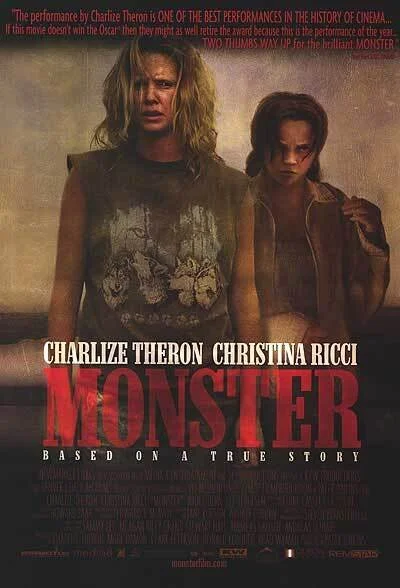
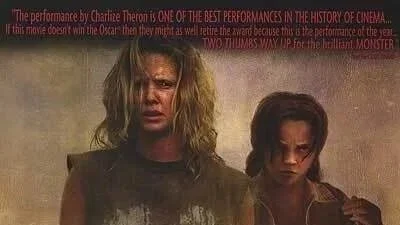
This episode examines a case that sits at the uneasy boundary between criminal adjudication, media power, and moral authority: the prosecution and execution of Aileen Wuornos, labeled the “first female serial killer. We look at two documentaries by Nick Broomfield—Aileen Wuornos: The Selling of a Serial Killer (1992) and Aileen: Life and Death of a Serial Killer (2003)—alongside the feature film Monster (2003), written and directed by Patty Jenkins and starring Charlize Theron in an Oscar-winning role. Broomfield’s documentaries are less about guilt or innocence than about process: who controls the narrative, how legal representation operates, and what happens when a defendant’s life becomes an object of transaction, between lawyers, media, and the public. The films also penetrate the issues around the application of the death penalty in the United States, and the problems that arise when the state seeks to executive individuals who are themselves victims and suffer from severe mental illness. Monster approaches the same facts through dramatization. It also raises important questions, including how far context should matter in judging criminal responsibility and construction of narratives around crimes.

28:29 Betrayal and self-defense
31:53 Nick Broomfield’s outsider view of the American legal system
34:56 Mental illness and the death penalty
37:39 Media coverage of sensational murders
39:22 Failures of the legal process
44:26 A critique of the death penalty
47:00 Exoticization in the films
0:00 Introduction
2:58 Capturing law on film
5:24 The two Nick Broomfield documentaries
11:16 Addressing Aileen Wuornos’s murders
18:47 The depiction of Tyria Moore (Aileen Wuornos’s girlfriend
20:55 Selling the Aileen Wuornos story
23:09 The theme of the “monster”
28:29 Themes of betrayal and self-defense
Timestamps
-
00;00;15;17 - 00;00;40;26
Jonathan Hafetz
Hi, I'm Jonathan Hafetz, and welcome to Law on Film, a podcast that explores law through film and film through law. Each episode looks at a different film to examine the various ways law operates across institutions, society and culture, not just inside, but also outside courtrooms. In this episode, we turn to a case that sits at the uneasy boundary between criminal adjudication, media power, and moral authority.
00;00;40;26 - 00;01;08;08
Jonathan Hafetz
The prosecution and execution of Eileen. Weren't us also labeled the first female serial killer? We look at two documentaries by Nick Broomfield. Eileen warns the selling of a serial killer from 1992, and Eileen. Life and death of a Serial Killer from 2003, alongside the feature film monster. Written and directed by Patty Jenkins and starring Charlize Theron in a widely acclaimed Oscar winning role.
00;01;08;10 - 00;01;34;01
Jonathan Hafetz
Broomfield documentaries are less about guilt or innocence and about process. Who controls the narrative, how legal representation operates, and what happens when a defendant's life becomes an object of transaction between lawyers, media and the public? The films also penetrate the issues around the application of the death penalty in the United States, and the problems that arise when the state seeks to execute individuals who are themselves victims and suffered from severe mental illness.
00;01;34;03 - 00;02;05;02
Jonathan Hafetz
Monster approaches the same facts through dramatization. It also raises important questions, including how far context should matter, and in judging criminal responsibility and the construction of narratives around crimes. To explore these films, I'm joined by Doctor Mara Malagodi. Doctor is a reader at Warwick Law School, the co-founder and co-director of the center for Constitutions in Context, and the coeditor in chief of Constitutional Studies, the journal of the International Association of Constitutional Law.
00;02;05;05 - 00;02;32;28
Jonathan Hafetz
Co-published with the Comparative Constitutions Project. Doctor Malagodi is the author of the monographs Constitutional Nationalism and Legal Exclusion in Nepal from 2013, with Oxford University Press and the Constitutional System of Nepal A Contextual Analysis, forthcoming in 2026 with heart. She's also edited a four volume series on Asian comparative constitutional law and a volume on gender, sexuality, and constitutionalism in Asia.
00;02;33;00 - 00;02;52;09
Jonathan Hafetz
Doctor Malagodi is a non-practicing barrister, a scholar of the Honorable Society of the Middle Temple, and an award winning documentary filmmaker who trained at CTV, the school founded by Gabriel Garcia marquez in Cuba. Doctor Malagodi, Mara, welcome to law. In film.
00;02;52;12 - 00;02;58;05
Mara Malagodi
Thank you so much. It's wonderful to be here with you discussing these films.
00;02;58;08 - 00;03;06;02
Jonathan Hafetz
So what got you interested in these films? You know. How do you see these as films about law?
00;03;06;05 - 00;03;35;00
Mara Malagodi
That's a great question. So I've always been a bit of a film buff since I was quite young, and I had an amazing opportunity towards the end of my postdoc at the London School of Economics. I was a British Academy postdoctoral fellow, so there was a little pot of money for extra training. And so I managed to convince the British Academy to send me to Cuba to train at the Escuela set up by Gabriel Garcia marquez.
00;03;35;03 - 00;04;03;16
Mara Malagodi
And it was a summer program in documentary film that was run by the University College of London, UCL Latin American Department. So it was a month of immersions in film school. And actually I found a lot of parallels between filmmaking, you know, from editing and the way in which we conduct our research as legal scholars. At the end of the day, you know, but also with lawyers, you know, we work with narratives, we work with words.
00;04;03;16 - 00;04;12;23
Mara Malagodi
And of course, filmmakers do that too, with the extra of images. And also law is currently photogenic, so it's attracted a lot of filmic attention.
00;04;12;25 - 00;04;25;08
Jonathan Hafetz
And there's some differences, I guess, between the sort of documentary and a feature film like this. I mean, how do you sort of see those two in terms of how narratives for construction constructed? I guess their overlaps, but differences as well.
00;04;25;10 - 00;04;46;24
Mara Malagodi
I guess, you know, I was I was looking at the package of the bolster DVD. I've actually just taught the class last week, really good discussions in the seminars with my students, and it was advertised monster based on a true story. So I thought, you know, also the way in which these particular films were marketed. Nick Broomfield second documentary was marketed.
00;04;46;24 - 00;05;12;27
Mara Malagodi
I think there was actually a package together with monster, so that the idea of art and truth, and what better film is there to explore? A very controversial story. So I thought, you know, as as the first class is quite a good case study for us to explore. And, and I think, you know, they're confessing come clean that I do prefer the documentaries to the feature film, but that's kind of where I started.
00;05;12;28 - 00;05;30;01
Jonathan Hafetz
And so just looking at the documentary. So there are two of them, right? We have the selling of a serial killer from 1992, and then Life and Death of a Serial Killer from 2003. You sort of talk about the focus of each of the two films because they, you know, they differ, I think, significantly in some respects.
00;05;30;02 - 00;05;53;10
Mara Malagodi
Yes, with the first film. And I think, you know, I have to say, have you been a teenager in the 90s? A shockingly revealing, possibly my age range. Nick Broomfield was very iconic, and I think, you know, I had seen already some of his films. And with respect to the first documentary, there's something that I quite like about, first of all, and I think the title gives it away the selling of a serial killer.
00;05;53;11 - 00;06;15;24
Mara Malagodi
So there is a transactional element with respect to the legal process that I thought was very intriguing. And so you have in a way, if you look at the first film, the story arc, in a way, if you look at it, take it at face value. It's almost simple. It's a filmmaker was trying to get an interview with an inmate on that row.
00;06;15;27 - 00;06;43;21
Mara Malagodi
But then, you know, if you look on a deeper level, it's actually quite a profound critique of the role of the media and the criminal justice system, of the role of corruption, of the investigators. And it's a history of exploitation. So I have an interest in gender. So this idea of the label of America's first female serial killer had something quite intriguing about it, because it doesn't seem to me to be accurate.
00;06;43;21 - 00;07;07;00
Mara Malagodi
And notwithstanding that received a lot of media attention. So it seemed quite fascinating. And in a way, the second documentary film starts with a court summons in which you have a filmmaker that has to take the witness stand, and some of the footage from the previous film becomes evidence in the appeal, in the latest appeal of Eileen Warners.
00;07;07;05 - 00;07;13;21
Mara Malagodi
So there was, in a way, something quite interesting in the mirroring of the two films I felt.
00;07;13;23 - 00;07;39;21
Jonathan Hafetz
And Nick Broomfield. He becomes a kind of alluded to an actor in the story, and the film is, you know, sort of the takes of the film itself as well as I get some of the outtakes from The Selling of the Serial Killer become evidence in the life of death of a serial killer when they're talking about, I think, largely about her ineffective assistance of counsel and also potentially the role of other people in the selling of her story.
00;07;39;24 - 00;08;07;21
Mara Malagodi
Absolutely. And that's the way in which the course that I've been teaching the law in film, course that I've been teaching focuses on, I look at representations of law, legal actors, legal institutions on film. But then I think a smaller part of the course looks at filmic interventions into the legal process. So in a way, these two documentaries kind of encapsulate both aspects of the discipline of law and film that you have.
00;08;07;22 - 00;08;35;10
Mara Malagodi
And there is, in a way, with Nick Broomfield of himself becoming a character that's part of his filming style. And I think, you know, for us being documentary film buffs in the 90s, we have very clearly that image of Nick Broomfield in a kind of goofy, really big headphones with the sound. Paul featuring very much one of the main characters in his own film, a very different approach from the majority of documentary filmmakers.
00;08;35;10 - 00;08;42;20
Mara Malagodi
So I think there is that kind of element of of pop culture that works quite well with these films.
00;08;42;23 - 00;09;00;17
Jonathan Hafetz
Yeah, no, it's interesting. You know, I guess there's different schools in documentary filmmaking where you don't see the hand of the filmmaker. But Nick Bloomfield is a is a character. I mean, he also becomes beyond everything else. He developed some kind of relationship with Eileen, which really, really plays out, especially in the second film.
00;09;00;19 - 00;09;26;22
Mara Malagodi
Absolutely. And I think that's also part of the controversy of the films. And if you read some of the film studies literature about these films, especially from family film scholars, there is also partly a critique that while the first film is really a critique of the exploitation of this woman, a woman from an underprivileged background that is being, in a way, scapegoated also because of her sexual orientation or her professional engagement and so on.
00;09;26;22 - 00;09;54;09
Mara Malagodi
But then you kind of wonder to what extent is also complicit in that process through an exotic of this woman. And to me, that's quite interesting as well in that respect. It's also part of his filmic style. I think, you know, there is not a single link Broomfield film I can think about when you don't have one of the main characters holding out their hands in front of the camera and say, stop filming quite forcefully and being quite annoyed.
00;09;54;14 - 00;10;22;05
Mara Malagodi
So to me, that's it's a element also of visual style. And in more substantive terms, in a case like this, there is a problematic element. We had lots of discussions over the years with my students about the second film, which is ostensibly a critique of the death penalty, and to do that in filmic terms is really seeking to emphasize the mental illness of Eileen Warners.
00;10;22;10 - 00;10;58;00
Mara Malagodi
And he does that with particular kind of techniques. But at the same time, the kind of dramatic tension within the film revolves around him questioning her repeatedly whether it was self-defense, especially in the first murder. And there is a particular scene in which he visits her in prison. It's few days before her execution and pretends that the camera's off and get her to say camera off, that he was self-defense with respect to the first murder.
00;10;58;01 - 00;11;16;21
Mara Malagodi
So there is a question that that why, you know, you understand that as a documentary filmmaker, you want to push the envelope, but there is something that feels somehow ghoulish in observing that spectacle and makes you feel, I think, as a member of the audience, somehow complicit in that consumption.
00;11;16;23 - 00;11;42;15
Jonathan Hafetz
That struck me. And just for background. So you mean. Right? So she is this woman with a history of from her childhood violence, sexual abuse. She'd been a prostitute in Central Florida and was accused and convicted of murdering seven men between 1989 and 1990, basically sort of along the Central Highway in central Florida. Right. And, you know, there's no question there's no question of whether she did it or not, right?
00;11;42;16 - 00;12;01;00
Jonathan Hafetz
I mean, she killed him. The only question is, as you said, to what extent what were some potentially all of the murders, self-defense. But the one that seemed to me the one where that self-defense argument was strongest was the first one. Right. And they graphically depicted in monster in the drama. And then part of the story is why does she go on and continue to kill?
00;12;01;01 - 00;12;06;03
Jonathan Hafetz
But yeah, just talk a little bit about that and that sort of the way the films approach that.
00;12;06;06 - 00;12;47;19
Mara Malagodi
Yeah. So I think, you know that the focus on the first try is really interesting because the first documentary film by Nick Broomfield really starts by presenting us with some of the evidence in the first trial. So what we see first is the mug shots of Eileen Werner's. So I think it's also significant that the first image that you see of the protagonist, whose film type was whose name the film title bears, that you have that aspect, and then you see the mug shot, and then you see the police confession, and then you see her on the witness stand being examined in the examination in chief by her lawyer in the first trial, in which
00;12;47;21 - 00;13;10;14
Mara Malagodi
effectively she describes in very graphic and moving and disturbing details the alleged sexual assault at the hand of the first victim. And I think, you know, at that point, it's the first time that you don't see her in a jumpsuit, in a prison uniform that really humanizes the character. And it's a very compelling piece of footage, incredibly moving and disturbing.
00;13;10;18 - 00;13;37;12
Mara Malagodi
And then you hear shortly after, a voiceover with the director informing us the effectively her first lawyer failed to introduce evidence with respect to the violent sexual history. And actually, I believe, the conviction for violent sexual assault on the part of the first victim. So you have a sense already at that point and the first trial only concerned first victim.
00;13;37;12 - 00;13;57;12
Mara Malagodi
So you have a mistake that seems really quite glaring, where the entire trial revolves around a question of self-defense. And that was the case. So that scene, I think, does a lot of heavy lifting in the first film, and the examination in chief is also replayed in the second.
00;13;57;14 - 00;14;13;17
Jonathan Hafetz
The film also explores, especially the first film, some of the other people around the criminal process. Right. I don't want to talk about the defense lawyer Steve Glazier and his role. I mean, because there's, you know, I think a important focus on him.
00;14;13;19 - 00;14;38;17
Mara Malagodi
Absolutely. And I think what I was discussing with my student, the representation of legal actors. And of course, we always thought with lawyers in law films, it's quite interesting. And the legal aid lawyer does not appear very much on camera, but one of the main character becomes the lawyer in the second trial for the next three victims. And the first image is very striking that you don't see his face.
00;14;38;17 - 00;15;00;05
Mara Malagodi
You actually see this kind of monstrous doll that he has built and that he keeps on the party of his house. And that's the first image with his voiceover. And then you hear about his background and you're told that it doesn't really operate from a law firm, but it kind of works as a lawyer from his own house.
00;15;00;08 - 00;15;25;12
Mara Malagodi
And it's not a sort of scenario in which it's an unusual lawyer but proves to be brilliant. It's not a My Cousin Vinny sort of. So for a trial, it's actually what you see is what you get, so to speak, that the performance of the lawyer is a struggle, some as the image. And of course, the filmmaker plays on the idea.
00;15;25;12 - 00;15;48;07
Mara Malagodi
And I always ask my students, right, look along firms. If you look at staff profiles, how are lawyers photographed? And usually they're photographs that we law reports in the background. None of us uses them anymore. Of course, you know, we're all Lexis and Westlaw, but that's still the visual symbol of professional authority. And so so, you know, we all have those tropes.
00;15;48;09 - 00;16;17;15
Mara Malagodi
And I think the filmmakers uses those to kind of present quite the stark image. And then of course, in the second film, what becomes the subject of Nick Broomfield, the filmmaker's testimony in court is the so-called seven joint. Right. So it's the issue that the lawyer in the second trial, Steve Glazer, allegedly gave legal advice to a client and therefore to Eileen Warner's while intoxicated.
00;16;17;16 - 00;16;23;24
Mara Malagodi
So there is this this kind of common thread between the two films that we have.
00;16;23;26 - 00;16;47;14
Jonathan Hafetz
Yeah. It's fascinating. I mean, you really do and encourage people listening to watch it. You have to see the footage of Steve Glazer to kind of get a full picture of who he is. I mean, he's this sort of like ex hippie sort of playing these classic rock songs on his guitar, smoking a joint. How many joints he smoked on the way to visit his client in prison to get the full picture of.
00;16;47;15 - 00;17;10;27
Jonathan Hafetz
I kind of almost have to see it, but it's it's startling. And the key thing he does in connection with this woman, Arlene Prall, or has a horse farm and adopts Eileen Moreno's as her daughter. I think for mercenary motives and to try to watch them try to take advantage, I think Arlene Powell is really the one behind it, to try to take advantage of the nose and try to sell her her story.
00;17;10;27 - 00;17;33;00
Jonathan Hafetz
But what Lazar does, though, is he gets at the second, you know, at the next trial for three murders, basically puts up no defense. And so I pleaded no contest to the killing. So there was some, I guess, legal strategy behind that, potentially to try to throw herself on the mercy of the court. But it's a kind of it's really a stark depiction of how the death penalty operates.
00;17;33;02 - 00;17;59;12
Mara Malagodi
Absolutely. I think it's also quite interesting that if you look at the choice of the filmmaker to make this film really begins with that very unusual legal strategy. One wants to call it that, to advise a client who's already been handed down a sentence, that sentence in the previous trial to plead no contest in the second trial when without a plea bargain, the death sentence is still on disabled.
00;17;59;14 - 00;18;31;21
Mara Malagodi
And that is, of course, the outcome of the second trial that for the next three victims, Aileen Wuornos receives three additional death sentences. And we're presented with the footage from the sentencing hearing in the in the second trial in which she's completely unprepared. That does not look like a defendant who has been properly advised by their lawyer that that is an outcome, a potential outcome, in that case, by watching the proceedings, a very likely outcome.
00;18;31;23 - 00;18;47;21
Mara Malagodi
That would be that no contest plea would result into three additional death sentences. She curses the judge she causes. She curses everyone, and she's visibly very upset by the sentence and completely unprepared.
00;18;47;24 - 00;19;07;08
Jonathan Hafetz
I want to talk a little bit about the Selby character from the well. It's the Selby character that's renamed in monster. Like I talked about her depiction in monster, but the real woman, Teresa more, right? She's another person. She's the one who I was in the relationship with and clearly had some knowledge about her commission of the murders, but she ends up cooperating.
00;19;07;08 - 00;19;16;00
Jonathan Hafetz
I think she basically disappeared. I mean, it's very clear Nick Broomfield didn't have any access to her. Yeah, I just I wonder if you had thoughts about kind of her role around this.
00;19;16;02 - 00;19;39;01
Mara Malagodi
Yes, that's really interesting. And I think, you know, the story, the love story between and the betrayal. I think, you know, it's it's kind of Shakespearean to a certain extent. What we see in that relationship that you have, Eileen Warners is a tragic character. Is this woman that effectively confesses to the murder, it looks like from the film, due to pressure from.
00;19;39;04 - 00;20;29;24
Mara Malagodi
And what we see is one clip from from the first trial in which Eileen Warners is sitting in the courtroom while the tape, the police tape of her conversation with her partner with a former partner, in which Teresa mo convinces her effectively to confess to the police to the murders and put psychological pressure on her. What we see then, in some of the flashbacks or interviews with one of the former police investigators, was the account that apparently some of the policemen that were eventually dismissed or transferred, or had engaged in negotiations over movie deals had apparently secured.
00;20;29;26 - 00;20;55;04
Mara Malagodi
So it's not sad, but it's kind of hinted that she was treated not as a suspect, but as a cooperating witness. And a lot of the allegations against not properly investigated, because in a way, there was a link between the profit side of the media deals, the film, the movie deals and the investigation and the criminal trial.
00;20;55;06 - 00;21;19;16
Jonathan Hafetz
Yeah, it's as you said, the first film really seems it's really kind of in a sense about sort of the exploitation to key theme, but from the police, prosecutors, maybe, you know, potentially Terry more herself, who may have gotten some money from the deals, sort of trying to sell, get money from the story. And then, you know, Arlene Prall, the one who adopt the woman who adopted her, and Steve Glazier, the lawyer trying to get money to, you know, to sell the story.
00;21;19;16 - 00;21;25;25
Jonathan Hafetz
So people trying to kind of profit off this woman and off these crimes, which, you know, horrible crimes as well.
00;21;25;28 - 00;21;51;16
Mara Malagodi
But I think also, I think when we're looking at the question of profit, it sheds the light on the identity of Eileen Warners. And I guess one of the questions that I ended up discussing quite a length with my students was, well, why is it that this story so appealing to Hollywood executives, what is it? Right. And why is it a point that the filmmaker Nick Broomfield makes very clearly in the documentaries?
00;21;51;16 - 00;22;41;18
Mara Malagodi
She's never offered either grace or a plea bargain or nothing, and she's being compared to other notorious serial killers like Ted Bundy. And there's something about the media portrayal of Eileen Warner. And even listening to the clips O murders with a feminine touch, angels of Death. So there's something very sensationalized about these murders, and I guess that's also the appeal coming on to monster that the story continue to have, even after the execution of Eileen Warners, that we're looking at, not just the poor by the destitute defendant, a woman that grew up in really poor circumstances, a victim of family and sexual abuse since a very young age, a prostitute and a lesbian.
00;22;41;19 - 00;23;09;20
Mara Malagodi
Right. So you have almost a cumulative effect with respect to this character that becomes appealing. And there is something to the story in terms of profitability. So I think there is that angle that is quite interesting to explore. And I think that's where the film monster kind of picks up in a way to humanize Eileen Warners. But I don't find it in a way less ghoulish than the other films, so to speak.
00;23;09;23 - 00;23;24;23
Jonathan Hafetz
Well, picking up on the film and even the title of the film, I'll start with the title monster. Right. And there's an interesting analogy. Or she talks about the figure of the monster Eileen does, or Charlize Theron, who plays her.
00;23;24;26 - 00;23;51;25
Movie Plays
Life was funny. It's hard, but it's also strange how things can be so different than you think. I remember I was just a kid in the Forge Club set up this beautiful, gigantic red and yellow Ferris wheel that lit up the night sky. They called it the Monster. As a kid, I thought it was about the coolest thing I ever seen, and I couldn't wait to ride it.
00;23;51;27 - 00;23;59;22
Movie Plays
Sure enough, when I finally got my chance, I got so scared and nauseous I threw up all over myself before it even made one full turn.
00;23;59;25 - 00;24;06;24
Jonathan Hafetz
What's the the idea of the monster in the film? And there's this kind of comparison to this Ferris wheel?
00;24;06;27 - 00;24;35;24
Mara Malagodi
Yes. I guess, you know, I would go back to gender here with respect to that. The expectations in this case, especially with serial killers, is that usually women are not active agents, their victims. So the story of Eileen Warners, in a way reverses that familiar plot in which women are victims, have no agency. And here you have a lesbian prostitute who is killed seven over clients within a very short span of time.
00;24;35;24 - 00;25;08;24
Mara Malagodi
And the media portrayals really give a sense of the particular kind of hatred, to quote McBroom fields, that this woman has attracted over the years. And it comes up even in the political wrangling that she describes over the fact that different counties, different states want to try her and execute her, that there is something with respect of political scoring, with respect to to the legal dealings with Eileen Warners and the idea of the monster.
00;25;08;25 - 00;25;47;22
Mara Malagodi
I guess there is something that is not just about the gender dimension. I think there is also a very clear class dimension there, and it's a point that is being raised in a lot of the feminist scholarship around the films and the story itself that I think we have with respect to the physical transformation of one of the most glamorous Hollywood actresses, Charlize Theron, so, so much I remember when the film came out, was being made in the in the press about her physical transformation, her prosthetic teeth, this idea of this glamazon blond actress being transformed into the monster.
00;25;47;24 - 00;26;22;01
Mara Malagodi
And it's kind of a reversal of some of the fairy tales, almost. Right, that you go from the monster that becomes the Prince. You actually have the inverted process from this beautiful, glamorous woman turning into the monster and kind of wearing those clothes and successfully convincing audiences of that performance, which was a very good performance. But, you know, I think it's actually the context in which that performance took place that added a lot to the success of the film.
00;26;22;04 - 00;26;28;14
Jonathan Hafetz
Yeah, I think she watched also the Broomfield documentaries in preparing for the for the role.
00;26;28;17 - 00;27;06;14
Mara Malagodi
She did. And I think, you know, it's really interesting to see the synergies in this case between documentary films. You know, with a very clear claim to truth and historical facts with the feature film that through artistic license, you know, it's interesting to see where the artistic license was taken in monster. So on the one hand, there is the main character, the protagonist, played by Charlize Theron, playing Eileen Werner's, that almost sometimes when you watch the films blurs the reality between are we watching the feature film or we almost watching real footage?
00;27;06;15 - 00;27;38;26
Mara Malagodi
And I think there was something like that with the OJ Simpson Netflix series that was released the same year of the Oscar winning documentary film O.J. and American Story. So I found quite a lot of parallels from the opposite kind of end of the spectrum. So you have that kind of hyperrealism monster with respect to the performance by Charlize Theron playing Eileen Warners, and then you have a complete artistic license with respect to the casting of Christina Ricci as Selby.
00;27;38;26 - 00;28;08;27
Mara Malagodi
And it's not even the real name, right? In that case of Eileen Werner's former partner. And clearly what you see is a very different types of in terms of physical appearance. The choice of Christina Ricci diverges quite significantly. If you look at the clips of Teresa Moore taking the stands in Eileen Werner's first trial, which I thought was fascinating, and I guess, you know, there was a commercial products that have to sell.
00;28;08;27 - 00;28;21;07
Mara Malagodi
But I think, you know, that's part of the exorcist of the same sex relationship between the main character and Habana, that you have two casting choices.
00;28;21;09 - 00;28;46;01
Jonathan Hafetz
It's striking to see kind of the difference between Christina Ricci and then what more looked like. I mean, to me, two of the key themes in the movie monster are one is with respect to the relationship, the betrayal. Right. I really think they dramatize the betrayal. And then the second is the depiction or trying to capture what motives were right.
00;28;46;02 - 00;29;06;25
Jonathan Hafetz
You know, what happened. The way the film comes down, it seems, is she clearly, you know, the first murder was clear self-defense, where they graphically depict the sexual abuse, the physical abuse, which was maybe going to be killed by this person that she picked up, shoots him in self-defense. And then this transformation right into the monster, not monster.
00;29;06;25 - 00;29;13;20
Jonathan Hafetz
And why? Why she transforms her. You know what happens. That seems like the central question in the movie.
00;29;13;23 - 00;29;40;13
Mara Malagodi
Losing, which is a question we've never really seen us properly in the trials. In a way, the film somehow investigates areas that none of the criminal proceedings were really able to illuminate at all. And I guess in a way there is a degree of sympathy for the monster. But I remember reading an interview with the filmmaker, and ostensibly, monster is not a film against the death penalty.
00;29;40;16 - 00;30;20;22
Mara Malagodi
So that was stated very, very clearly, if I recall correctly, by by Patty Jenkins, that it was an interesting story, that, of course, there was reason that there was an interesting story to tell about Eileen, but it was in any way not a critique of the outcome of the case. And in that sense, I find monster very, very different from Nick Broomfield second documentary film, which is very, very explicitly a critique of the death penalty in general, but also with respect to those specific circumstances, looking at not just the question of self-defense with respect to the first victim.
00;30;20;24 - 00;30;50;00
Mara Malagodi
Also, with respect to mental illness, which I found actually much, much deeper than the feature film. And if you think about the fact that a feature film has a lot of artistic license, one could have expected perhaps a bit more. And I think the film hinges so much on Charlize Theron's performance and physical transformation for the film that actually, the more I rewatched it, even for teaching, the more shallow I found it.
00;30;50;03 - 00;31;07;04
Jonathan Hafetz
I mean, I guess it's just sort of ambivalent on the death penalty. They don't actually. You only learn that she was executed. I think, you know, after right, when they show the graphic titles and they tell you what happened and the film does because you do see these the final victims where, you know, they clearly were not self-defense.
00;31;07;06 - 00;31;23;23
Jonathan Hafetz
Right. And then you have the, you know, the sympathy. One of the victims wife was wheelchair bound, it looked like. And another one was just not even a John, which is picking her up to try to help her. And she shoots him because, you know, he could identify her. So I guess the sympathies start to, to to shift in the film.
00;31;23;25 - 00;31;46;03
Mara Malagodi
Yes. And I think, you know, while Nick Broomfield seeks to explore much more of the backstory, but it's not so much about the relationship in the second film between Eileen Werner's and her former partner Teresa More. But he seeks to explore her childhood. And I think, you know, the family history, the history of child abuse, of neglect, of poverty.
00;31;46;03 - 00;32;06;18
Mara Malagodi
And I think that is much deeper work in which you get to understand that side. There is also something, I think, though, with respect to Nick Broomfield film and and I guess, you know, it's interesting for me to be on a podcast with you because I've been teaching this class and discussing this, you know, Kong and mostly in the UK.
00;32;06;18 - 00;32;30;24
Mara Malagodi
So I think for us in the UK, listening to Nick Broomfield, who was a British filmmaker. So even through the access you have to his accent, you have a sense that you're being almost taken on on a tour as outsiders of the American legal system. So there is that kind of device that you experience of being on a source of guided tour.
00;32;30;27 - 00;32;50;06
Mara Malagodi
And with respect to the penalty, I think, you know, there are some points there, but I think one of the other messages that comes across that we end up discussing, going back to the money and the financial transaction, thinking about questions of due process, or in the UK context, rule of law. It's also the question of access to justice.
00;32;50;09 - 00;33;16;15
Mara Malagodi
And of course, you know, you have you have a right to legal representation, but not particularly right to a competent legal representation per say. But you do wonder, you know, equality before the law for the poor defendant, whether, you know, you come from marginalized background or you have identity markets or protected categories that inform your identity, what can you expect from legal proceedings in those circumstances?
00;33;16;15 - 00;33;35;00
Mara Malagodi
So I guess, you know, there is that deeper lesson with respect to that. And we had lots of discussions once legal aid cuts were introduced in England and Wales. Looking at that scenario, is that what happens when you know the state doesn't support a robust legal defense by funding it?
00;33;35;03 - 00;33;56;14
Jonathan Hafetz
You get that sense. Nick Broomfield, right outside of from UK, coming in and looking at this US criminal justice system, especially the death penalty operates kind of the political legal culture around Florida, Central Florida. It does kind of give the sort of has that outsider perspective on this sort of very troubling feature of American justice completely.
00;33;56;14 - 00;34;20;21
Mara Malagodi
But also he exotic sizes it and I guess, you know, there is been a lot of the films, especially those on on subjects who come from marginalized backgrounds. It seems to me that someone Nick Broomfield film, especially when you're when you're looking at these kind of circumstances and context, then you really kind of exotic sizes, the differences and kind of plays up his role as an outsider.
00;34;20;21 - 00;34;42;12
Mara Malagodi
He's actually yes, he's a British filmmaker, but he's lived in California, I think, for over 30, 40 years. So, you know, it's very, very well versed, I think, with the American context and was made lots of film and some of them even with celebrities. But I guess that's part of the narrative artifice that he deploys more or less effectively.
00;34;42;12 - 00;34;54;23
Mara Malagodi
But I don't know. And I was quite curious, you know, to be in conversation with you because, of course, you know, by a lot of my impressions are those of an outsider, whether you picked up on that as well.
00;34;54;25 - 00;35;12;04
Jonathan Hafetz
Yeah, I did a little bit. I mean, I mean, to me, one of the things that's most remarkable about what he does in the second film, and you mentioned this before, is the clear mental illness of Eileen Warners. I mean, you know, it's really almost painful to watch her, how she's become delusional and lost her grip on reality.
00;35;12;05 - 00;35;32;02
Jonathan Hafetz
I mean, the other thing that was interesting, the rational choice, but she sort of chooses to pull the plug on her appeal at some point, kind of wants to die, right? She thinks she's recognized she's very little chance of ever getting off. There's it's not a DNA innocence case. And so she just basically says, nope, I did it all in cold blood.
00;35;32;03 - 00;35;43;27
Jonathan Hafetz
Right? None of it was self-defense. So I spoke the mental illness and kind of the kind of, sort of the crushing pressure of being on death row for so long. I found that sort of one of the strongest parts of the film, the second film.
00;35;43;29 - 00;36;18;22
Mara Malagodi
I agree, and I think also I picked up on something and I think which is, on the one hand, the kind of camera framing that McBroom film uses in the second film. And you have really unusual rather than the sort of BBC place your subject when you're interviewing at two thirds of the screen, you have a lot of zooming, zooming in onto Eileen Warner's face, kind of using the deforming properties of the camera lens to kind of exasperate, in visual terms, the element of mental illness.
00;36;18;23 - 00;36;49;03
Mara Malagodi
And of course, you have the dialog of the interviews and so on, the losing grip on reality, as you were saying. But visually that's quite striking. And in a way that's disturbing because and that was the point that came up, I think, in the first film when when Nick Broomfield manages pays 10,000 pounds to interview Steve Glazer, the lawyer in the second trial, and I lead the adoptive mother, and he's shown this picture of Eileen and Steve in court.
00;36;49;03 - 00;37;20;02
Mara Malagodi
And Steve makes this point. He's like, well, you know, it's one of the few flattering pictures that you have of her that she looks happy. And actually, if you look at a lot of the visual tropes in the second film, kind of piggyback on the visual tropes used by the media at the time of the investigation, at the time of the trials in which, you know, the idea of the monster has very clear visual connotations that a lot of the press reports use those pictures of a really unflattering pictures.
00;37;20;02 - 00;37;39;03
Mara Malagodi
And it's the same that you you had on the original DVD, I think, as well, you know, this deformed face, the handcuffs kind of exasperating those elements. And then you have, you know, the dialogs and I think, you know, adding, adding to that level of, of critique.
00;37;39;06 - 00;38;02;13
Jonathan Hafetz
The sort of imagery in the context it really is of a period, the footage, you know, it's from, well, the murders were 89 to 90. So trials are, you know, after that early 90s, you know, it's around for the OJ trial. It really does the court of sort of media circus. I don't think that was the focus of the film, but kind of going back and looking at the documentaries, I really think it does kind of also capture the media coverage of a sensational killing completely.
00;38;02;13 - 00;38;40;17
Mara Malagodi
And I guess you have the media coverage, but it's also the impact of the media coverage on the trial. And I guess for us observing this from the UK, you're not allowed to record in a criminal courtroom. I think Scotland's difference by England and Wales as a jurisdiction. So we're really not used to it. The idea of having that kind of media presence in the courtroom, and it's not about the fact that you can go as a member of the public and attend the most criminal trials, should you wish, unless the judge has place restrictions in order, whether that be a terrorist case or children are involved in vulnerable defendants.
00;38;40;17 - 00;39;07;07
Mara Malagodi
But in that case, it seems really integral. So the law, in a way, we talked about at the very beginning of our chat, the law being photogenic, but then the legal process becomes spectacle rather than, you know, you go from photogenic to circus like. And there is that transition where you think, isn't justice somehow loss lost in this transformation of the legal process into a spectacle?
00;39;07;07 - 00;39;12;23
Mara Malagodi
And whether, you know, it's no longer about transparency, but it's about consumption.
00;39;12;25 - 00;39;43;10
Jonathan Hafetz
Yeah, absolutely. And, you know, there's a way the law seems limited and flawed. I mean, and the documentaries and to some extent in the, in the feature film. Right. I mean, you talk about the commodification, right, the way the death penalty operates and the Broomfield documentaries, and then to some extent, I mean, I don't know if that's the focus of the film and monster, but just the sort of inability of the legal system to capture sort of what happened and then sort of to understand, you know, what motivated or led, I think, want us to commit these crimes.
00;39;43;10 - 00;40;03;14
Jonathan Hafetz
You have to sort of binary of self-defense versus cold blooded murder. And after the first one at least, right. It seems like it's, you know, she she claims self-defense, but or at the beginning, she claims self-defense, but it doesn't really fit within the legal category of self-defense. It's a much broader concept of self-defense.
00;40;03;16 - 00;40;36;13
Mara Malagodi
Absolutely. And you do wonder, right? You speculate. Had a lawyer been successful in introducing evidence, convincing evidence of self-defense, and had the charge being dropped to a man's loaded charge, or had she been acquitted, would have that have had a knock on effect on the later trials? Could they have argued that it was better wife syndrome, sort of better wife syndrome, PTSD, that in some other ways it would have resulted in Eileen Warner maybe still being convicted?
00;40;36;13 - 00;40;40;16
Mara Malagodi
Most likely, but not receiving death sentences.
00;40;40;19 - 00;40;56;29
Jonathan Hafetz
It seemed to sort of in just a misapplication, a law that she was not acquitted, at least in the first trial or the self-defense wasn't recognized. And I think that does set it up. I mean, I think the other the self-defense as a legal matter, the self-defense claim would have been much harder in the other cases. But I think you're right.
00;40;57;00 - 00;41;14;14
Jonathan Hafetz
I do think maybe there would have been a plea or she'd have gotten a life sentence or something. Something else. But but she also. Right. It's like she sort of gave up, right? I think the films documentary, I think, captures that, that after she was convicted in the first trial, she really just kind of gave up on the on the system.
00;41;14;16 - 00;41;51;04
Mara Malagodi
Yes. And I think she repeats that in different media interviews, in her outbursts at the time of the sentencing hearing that you're sending to death a woman that was raped. And there is this idea profound, I think, sadness and desperation surrounding the fact that such a violent act was not recognized at all. Right, that there was a mistake from her own lawyer in the first try of not using the relevant evidence, potentially a mistake from the trial judge, of letting evidence concerning the later murder before the jury.
00;41;51;04 - 00;42;25;03
Mara Malagodi
So a number of appeal grounds that you would imagine that a composite lawyer could have done quite a bit with those in the circumstances. So the sense is, is really the desperation also of of witnessing a legal process that fails a poor defendant so spectacularly. And I think, you know, in a way, the film, all of the films end up kind of focusing on other aspects linked to her identity rather than the spectacular failures, and we respect to that.
00;42;25;03 - 00;42;50;25
Mara Malagodi
So I've also been wondering, watching these films, whether the media portrayal of Eileen under a particular light as the monster, to what extent have they shaped the perception of the jury wood, the legal process, being able even to find an unbiased jury? I think that was one of the issues with O.J., the difficulty of containing the jury away from the media circus.
00;42;51;02 - 00;43;03;07
Mara Malagodi
So that doesn't come up quite as much in Yellin Warners. But it seems that with that kind of coverage would have be very difficult to find a more impartial adjudicator.
00;43;03;10 - 00;43;24;08
Jonathan Hafetz
Yeah, for sure. And I think, you know, you're right. I mean, it's there in the film. It's there in the films, the sort of failures of the the process. You mentioned the failure of the first lawyer to uncover the evidence of the victim's sexual violent crimes. I think the judge allowing in evidence that probably shouldn't have been allowed in, it was also issued with the prosecutor not disclosing information.
00;43;24;08 - 00;43;33;14
Jonathan Hafetz
I don't think it's his focus. But, you know, if you kind of peel a little bit deeper, there is a good amount there about the procedural failures in this case completely.
00;43;33;14 - 00;44;02;16
Mara Malagodi
And I think the documentary films, when you're thinking about due process, rule of law, constitutional protections. So at the end of the day, I'm not a criminal lawyer, I am a constitutional lawyer. So they're kind of reflections on on the big C of the constitutional dimension. And you really wonder, you know, to what extent the constitutional promise of equality before the law is really then realized.
00;44;02;17 - 00;44;25;08
Mara Malagodi
And you really look at that dissonance between the law in books and the law in action that is, is particularly disturbing. And in a way, you understand that it gives the dramatic engine to the film. But I think for us as viewers, especially for us with the interest and professional takes, it is a very bitter message that you take, you come away with.
00;44;25;10 - 00;44;40;23
Jonathan Hafetz
Yeah, that and the death penalty, which I think is at the end of kind of final words and the commentary of Nick Broomfield second documentary, when he says something to the effect of, you know, you're clearly executing someone who's really mentally ill. And that's very troubling. I mean, it's something to that effect.
00;44;40;26 - 00;45;07;27
Mara Malagodi
Yes, absolutely. And I think, you know, the second film, for all its flaws, I don't think it's a perfect film, but it still works as a very powerful critique of the death penalty, especially under those conditions. And I think, you know, it shows in very clear terms what the issues are, not just with that particular case and with the kind of conditions that inmates are going through.
00;45;08;00 - 00;45;26;07
Jonathan Hafetz
And, you know, a lot of the film, she's already been sentenced, right. So you have all these years while she's on death row, I mean, a little bit about the, well, the about the appeals, the issues and the appeals, but also about kind of what it's like to be on death row. And then about, as you said, Nick Broomfield accompanies former people from her neighborhood, go back and revisit her past.
00;45;26;07 - 00;45;31;27
Jonathan Hafetz
It's sort of like the aftermath of the trial, if you will, and kind of what that's like. So that's another part of the movie.
00;45;32;00 - 00;46;00;14
Mara Malagodi
Absolutely. And I think, you know, going back to what we were discussing at the beginning, the filmic representations of legal actors and going back to lawyers, it's only in the second film that you are confronted as a viewer with a competent attorney. Finally, you have a character who's what you would expect, a lawyer who is highly skilled in in that sentence, in handling that sentence appeals and that penalty cases.
00;46;00;14 - 00;46;24;25
Mara Malagodi
So you have the kind of heroic lawyer that appears, but there is also a very bitter messaging that you have to get to that point, that it's your last possible appeal, that it is only at that point with a case that has attracted that kind of media attention, that the poor defendant has access to that kind of legal representation.
00;46;24;25 - 00;46;49;03
Mara Malagodi
And I think, you know, there is a very bitter irony, for lack of a better expression, of kind of noticing that patterns with respect to the legal representation that she's had and that, you know, to me, it was also and it was also with my students when we were discussing kind of contrasting the approach of the lawyers, the way in which they're filmed, that there was that kind of sad, sad realization there as well.
00;46;49;05 - 00;47;00;09
Jonathan Hafetz
Yeah, I'm trying to undo the work of the prior lawyers. Any other sort of things that struck you or stuck out to you about the films and whether documentary or the feature film?
00;47;00;12 - 00;47;39;23
Mara Malagodi
I think, you know, with the documentaries, there was the element of exoticism. I think, you know, and I was reading a piece by a film studies scholars talking about the almost racialization of the racialized transformation of Charlize Theron from glamorous actress into a working class prostitute who was also a lesbian. Right. So the idea that it has a very specific set of visual elements there, and I thought that that was quite interesting per se, kind of linking those different elements there.
00;47;39;23 - 00;48;05;05
Mara Malagodi
And I felt, you know, that the portrayal had something over the top with respect to, to the US, that there was the element of exercise, but it's, you know, as a as that that's just impressionistic rather than, I guess, accurate. And I was quite curious about that. And actually, the first time that I have a discussion with a colleague from the US on this, so I guess that element.
00;48;05;07 - 00;48;24;05
Jonathan Hafetz
Yeah. But I mean, you know, I'm from New York, so there's that level of like exoticism within America kind of looking down and going and looking at what happens in Florida. And, and you got that with the documentaries especially tried to kind of look into the sort of Florida, Central Florida subculture. Right? There's the bar that she went to.
00;48;24;08 - 00;48;25;15
Speaker 4
The human bomb.
00;48;25;17 - 00;48;43;23
Jonathan Hafetz
The human bomb seems to like kind of try to blow himself up. Right. Who knew her? Like, there's a little bit of that. There's a little bit of exotic even within the United States, I think from kind of like from the Hollywood, you know, coastal LA coming down and looking at this sort of subculture that it's kind of, you know, peeling the layers of the onion off.
00;48;43;25 - 00;48;51;10
Mara Malagodi
Yes. That kind of reminds me of Sandra Bullock character in The Time to Kill. Right? Perhaps then that's an apt parallel.
00;48;51;13 - 00;48;52;02
Jonathan Hafetz
Exactly.
00;48;52;03 - 00;48;59;05
Mara Malagodi
Okay. Okay. I'm just I'm glad it's not just for the outsiders that, you know, there is a relevant the resonates.
00;48;59;08 - 00;49;11;21
Jonathan Hafetz
Yeah, I know definitely. I mean, it's not aspects of the legal system, but there's something about it that just seems, you know, depiction of that sort of time and place in Florida that's quite different, I think, from some other I see cultures.
00;49;11;23 - 00;49;16;07
Mara Malagodi
Okay. I'm glad that picked up on something that resonates.
00;49;16;09 - 00;49;24;11
Jonathan Hafetz
So, Mara, it's been so great to have you on the podcast to talk about these films and the issues they raised. So thanks so much for coming on.
00;49;24;13 - 00;49;27;01
Mara Malagodi
Thank you so much. And it's been great fun.
Further Reading
Cavanaugh, L. Sheila, “‘White Trash:’ Abject Skin in Film Reviews of ‘Monster’,” in Skin, Culture, and Pscyhoanalysis (Cavanaugh, L. Sheila et al. eds.) (2013)
Dargis, Manohla, “Life and Death Issues,” Los Angeles Times (Jan. 9. 2004)
Diamond, Suzanna, “‘A Flower in a Hard Rain’: Melodramatic Storytelling by, and About, Aileen Wuornos,” Anthurium, vol. 15(2) (2019)
Horeck, Tanya, “From Documentary to Drama: Capturing Aileen Wuornos,” Screen, vol. 48(2), pp. 141-59 (Summer 2007)
Pearson, Kyra, “The Trouble with Aileen Wuornos, Feminism’s ‘First Serial Killer,’” Communication and Critical/Cultural Studies, vol. 4(3), pp. 256-75 (Sept. 2007)
Smith, Abbe, “The ‘Monster’ in All of Us: When Victims Become Perpetrators,” 38 Suffolk U. L. Rev. 367 (2005)


Mara Malagodi is a Reader at Warwick Law School, the co-founder and co-director of the Centre for Constitutions in Context, and the co-Editor-in-Chief of Constitutional Studies, the journal of the International Association of Constitutional Law (IACL) co-published with the Comparative Constitutions Project (CCP). Dr. Malagodi is the author of the monographs Constitutional Nationalism and Legal Exclusion in Nepal (2013) with OUP and The Constitutional System of Nepal – A Contextual Analysis (2026) with Hart. She has also co-edited a four-volume series on Asian Comparative Constitutional Law (2023-26) and a volume on Gender, Sexuality and Constitutionalism in Asia (2024). Dr Malagodi is a non-practising barrister, a scholar of the Honourable Society of the Middle Temple, and an award-winning documentary filmmaker (Raindance 2015 award for best doc) who trained at EICTV, the school founded by Gabriel García Márquez in Cuba.