
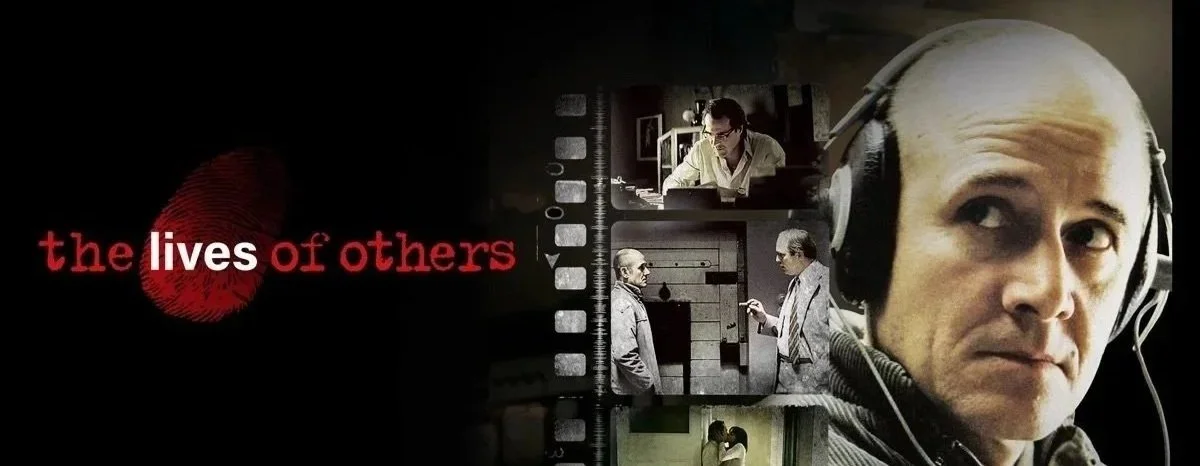
Episode 56: The Lives of Others (2005)
Guests: Mark Drumbl & Barbora Hola
Listen Anywhere You Stream
~
Listen Anywhere You Stream ~
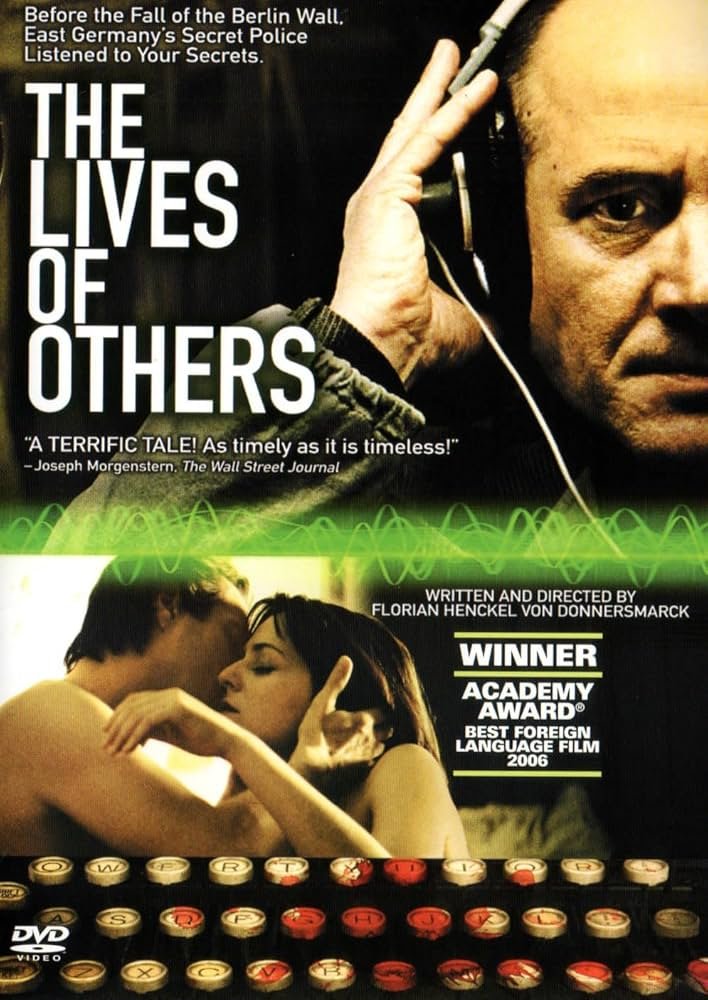
This episode looks at The Lives of Others, Florian Henckel von Donnersmarck’s haunting exploration of surveillance, complicity, and the brittle architecture of authoritarian legality in the final years of the German Democratic Republic (GDR/East Germany). The critically acclaimed 2006 film examines how law can be co-opted into an instrument of domination, how bureaucratic routines of “security” normalize repression, and how small acts of resistance acquire profound moral weight under systems built on fear and an extensive system of informers. The Lives of Others raises enduring questions about the ethics of observing and informing in Cold War Eastern Europe. To help unpack these themes, I’m joined by Mark Drumbl and Barbara Holá, whose recent book Informers Up Close: Stories from Communist Prague (Oxford Univ. Press) offers a deeply researched, empirically grounded look at informers within repressive regimes and transitional justice processes.
Guest: Barbora Hola
Barbora Hola is Professor in Empirical Legal Studies of International Criminal Justice at the Department of Criminal Law and Criminology at Vrije Universiteit Amsterdam and Senior Researcher at the Netherlands Institute for the Study of Crime and Law Enforcement (NSCR). She has an interdisciplinary focus and studies transitional justice after atrocities, in particular (international) criminal trials, sentencing of international crimes, rehabilitation of war criminals and life after trial at international criminal tribunals. Barbora is alsoa fellow at the Center for International Criminal Justice and a co-chair of the European Society of Criminology Group on Atrocity Crimes and Transitional Justice In 2018 she has been appointed as a member of De Jonge Akademie of the Netherlands Royal Academy of Arts and Sciences, and in 2017, Barbora was one of the four candidates who received the prestigious ‘WISE’ (Women in Science Excel) fellowship from the Dutch Organization for a Scientific Research to develop her research line on empirical studies of international criminal and transitional justice after atrocities.
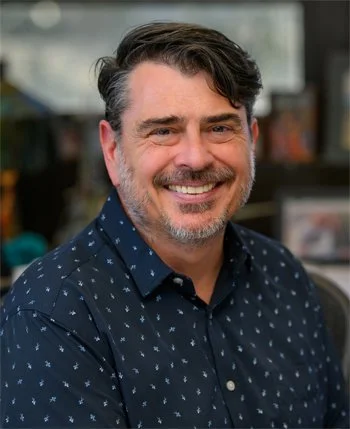
Mark A. Drumbl is the Class of 1975 Alumni Professor and Director, Transnational Law Institute, at Washington and Lee University. He has held visiting appointments and has taught at law schools world-wide, including Queen’s University Belfast, Oxford University (University College), Université de Paris II (Panthéon-Assas), Free University of Amsterdam, University of Melbourne, Masaryk University (Czechia), and John Cabot University in Rome. His work has been relied upon by national and international courts; he has served as defense lawyer in Rwandan genocide trials; co-authored an amicus brief to the International Criminal Court in the Ongwen case; and has been an expert in litigation including on international terrorism, with the UN in matters involving child soldiers, and with the UN Human Rights Council in the drafting of a global convention to criminalize racist hate speech. His books include Atrocity, Punishment, and International Law (Cambridge 2007), Reimagining Child Soldiers in International Law and Policy (Oxford 2012), and Informers Up Close: Stories from Communist Prague (Oxford 2024, with Barbora Holá); and co-edited volumes Research Handbook of Child Soldiers (Elgar 2019, with Jastine Barrett), Sights, Sounds, and Sensibilities of Atrocity Prosecutions (Brill 2024, with Caroline Fournet), Children and Violence (Routledge 2025, with Christelle Molima, Jastine Barrett, Mohamed Kamara and Karl Hanson), and The Character of International Law (Bloomsbury, 2025, with Emma Breeze and Gerry Simpson).
33:26 Informing’s corrosive impact on social relations
35:02 Who becomes an informant and why
38:22 Informers and transitional justice
44:57 The opening of the secret files
50:39 Informers and agents
55:54 Resistance and historical revisionism
1:00:46 How the book came about
0:00 Introduction
4:23 East Germany in 1984
6:32 The universality of informing
7:35 The surveillance state in the Eastern bloc
13:27 Informers and informing
19:36 Informing's afterlife
23:26 The book’s methodology and illustrative cases
Timestamps

-
00;00;09;25 - 00;00;49;12
Jonathan Hafetz
Hi, I'm Jonathan Hafetz, and welcome to Law on Film, a podcast that explores law through film and film through law. Each episode focuses on a different film to examine the varied and often surprising ways law operates across institutions, communities, and daily life not just inside but also outside courtrooms. This episode, we look at lives of others Florian Henckel von Donner's Smart's haunting exploration of surveillance, complicity, and the brittle architecture of authoritarian legality in the final years of the German Democratic Republic, aka East Germany.
00;00;49;14 - 00;01;16;17
Jonathan Hafetz
The critically acclaimed 2006 film examines how law can be co-opted into an instrument of domination, how bureaucratic routines of security normalize repression, and how small acts of resistance acquire a profound moral weight. Under systems built on fear and on an extensive system of informers. The Lives of Others raises enduring questions about the ethics of observing, informing, and intervening in Cold War Eastern Europe.
00;01;16;20 - 00;01;47;10
Jonathan Hafetz
To help unpack these themes. I'm joined by Mark Drumbl and Barbora Hola, whose recent book Informers Up Close Stories from Communist Prague by Oxford University Press offers a deeply researched, empirically grounded look at informers within repressive regimes and transitional justice processes. Their work examines why individuals become informers, how state structure and reward those relationships, and what happens when societies later attempt to reckon with these morally fraught collaborations.
00;01;47;12 - 00;02;12;03
Jonathan Hafetz
Bringing the lives of others and the book informers up close together into conversation with each other will allow us to explore how informing is structured, justified, resisted and later remembered. Together, the film and book illuminate the lived realities and ethical ambiguities of surveillance and collaboration under authoritarian rule, as well as the legal and moral challenges that arise when societies seek to confront these practices.
00;02;12;10 - 00;02;50;27
Jonathan Hafetz
Following transitions to democracy. Let me introduce my guests. Mark Trumbull is the class of 1975 alumni professor and director of the Transnational Law Institute at Washington and Lee University. Marcus held visiting appointments and has taught at law schools around the world. His work has been relied on by national and international courts. He's also served as a defense lawyer in the Rwandan genocide trials, authored an amicus brief to the International Criminal Court, and been an expert in various aspects of international litigation around international terrorism, child soldiers, and the drafting of a global convention to criminalize racist hate speech.
00;02;50;29 - 00;03;19;11
Jonathan Hafetz
His books include atrocity Punishment and International Law Reimagining Child Soldiers and International Law and Policy, and, of course, Informers Up close Stories from Communist Prague. With his coauthor Barbara Haller. Barbara Pollack is professor in empirical Legal Studies of International Criminal Justice at the Department of Criminal Law and Criminology via Université Amsterdam, and senior researcher at Netherlands Institute for the Study of Crime and Law Enforcement.
00;03;19;14 - 00;04;00;02
Jonathan Hafetz
Barbara has an interdisciplinary focus and studies transitional justice after atrocities from multiple perspectives. Barbara is also fellow at the center for International Criminal Justice and co-chair of the European Society of Criminology Group on atrocity, Crimes and Transitional Justice. In 2018, she was appointed as member of the J. Young Academy of the Netherlands Royal Academy of Arts and Sciences, and in 2017, Barbara was one of the four candidates who received the prestigious Wise Women in Science Excel Fellowship from the Dutch Organization for Scientific Research, develop a research on empirical studies of international criminal and transitional justice.
00;04;00;02 - 00;04;13;26
Jonathan Hafetz
After atrocities. I should add, Barbara is also a fluent and a native speaker in Czech, which was instrumental to their book project, as we shall learn about. So Mark, Barbara, welcome to Long Film. Great to have you on the podcast.
00;04;13;28 - 00;04;17;02
Barbora Hola
Well, thank you so much and I'm very happy to be here.
00;04;17;05 - 00;04;33;26
Jonathan Hafetz
So let's start first with the film, and then we can move into the book and explore all these fantastic and important synergies. So The Lives of Others takes place in 1984. What's going on in the GDR and across Eastern Bloc at that time period? Take us back to 1984.
00;04;33;28 - 00;05;03;23
Barbora Hola
Well, I was four years old, and I think that what is going on is that the, communist regimes are slowly but surely, cracking a little bit. I think. So in the 1980s, you have, glasnost and perestroika in, in, in the Soviet Union and I think all over Eastern Europe, like, the whole systems of repression and authoritarianism are cracking slowly.
00;05;03;26 - 00;05;31;24
Mark Drumbl
Well, and while all that is going on, and I think this is one of the magical parts of the film, notwithstanding cracking and creaking and crumbling and Stasi secret police and oversight, the other thing that's going on is people are living their lives. They are falling in love. They are writing beautiful things. They're scurrying about to try to scamper some space of joy and happiness.
00;05;31;26 - 00;05;55;18
Mark Drumbl
They're feeling things, they're lonely and they're filled. They are full of emotions. And one of the things that I think is really quite stunning about the film is it conveys everything that Barbara said. And that's sort of the leitmotif for it all. But what it does is it conveys the emotionality of life, even within strictures and structures.
00;05;55;20 - 00;06;09;18
Mark Drumbl
And for us, that's something that was an enormous influence when we decided to write our book in the way that we wrote it. And it's beautiful that the film does convey this kind of duality.
00;06;09;20 - 00;06;35;27
Barbora Hola
And if I if I may follow up on that very fast, I think what the film does is it indeed shows the human side, and it is to an extent in that it is timeless. So you could have asked what was going on in 1994 or 1755, because I think that perhaps the human sort of view, human part or humanity of it all perhaps would have been very similar.
00;06;36;00 - 00;07;05;14
Mark Drumbl
Well, and the other thing that's also transcendent, and which is also a theme in our book, is the reality of eavesdropping, listening, snitching, tattling, and using information to people's advantages, regardless of the liberality or liberality of the state. So, you know, hooking into what Barbara said, there's a timelessness to that, too, you know, in Informers and listeners are everywhere, just as they are nowhere.
00;07;05;15 - 00;07;35;07
Mark Drumbl
I mean, obviously, the tack of informing has changed from the 1980s in the Eastern Bloc to nowadays, where everything is recorded just like we are now. And I think that's another important, timeless theme. Listening, eavesdropping, securing information among people trying to live their lives in their own flawed ways within the structures of, of, governmental tentacles.
00;07;35;09 - 00;07;59;00
Jonathan Hafetz
And so we get the film sort of, you know, focus around the Stasi. Right? The secret police, in the GDR. And you talk about in your book, the Sbrt, the basically the Czechoslovak, the well that in Czechoslovakia, analog. What was the size and significance of the Stasi? Right. So you're talking about this sort of people trying to live their lives amid this state where you have this secret police?
00;07;59;00 - 00;08;02;14
Jonathan Hafetz
I mean, how pervasive, how significant was it?
00;08;02;17 - 00;08;39;22
Mark Drumbl
The Stasi was probably close to the KGB and perhaps even beyond the KGB in terms of its reach, its depth and its network. I think East Germany actually had the highest percentage of informers and secret police agents from any of the communist countries. So therefore there was variance internally. The Stasi were very dense. A lot of recent research actually has come out on the Stasi, and actually has suggested that the density of informing in East Germany actually transcends even just the Stasi.
00;08;39;22 - 00;08;47;13
Mark Drumbl
And there were vast networks of informal informers, so to speak, in a variety of societal organizations.
00;08;47;15 - 00;08;52;26
Barbora Hola
So. So you mean people who did not cooperate with Stasi but informed in many other ways, right?
00;08;52;26 - 00;09;47;02
Mark Drumbl
More correct. For example, people at schools, clubs, associations, sporting teams who stood outside the formal apparatus and contractual agreement to be informers with the Stasi, but who nonetheless supplied information. If we can pivot to the Czechoslovak Soviet Socialist Republic, what we have there is a less dense network and one that is not as deeply anchored in society. However, to some extent these are differences of degrees, not of kinds, and the fact remains that the surveillance state orchestrated by the STB was actually very intrusive, quite penetrative, and basically was an irrevocable aspect of the life of all Czechoslovak acts from 1948 until the very late 1980s, when that state, similar to the state in East Germany,
00;09;47;06 - 00;10;20;19
Mark Drumbl
crumbled. And this is replicated throughout all of the Eastern Bloc countries. And in fact, there are considerable similarities among the various secret police networks and in forming networks. Lots of them followed similar directives from Moscow and established similar patterns. And and perhaps Barbara, maybe you can share a little bit on the, the procedures, the operating procedures and the deep bureaucratic ization and almost professionalization of the information gathering process.
00;10;20;22 - 00;10;53;16
Barbora Hola
Yes, indeed. I think that when it comes to the character of these, secret police institutions, they are very much similar across across Eastern Europe. However, they differ in size. And of course, context matters always. So in Czech Republic as Marx or Czechoslovakia, as Marx said, it was started by specialist in Czech or STB state security. And yeah, what they did, and it's very much similar to what we see in the movie as well, is that they basically policed private lives of citizens.
00;10;53;16 - 00;11;16;21
Barbora Hola
So, they're very interested in everything and anything. What everyone was doing, there was a lot of surveillance, a lot of harassment, a lot of, penetration of law, I would say, into private lives of people. So, often times we speak about the rule of law, and this is to an extent ruled by law, but law, which is also very arbitrary, I think so.
00;11;16;21 - 00;11;41;11
Barbora Hola
So in that sense, there is a little bit of a paradox as well, because everything this was, was, sort of rule based, but the rules were also very much twisted oftentimes. And when it comes to, size in Czechoslovakia, I think that the estimates are that when it comes to informers, every 1 in 100 Czechoslovak citizens was cooperating with secret police back in the time.
00;11;41;11 - 00;12;02;27
Barbora Hola
What also needs to be added, I think excellent is that of course, it was 40 years. So, the intensity of surveillance and the way how the secret police was working was changing over time to depending on external circumstances, internal circumstances, and as it goes with anything and everything.
00;12;02;29 - 00;12;34;23
Mark Drumbl
Right. So in the Stalinist years, in the 1950s, the surveillance was particularly acute, and the methods of recruiting informers were more brutal and often involved coercion and the consequences for being informed upon could actually involve serious imprisonment. And, you know, physical coercion that waxed and waned, as Barbara said, through time in the, Czechoslovak case, things in the 1960s became slightly looser.
00;12;34;25 - 00;13;01;17
Mark Drumbl
Then there was the Prague Spring in 1968. That was a major turning point with Operation Danube and the Soviets then coming in and reasserting control. A period of normalization, ensued after that in the early 1970s, where the system became rigid once again. And then I think over the last 15 years or so, and this is a very interesting stage, and I think it's similar in East Germany.
00;13;01;17 - 00;13;25;17
Mark Drumbl
I think we see this in the lives of others because, Jonathan, as you said, the time period is in the 80s. What we see sort of from the mid 70s on is this kind of the purification of the regime and forming continues, the structures continue, the strictures continue. But there's a great apathy that begins to settle in. And what's very interesting is informing continues in this particular space.
00;13;25;22 - 00;13;54;02
Mark Drumbl
If I just want to jump in and add one other, I think important caveat the lives of others features predominantly gay. Obviously the secret police agent, the handler, its easy agent is a Stasi agent. And of course the STB had its agents. But accompanying this is this much broader, you know, rim and ring of informers. And that is more the focus of our research than the agent.
00;13;54;08 - 00;14;27;11
Mark Drumbl
The two are obviously together, but the informer in, the lives of others, the dominant one is Krista Maria. So the heroic lead character, Raymond's girlfriend, lover, and so forth, and she ends up informing against him and, you know, providing the key piece of information about the contraband typewriter. And in a sense, she betrays him. The way she becomes enmeshed in the betraying, of course, is through coercion.
00;14;27;11 - 00;15;01;18
Mark Drumbl
She's obviously you know, addicted to, prescription meds. The, Minister of Culture is sexually harassing her. He sees himself in competition with the very glamorous demon. And then you've got Vizsla, the agent who, almost in this voyeuristic space to go back to what we had said earlier, it's got these surveillance obligations. But then he becomes completely enamored with the amor and the ardent nature of the relationship between Raymond and Maria.
00;15;01;18 - 00;15;10;23
Mark Drumbl
So it really is this play on love life at the same time lauding power. So I think this is a really great hook.
00;15;10;25 - 00;15;37;14
Jonathan Hafetz
Yeah. So interesting. And he also becomes a Vizsla also becomes disillusioned. Right. Because he was sort of, the good soldier, kind of the believer in the mission of the Stasi, of informing that it was necessary to the revolution. And then he realizes that the reason that they're going to spy on three man is not because really, they suspect him of any, you know, really pro-Western or anti-government sympathies.
00;15;37;19 - 00;15;56;23
Jonathan Hafetz
But as you said, Mark, because the Minister of Culture, Bruno Ham, that that that the big shot wants him out of the way so he can pursue his girlfriend dream, his girlfriend goes to Maria. And so there's a corruption. The informing that's at the center of the lives of other is really about kind of almost like a really very petty personal corruption and abuse of power.
00;15;56;25 - 00;16;15;15
Barbora Hola
And I also think there is a huge contrast, right? Also, if you look at how the film is made when you look at the scenes from the Stasi environment, which are like very, very sort just like, rectangular and boring and, and then look at the place where Christa and Work are living, which is sort of much more lively.
00;16;15;15 - 00;16;42;01
Barbora Hola
And to an extent, I think that perhaps for these LA that's also like you, seems to have had a crush on Georg and Christoph. Maybe the way of life and to an extent is very attracted to that as well. Also, in contrast to to how he is being depicted or his life is being depicted in the movie. So I also think that it goes perhaps a little bit beyond corruption or a systemic sort of motivations, and back again to the human.
00;16;42;01 - 00;16;53;29
Barbora Hola
And our lives are just like emotions and desires. And because I think that there is also a little bit of him longing, being like Geller and Christoph to an extent.
00;16;54;02 - 00;17;38;25
Mark Drumbl
But what's also interesting, just pushing, Barbara's point further along and what I think is a very interesting direction. What we found in our research, in our book and what the film also conveys is Jonathan most informing was indeed petty. Most of it was murdered by resentment, desire, getting things, getting even getting. Ahad was murdered by personal grievance, and the informing network was turning to surveillance and the secret police to settle scores and get things that had nothing to do with the preservation of Marxist-Leninist political thought or the preservation of the state.
00;17;39;01 - 00;18;11;22
Mark Drumbl
So, in a sense, the Minister of Cultures motivations for initiating all of this and then vs les motivations for subverting it belie the reality that for the most part, this is actually how it worked and how the system was harness. So I'm totally with Barbara that it's not per se corruption. It's the convenience of this as almost a way to socially navigate fraught times.
00;18;11;24 - 00;18;30;25
Barbora Hola
But it also shows that all the systems, no matter whether they're a democratic, repressive, authoritarian, are enforced by humans. Right? And humans are humans. So we live our lives no matter what the system is. And I think that this movie is exactly about that. It's about the humanity of life and the regime as well.
00;18;31;00 - 00;18;58;06
Mark Drumbl
And also the pain of betrayal. Right. So, so in the lives of others, the betrayal so pissed. Maria betraying Georg Damon. It's it's elongated because for the longest period of time, Damon thinks that Sister Maria is the one who, yes, informed but then redeemed it by somehow disappearing the typewriter. And then it's only when he opens the secret police files and reads his.
00;18;58;06 - 00;19;26;24
Mark Drumbl
It looks at the timeline, and he's sitting in this dusty, musty archive room, looks up, and it's like, Holy smokes! The timeline is such that it must have been Vizsla who did this and not Krista Maria, which is another really interesting aspect, I think of this film and something that is also quite motivational to us. It's the presence of the truth of the archives that then opens up and circulates after the fact.
00;19;26;26 - 00;19;52;08
Mark Drumbl
Now what do you do with that information? And maybe we should get to that a little bit later on in our conversation. But that's also an important, point, because informing ended in this classic sense when the Eastern Bloc turned, you know, market based liberal democracy or attempted to do so, whatever that means. But informing continues. So it's the lives of others at the time.
00;19;52;08 - 00;20;31;02
Mark Drumbl
But those lives have an afterlife, a really vibrant afterlife today. Still now the films from the mid 2000, but certainly still now in the countries of the former Eastern bloc and forming is, a hot topic. We've workshopped our book in a number of places, and our book sort of attempts to perhaps take a bit more of a reconciliatory approach to informers through contextualization and emotional analysis, and that elicits responses, in particular from people who become of age in these East European and forming networks.
00;20;31;09 - 00;20;43;03
Mark Drumbl
And there's a pension to a form of retributive ism there. And I get it. It's not ill placed. It's not, you know, menacing or baleful, but it's really there. So it's goes on.
00;20;43;05 - 00;21;07;05
Jonathan Hafetz
Yeah. The end of the film, it's sort of hints at transitional justice. You have the archive, which we're going to get into when we talk about the book. But when drama learns what happened, there's sort of it's not a formal transitional moment, but there's some sort of sort of reconciliation at the end on a very human level. Like you, you talk about where he goes to look at these letters, who's now sort of living, you know, in this what's now and kind of play them like more rundown part of East Germany.
00;21;07;12 - 00;21;25;28
Jonathan Hafetz
And, you know, he's delivering now with a pushcart and draymond's, you know, a celebrity author and but he realizes it. So he writes this book, dedicates it to him. The book's good. So not about a good person. He dedicated to these learn and then Wheeler sees it. So you have sort of this kind of interesting human reconciliation or something like that, perhaps at the end of the film, which I think was pretty interesting.
00;21;26;00 - 00;21;43;27
Barbora Hola
Yeah, it's very interesting what I find also very interesting and that you have reconciliation without these two ever meeting each other. Right. So that is also like sort of like they they are passing each other even on the street, writing in one scene but never meeting each other. And in this way, the movie actually, I think portrays quite positive.
00;21;44;03 - 00;22;08;22
Barbora Hola
I would say quality of opening the archives and finding out the truth and sort of getting to know actually what happened. But what we discuss in our book is that there is also other sides to it. Right? So there might be also cruelties in opening the archives, which perhaps are hardly ever discussed because everything in transitional justice or everything oftentimes, like the main mantra, is transparency and the right to truth.
00;22;08;22 - 00;22;40;28
Barbora Hola
However, there also can be a collateral damage to opening the archives because I was quite surprised and perhaps naively, because when I started to, do the research for the book, the empirical part is based in STB archives. So so we actually have read thousands and thousands of pages of STB files on informers. And the information that one finds there is not really like a state security, ideology, James Bond type of information.
00;22;40;28 - 00;23;08;09
Barbora Hola
But what it comes down to is really sort of gossip and very intimate, very private things which were recorded for the eyes of the secret police. Many of these things were actually supposed to stay secret. But, with the opening of the archives after the regime fell, all this very private, very intimate information became a public goods to be used and abused by everyone and anyone.
00;23;08;12 - 00;23;26;10
Barbora Hola
So in this sense, I think that the movie is a little bit too positive, about the archives opening. Understandably. Right. But I think what needs to be realized is that there are there is also cultural damage which comes with it, and it's important to talk about it, too. I would say.
00;23;26;12 - 00;23;46;27
Jonathan Hafetz
So in your book. You went to the archives, the archives. You went through hundreds of files. You narrowed it down to 23 file stories. And then you really featured six of those in narrative form. In your book, you talk about why you chose this methodology and what you hope to show through it in the book.
00;23;46;29 - 00;24;20;11
Barbora Hola
So what we wanted to do, we wanted to show human stories, I think so, so we wanted to give a very detailed, narratives about individual informers to show the complexity and humanity of individuals who ended up informing or were voluntarily informing or were forced to inform. And therefore, we took the files as the main source with all the detail we wanted to show human stories, and the files are the most readily available source, actually.
00;24;20;14 - 00;24;39;29
Barbora Hola
And of course, in the book we discuss the advantages and disadvantages of using, secret police files. And of course, it has a lot of limitations, however, also a lot of advantages which we find, especially the detailed character and the very, biographical sort of nature of these sources and. Yeah.
00;24;40;02 - 00;25;02;03
Mark Drumbl
Yeah. So, Jonathan, it's a little bit like what we spoke about when we were chatting in Johannesburg and you were talking about, you know, your podcast on law and film. I think what we wanted to do was create a moving picture with words of the lives of these particular informers. We wanted to put them on film and high resolution granularity.
00;25;02;09 - 00;25;30;26
Mark Drumbl
I've become very interested in the idea of biography as opposed to history. And, you know, we can relate a history of the STB, which we did. I guess you can number crunch and come up with statistics, you know, all sorts. But what I think we wanted to do was create a biography of real people who really were involved in real ways in the reality of the informing network.
00;25;31;03 - 00;25;57;05
Mark Drumbl
So therefore, we prepared these file stories as Barbara mentioned, there are several thousand words in length, each of them. We selected six for the book that we felt were representative of not only different periods, but also, different kinds of ways in which people became ensnared into the informing network because we didn't engage in aggregated statistical analysis.
00;25;57;07 - 00;26;23;12
Mark Drumbl
A lot of the selection of the file stories that we did were impressionistic, so as to create, a broad palette in a sense, different time periods, members of the party or not, a broad array of people in different walks of life from students through this through to sex workers, through to party officials, through to academics, through to laborers.
00;26;23;19 - 00;26;58;10
Mark Drumbl
We did slightly over represent women in our, discussion of informers, in large part because we wanted to surface that particular reality that there were some women informers and to better tell their stories. So at the end of the day, it is a methodology that I think serves a different purpose than compilation and computation. It's a biographical film, the life cycle and life stories of people who inform.
00;26;58;10 - 00;27;24;08
Mark Drumbl
And some of the informers we selected were more short term announcers. For others, it was an entire lifestyle. It filled, you know, four decades of their lives and, a number of informers. For example, one we feature in the book called Force in Form for the Nazis. Then following the, liberation of Czechoslovakia, was imprisoned, informed in prison.
00;27;24;13 - 00;27;55;02
Mark Drumbl
So it was released early, then became an STB informer, and then at some point started to spend time in West Germany, became an informer, supposedly for the West Germans. The STB cuts him off. He's informing no more. And then he sort of has an emotional breakdown. And, there's a poem he wrote called CI, which is in his file, in which he's pleading with the STB now through poetry about his misery.
00;27;55;04 - 00;28;02;28
Mark Drumbl
Being minced from the informing contact. So it's it's really there's a filmic quality to it.
00;28;03;00 - 00;28;32;21
Jonathan Hafetz
Again, you've referred to this elsewhere as like the Mazda panorama or the panoramas that used to be prevalent in the late 19th century. There's the famous one by magic of the Dutch village Shivan again. And so that's sort of what you were aiming to get to, you know, the sort of overall view through these individual stories. Were there any other you mentioned this, one of this sort of, itinerant professional inform or any other particular cases that sort of stood out to you in your effort to kind of achieve this granularity.
00;28;32;21 - 00;28;36;26
Jonathan Hafetz
Individual richness, and to sort of unpack the complexities?
00;28;36;28 - 00;28;58;24
Barbora Hola
Well, they all of them are interesting in their own way. So the the stories that we are featuring, in the book are we chose them, on purpose, right to, to show like different the different ways and different emotions that actually motivated, informers according to us. So I think that one of them which stuck with me is Lili.
00;28;58;24 - 00;29;22;16
Barbora Hola
So Lili was, very, very brave. And defiant woman. Her story is quite short, but very, very impressive. She was informing in the 1950s. So actually in the Or informing, she was actually not informing, but she was approached by the secret police in 1950s and they wanted to, ensnare her in their network. And she was very resistant.
00;29;22;16 - 00;29;54;06
Barbora Hola
And they because she was suspected of working with, French intelligence. So, again, a little bit of a similarity with Scott was a secret police approach to her and, blackmailed her to actually start cooperating with them. And she, was refusing in the end, actually, what ended up happening was that, it is not explicitly set in the file, but, it is more or less obvious that Lili was actually being tortured.
00;29;54;11 - 00;30;20;20
Barbora Hola
She she was, interrogated very much so by secret police. She still resisted. In the end. She actually ended up, being convicted for treason, and, she went to jail. But I found her story very impressive because she was really extremely resistant to heightened pressures. And I think that that doesn't happen very often. So that's one of those which stuck with me.
00;30;20;23 - 00;30;43;02
Mark Drumbl
Yeah. And Lili is obviously at the height of in its, Right. So a period of time that was particularly brutal. I think others that Barbara and I have since talked about a lot who have stuck with me and us and, alone and together, there's Soukup, who's featured. So he's like this low level, you know, kind of harmless criminal who's into exile.
00;30;43;06 - 00;31;10;02
Mark Drumbl
That's money changing. He's into this, you know, crime less victimless crime kind of things, a little bit scamming here and there. And he turns to informing to keep his whole system going, both in, Czechoslovakia and then also in West Germany. There's Dore, who is a sex worker who, informs initially is drawn into it because sex work was a crime.
00;31;10;02 - 00;31;51;26
Mark Drumbl
The crime of parasites is, not having a job. A proper job was a crime. That's a lever that was often used by the STB to get people in. And then she's informant for a while, but she's like a smooth operator. She never really ever says anything of any meaning. And then in the files, the, her informing ends because the STB quite pithily notes that she refuses to come to any more meetings with them in this sort of clandestine apartment where they're supposed to meet, and that's because, she says that she now has a new boyfriend, and the new boyfriend's a bit jealous and doesn't want her roaming around visiting like men
00;31;51;26 - 00;32;20;22
Mark Drumbl
in flats and then the SDP officer is just like, okay, it's done, right. There's no recrimination. You're you're no longer informing, this this guy Barry. Who informs a lot and quite systematically, but he's like an environmental scientist and he's informing on the practices and his state agency of noncompliance. I think that's where the waste management disposal protocols and then.
00;32;20;22 - 00;32;41;17
Mark Drumbl
And the files are full of these technical reports. The agents must have been so bored reading and listening to this stuff. And his motivation is environmentalism. There's also another guy I don't remember his name. And by names. These are the code names that the STB gave them. We anonymized and Sydenham ized everything but just retained the code names.
00;32;41;20 - 00;33;05;17
Mark Drumbl
Although our anonymization and, going to pseudonyms. That's just for academic ethics. Anyone can open. The files are wide open. Barbara, we'll talk about this later. Way more than in any other East European country. Former East European countries are wide open. But Barry, is like providing all this info and ratting people out because the law on waste management was not complied with.
00;33;05;17 - 00;33;18;13
Mark Drumbl
He was like an environmentalist. And then the even in the files, he's mentioning how West German laws were so much better for the environment. So it's just a potpourri of gossip.
00;33;18;16 - 00;33;45;28
Jonathan Hafetz
Yeah. You tend to think it's sort of more of this kind of precise process, but there's an array of information on a societal level, like we're talking about the individual cases and you focus on this granularity, but you also, I think, kind of observe the way kind of it added up and you kind of aggregate it. You know, you write about the corrosive nature and societal level that this informing had where like lying, dissembling, pretending became omnipresent.
00;33;46;00 - 00;33;50;24
Jonathan Hafetz
You have all these sort of individual acts, but together it sort of creates a it back.
00;33;50;26 - 00;34;11;18
Barbora Hola
Like assistant system of surveillance. Right. So I still remember my parents telling me when I was, when I was little that the walls has ear, the walls have ears, and that sort of just like the pervasive, I think, sentiment which perhaps still remains in, in, post-communist countries. And then there were these, you know, sort of like the double lives.
00;34;11;18 - 00;34;32;05
Barbora Hola
And I think that we discuss it in the book as well. So, so there was something people were saying on the outside and something else that they were, saying in private and that sort of just like I think also is a consequence of the whole system of surveillance and fear of being ratted out or saying something wrong that people can use against you.
00;34;32;05 - 00;34;59;26
Barbora Hola
So in that sense, it's actually, you know, so, so, to an extent, we are not making fun of it, but but sort of like telling the individual stories. And I think that you're correct, Jonathan doesn't also show these more systemic consequences of this whole system of surveillance, where basically people I don't know whether they were afraid, but they were hesitant to show their true selves because it could have backfired.
00;34;59;27 - 00;35;01;01
Barbora Hola
I think.
00;35;01;04 - 00;35;28;02
Mark Drumbl
And I think this leads to another important dynamic. So in our book, we seek to offer a humanistic portrayal of informers, and there's a lot of data to support that. These are generally marginal folks in society. Initially they're blackmailed into informing and then quite a number of them begin to assume or agency over time and then begin to take more proactive roles.
00;35;28;02 - 00;35;56;15
Mark Drumbl
And, as we said earlier, turn to informing as social navigation. We're very open to the critique that perhaps somewhat similar to the lives of others. Right. So this is portrayed in this, you know, positive, empathetic, complex way. And I think we and he is like that in the film. All right. And I think we endeavored to perhaps do something similar that's rooted in actuality.
00;35;56;17 - 00;36;38;07
Mark Drumbl
But the reality is that this also inflicted immense harm on people through his work. And the informers we study also inflicted immense harm on people. And to me, this gives rise to a really interesting question. Namely, petty motivations can cause tremendous pain. And what do you do with that? After the fact? And is it necessarily better or worse than the pettiness that the pettiness is motivated not by some political dogma, but by getting even, getting ahead, getting things and vulnerability?
00;36;38;07 - 00;37;10;01
Mark Drumbl
The informers are tremendously vulnerable, like lots of them over the arc of their lives tumble into serious mental health issues. Drug addiction. Like Christine Maria. They're fragile. They're they're failing and flailing people, so they can also inflict tremendous harm, just like Maria does in the film, and a really deep betrayal. And Damon really loves her. He he's a very charismatic, charming man.
00;37;10;01 - 00;37;24;06
Mark Drumbl
He's got a lot of game, and he really loves her, and she betrays him and she can't face up to it, knowing what she did when she is discovered. And then she runs in the street and essentially commits suicide.
00;37;24;08 - 00;37;52;05
Jonathan Hafetz
I think that's yeah, one of the sort of, an important takeaways from the book. Right. As you mentioned also in the film is this sort of this duality. Right, is explaining, right, as you have informers, there's some sense victims, they're weaponized by the state, but they become victimizers. Right. And so that duality, I think, is very important and also has implications, as you talk about for the aftermath, what comes next for transitional justice, right?
00;37;52;05 - 00;38;17;29
Jonathan Hafetz
And for efforts to I think the way you explain is that that basically after, you know, the Communist state falls, the Velvet Revolution, there's an effort to kind of go back and try to paint the picture a little more black and white. Right. Informers all bad. Right? And that some of the gray is lost. And I, I don't know, I see the, the book as sort of offering, a kind of a qualified or response to that or the way that it's, it's more nuanced.
00;38;18;04 - 00;38;26;29
Jonathan Hafetz
Yeah. So if you could talk about that and some of the implications for, for transitional justice when you have, you know, this kind of duality in this tension between victim and victimizer.
00;38;27;01 - 00;39;13;29
Barbora Hola
Yes. And I think, I think the, the tragic quality or the vulnerability of informers, which is there during the communism, persisted even after. Right, just because of the mere fact that they were informers. They, at least in Czechoslovakia, overtake republic afterwards because Czechoslovakia actually, dissolved in 1993 into Czech Republic and Slovakia. And we in the book focus on Czech Republic, the informer actually became the embodiment to an extent of, the evilness of the regime, because it is very easy to, to, to an extent, pinpoint fingers on, on these people who, for one reason or another, to an extent, ended up in The Informers networks and say, you know, they are
00;39;13;29 - 00;39;43;11
Barbora Hola
the ones who actually are responsible to and who were the backbone of, of the repression as well. While in reality, I would say that almost every and any Czechoslovak citizen actually bears a certain level of complicity because, yeah, the regime was kept going not only by informers, but also by, ordinary citizens who were showing up, you know, in processions and hoover justice.
00;39;43;11 - 00;40;13;20
Barbora Hola
Yeah. Living their lives and not really not really sort of doing what, what they were told to do. So in that extent, I think that like, the vulnerability of informers actually persists even after the transition. So in the end, I think these people ended up being stigmatized to an extent, ostracized, because it is just very easy, comforting, as we argue in the book, to sort of, pinpoint fingers and say, yeah, these are the worst of the worst.
00;40;13;22 - 00;40;50;18
Mark Drumbl
Right? And it's inescapable that informers are a much maligned character in our literature film across the board. That's how we open our book. Like, you know, Benedict Arnold, you know Freddy Corleone, In like, The Godfather, you know, Judas Iscariot. Very easy. But, you know, we also into complexity informers by humanizing them. And the reality is, one of the things that I think is very interesting is the fine line between informers, snoops, snitches, bad, and whistleblowers who are seen as heroic, but whistleblowers engaging the exact same methodology.
00;40;50;18 - 00;41;15;14
Mark Drumbl
They're ratting people out behind their backs, tattle tailing, and, you know, they're snitches who generally don't get stitches, right? They're thought of very highly. So one of the things we do try to do at the end of the book is presents, informing as a social reality that every single state and movement requires, you know, we talk at the end of the book about people who rang the telephone hotlines.
00;41;15;18 - 00;41;44;02
Mark Drumbl
I mean, Jonathan, you're up in like, you know, in the New York City area, you know, that there's research from New York City during the pandemic of Covid hotlines and who called them and who got snitched on whom for, you know, not adhering to protocol. And actually, those patterns belie the fact that many of those phone calls were motored by people from outside the community coming in, and there was a racial tone to who was calling on whom and why.
00;41;44;02 - 00;42;13;12
Mark Drumbl
Right. So this is another sort of problematic aspect. So and I think at the end of the day, then you've got the reality of informing as a social practice, what do we do with it? And I think both Barbara and I incline more towards thinking of transitional justice in this space, not in this retributive sense, but perhaps more in a reconciliatory and restorative frame.
00;42;13;15 - 00;42;34;18
Mark Drumbl
But regardless, you can't have transitional justice unless you have an accurate of understanding of who and why is causing the harm. And the sad reality is, or the, you know, intriguing reality or the necessary realities when it comes to informing. It's very, very, very complex.
00;42;34;20 - 00;42;59;00
Jonathan Hafetz
You know, that's another thing that I think is so fascinating about the book is about, you know, it's about this time and this place in Czechoslovakia, right during the Cold War period. But it's also about the process of informing, as you mentioned, you kind of open the book that way, talking about sort of informers through time to be one of the most you kind of interesting, different but interesting analogies too, is, that occurred to me was during the McCarthy era in the United States.
00;42;59;02 - 00;43;19;09
Jonathan Hafetz
You know, it's different. I mean, it's not the same level of state repression, but tremendous pressure and all the different choices that people had to make of whether to inform or not inform in all the different motives. So I really I think it reverberates in a lot of other interesting contexts, not just in other Eastern Bloc countries, but more broadly.
00;43;19;12 - 00;43;51;15
Mark Drumbl
Yeah, and not just McCarthy. In, you know, World War One, President Wilson sets up this, you know, there were no hotlines at the time, but these informational conduits for people to talk about, you know, problematic German, you know, Americans and their putative treason with the state. They had to shut down the whole system because people were just turning into it to settle these scores that had no basis in any fact of supposedly treason or lack of allegiance or or dangers to the state.
00;43;51;18 - 00;44;13;28
Barbora Hola
Yeah, but that something would be discussed in the book as well. Right. So so, no matter the context in the end, when, when you really go into the nitty gritty micro-level, it is very similar. It is very similar over time, over borders, as Mark would have said, spaces and places, it's faceless and places.
00;44;14;00 - 00;44;39;02
Mark Drumbl
And I also think, you know, the film is great and, I think it's, a masterpiece of people living intensely. And I think it's really a beautiful film, but it's also easy to point to, you know, Stasi. Easy, right? You know, this is this that happens there, and it's localized in time and place, but it is actually not.
00;44;39;02 - 00;45;04;02
Mark Drumbl
There's a ubiquity to it. And if informing is central to the human condition, then I think we need a more sophisticated and less scapegoating approach to deal with it, something that's less soothing. And, you know, Barbara, maybe you can sort of talk a bit also about the opening of the files and the cruelties that were occasioned by that process.
00;45;04;02 - 00;45;20;22
Mark Drumbl
So we've got this notion of transparency is great human rights activist. I want it open to files. Cultures of secrecy are rotten and rancid and wretched. But you know, Barbara, clearly in the Czech context, there were externalities that arose.
00;45;20;25 - 00;45;52;19
Barbora Hola
Yeah, especially when the files are opened as such, you know. So movies? No, there's no redaction whatsoever. Then you really get out all these oftentimes spicy and oftentimes extremely private details, which perhaps shouldn't be out in the public. So like alcoholism problems, affairs and stuff like that. And this can be painful for, you know, relatives, children, people whom should have never known that information.
00;45;52;19 - 00;46;16;06
Barbora Hola
So in that sense, these are the externalities that we hardly ever talk about. And I can give you an example, which is very benign. But but, you know, my mother always told me that she had straight A's at school. And, somehow during the, the sort of like, as this project was developing, I actually asked for files, potential files, if they're out there.
00;46;16;06 - 00;46;41;06
Barbora Hola
Of all my family members. And there is a file on my mother, and it's not that she was informing, but because she was a nurse in the hospital, which was run by Ministry of Interior and all the employees of Ministry of Interior had files. So I go to her file and then in this file there is everything, you know, including like the certificates, from school, like all her grades.
00;46;41;06 - 00;46;59;11
Barbora Hola
And these were not straight A's, you know? You know what I mean? So. So it's just sort of. Yeah. And but but this nicely shows this sort of like a discrepancy. And the things that that can come out and perhaps should have never come out. This is absolutely benign. And we asked about it. But you can imagine.
00;46;59;18 - 00;47;00;03
Jonathan Hafetz
Course.
00;47;00;06 - 00;47;08;27
Mark Drumbl
Yeah. But knowing that information of course motivated Barbara to study all the time and graduate with straight A's and everything.
00;47;08;29 - 00;47;23;28
Jonathan Hafetz
Works exactly right. It was done for for a good purpose. But you're right. I mean, there are it's just there's things are some things are, you know, meant to not be public, right. And not to come out. And I think, you know, the, the archives, I mean, that is something that's very distinct, right, about the post-Communist Eastern Europe.
00;47;23;28 - 00;47;45;01
Jonathan Hafetz
And it's in the, you know, that features at the end of Lives of Others. It's obviously the heart of your book. And, you know, you talk about, the power of archives being a key feature of post-communist public policy. And you you mentioned you quote, Derrida in your book for the idea that there's no political power without control of the archives and archives act as spaces for public formations.
00;47;45;03 - 00;47;55;07
Jonathan Hafetz
So what are some of the sort of larger kind of political literature battles, or are there battles over the archives, or have there been over the past few decades since they've opened up?
00;47;55;10 - 00;48;39;02
Mark Drumbl
Well, the control over the archives, as you pointed out, is key. You know, the word archive comes from the ancient Greek archon, you know, which was the repository of of information and power. So clearly the archives in, the Czech Republic nowadays are largely arranged and organized by, social movements committed to anti-communism and the, harms and pitfalls of modern neo capitalist democracy in the Czech Republic often become underplayed by focusing on the fact that there's been this progress from the communist past, and the archives are are deployed in that regard.
00;48;39;02 - 00;49;21;04
Mark Drumbl
And anti-communism features within modern day Czech politics. So our book has, you know, the STB files and we also have a lot of oral history projects. We've also got a lot of secondary literature, we got interviews, we got folks that are working on, you know, academic oral history projects that contrast with state run oral history projects. And a lot of the more nuanced oral history projects reveal the reality that although there may have been civil and political rights limitations in the communist period, a lot of people in modern day Czech Republic are very sensitive to economic, limitations that arise through a vulnerability vis-a-vis capitalism.
00;49;21;06 - 00;49;39;23
Mark Drumbl
And I think the archives serve as purposes to present the past as really putrid. And that doesn't mean it wasn't, but it doesn't mean the present is perfect. And I think that's an important angle to think about as well.
00;49;39;25 - 00;50;02;09
Barbora Hola
And and yeah, archives are information, right. And information is extremely valuable goods. And I think that the power of the archives can also be seen in the fact that when, you know, the Velvet Revolution or the revolutions in, in the Eastern European, central Eastern European countries were not, one moment momentarily. Right. So it was it was a process.
00;50;02;09 - 00;50;26;15
Barbora Hola
It was a development. And what happened and I think it happened all around, is that the secret police units once it was quite obvious that the regime's were going to crumble, started to burn their archives as well. And in that sense, this really also shows the power of the information that that was in there. So that something what we discuss in the book as well.
00;50;26;16 - 00;50;36;19
Barbora Hola
But but for parts, the archives were actually destroyed by the STB itself, and there must have been a reason why they did it.
00;50;36;22 - 00;51;05;05
Mark Drumbl
There is another interesting parallel between the book and the film, and we talk about informers in the book, the films about agents, however, we also noticed in our review of the files that the secret police agents also had their own set of emotions. Right? So, you know, we make the argument informers are motivated emotionally by fear, resentment, you know, devotion.
00;51;05;07 - 00;51;28;02
Mark Drumbl
These are, you know, causes that and desire causes to get them to inform. But the secret police officers had their own emotions as well. And some of them were somewhat surprising. We noticed solicitude in the files, namely the agents caring about the informers, chiding them about their drinking too much. Trying to encourage them on a better path.
00;51;28;07 - 00;51;48;02
Mark Drumbl
We also noticed frustration. They were informers who were just inept. There's this one informer who was trained, and all this wiretapping, and they invest all this effort at training him, and he goes to do the wiretap and like, he just he bombs out like he doesn't pull it off. And, you know, it all turns into a debacle there.
00;51;48;05 - 00;52;11;08
Mark Drumbl
But one point that I think is really interesting is the fact that the STB collected a lot of information that they never acted on. They typed it all up because they had to look like that was their work product and doing work and getting ahead. So the files are full of hundreds of thousands of pages of typewritten notes that were never acted on.
00;52;11;12 - 00;52;37;25
Mark Drumbl
All the stuff Barbara's talking about alcoholism affairs, petty theft, bad behavior, blah, blah, blah, blah, blah, blah, blah blah blah blah and nothing happened. Stuff only happened when transitional justice activists after the fall of the regime said, we gotta open this up to everybody, and there's a harm in that, and I'm not excusing or forgiving the secret police officers at all.
00;52;37;25 - 00;52;56;05
Mark Drumbl
But the fact remains is they collected a lot of stuff that they never acted on, and it's out on the shelf and gather dust. The other interesting angle, you know, which Barbara can also talk about more now is the intersection with tech and digitization. So all this stuff is digitized and that's another angle. It makes it more accessible.
00;52;56;08 - 00;53;11;13
Mark Drumbl
And that checks have the most liberal access policy in the DDR, GDR, DDR. After being wide open for a while, there were some suicides publicly, there were some tensions, and then stricter rules came in of access.
00;53;11;15 - 00;53;34;07
Barbora Hola
And if I may, I will not talk about digital digitization and tech. But I think what is really interesting, Mark, and circling back to the movie, are the emotions of the agents. Right. And the STB agents, because I think that if you look at valor when like in the first half of the movie, when he is like the devoted, very meticulous Stasi officer, he's absolutely emotionless.
00;53;34;14 - 00;54;00;26
Barbora Hola
So his face is very static. He doesn't have any expression. I think he is sort of, shown as this rational ideology believer to an extent. And then there comes the change, and suddenly his face is full with emotion when he becomes a better person, perhaps, and starts like changing, changing the report, which I find really interesting because I am not sure of.
00;54;01;02 - 00;54;17;13
Barbora Hola
I am aware of any research in, central Eastern Europe where someone speaks of emotions of the agents and they were definitely there. And I think perhaps very much determinative of what happened, which also the movie shows very well, to an extent.
00;54;17;15 - 00;54;38;23
Jonathan Hafetz
I think the actor was actually ill, I think at the time or was and passed away shortly after. All the UK that went to play this, Larry would actually experience the surveillance in real life. So they have been tapping into that. But the transformation is kind of remarkable. So, I'm captures both the agents and then the informing dynamic through, Christine, Maria and Raymond.
00;54;38;23 - 00;54;42;12
Jonathan Hafetz
So, yeah, I know I think that synergies with your book are incredible.
00;54;42;18 - 00;55;05;15
Mark Drumbl
Well, so I mean, and on that note, okay, so these logos to these great grandiose extents to, like, protect Damon. What? We don't know. But I, Barbara, I can shed more light on it. I'm not certain these you know, the agents in the STB whose files we encountered, you know, were as grandiose, but they also protected people just as they also pounced on people.
00;55;05;18 - 00;55;07;11
Mark Drumbl
They're also human.
00;55;07;14 - 00;55;31;11
Barbora Hola
Exactly. And that's what I wanted to say to an extent. So, so, so, so the story in the movie is of course, dramatic, right? So, so it's made for dramatic purposes. And I think that it did not happen very often that the agents like turned around like that and started to, play on the system. But there are these instances of little bits and pieces where perhaps the system can be can be fooled.
00;55;31;11 - 00;55;45;02
Barbora Hola
And I think that these can be these can be found in the files as well, especially when the agent and the informer had a good go to human relationship, which also happened. And you can sort of sense it from, from some of the files to.
00;55;45;05 - 00;55;52;22
Jonathan Hafetz
Any other takeaways from the book and your work in this area that you wanted to add.
00;55;52;25 - 00;56;22;13
Mark Drumbl
Well, I think one thing that is an interesting angle, which is sort of another overlap in the film, is one of the things the oral histories, especially official ones, portray about post-communist Czech Republic is how everyone was really a resistor. Right. So there's this. All of a sudden the volume of resistance inflates in, you know, historical revisionism.
00;56;22;15 - 00;56;44;24
Mark Drumbl
And, it's easy then to say, well, you're not listed as an informer. And what happened in the Czech Republic is lists were published in the newspaper of informers. And then, you know, people could challenge their designation as an informer and, which actually led to the STB files being used in courts, civil courts. But put that to the side.
00;56;44;27 - 00;57;16;26
Mark Drumbl
You've got this reality of resistance really being inflated. And I think it is an important corrective in our book to recognize that just as informers can be demonized and scapegoated as being very powerful and all encompassing historically, so too can the prevalence of resistance. And I think this is an important dynamic now in the lives of others. Again, you got what are the motivations for resistance?
00;57;17;00 - 00;57;39;06
Mark Drumbl
So Damon is a resistor. He writes that article on the prevalence of suicide in the German Democratic Republic. And that's the, you know, origin of the entire typewriter thing, the sending it out to the West. It gets published in their Spiegel and etc.. And that leads to them really cracking down on Krista Maria. But what are Damon's motivations for doing this right?
00;57;39;10 - 00;58;03;22
Mark Drumbl
His motivations are also deeply personal. Yes. His really good friend is is a cool guy who's been, you know, defrocked. He can't be a director anymore, you know, like, he's got some line in there that, like, him not being a director is the equivalent to a miller having no corn anymore. He commits suicide, and that's Damon's motivation for his resistance.
00;58;03;24 - 00;58;30;24
Mark Drumbl
And I think this is also interesting to me because Damon largely is in sync with the DDR regime. In fact, he's got his friend. I don't remember the guy's name, Barb. Or do you remember his name is a thin guy with glasses who's, like, going to parties and, like, bugging Damon about being, you know, such an acolyte. And he's this guy is, like, picking fights and and not in a bad way, but he's picking fights.
00;58;30;26 - 00;58;39;08
Mark Drumbl
But Damon's motivation for resisting is also deeply personal. It's his love for his friend. Right.
00;58;39;10 - 00;58;58;16
Barbora Hola
And to what extent is what he does resistance. Right. So that's another thing. I think it also and what it also shows is that all of us combine all of this together. Right? So the drain man is a regime supporter. Actually, he largely benefits from the regime. But for this particular act and also a little bit afterwards, you know what I mean?
00;58;58;16 - 00;59;13;23
Barbora Hola
And it's the same with me with Crystal Maria, who sort of informs but also also resists. And the same with Liesel. I think that the what it shows is that perhaps every human being has it all inside us.
00;59;13;25 - 00;59;39;28
Mark Drumbl
Which is kind of what Vaclav Havel said when presented as president when he was with the prospect of opening these files and the clarity. You didn't want to do it because to him, the line of collusion, complicity as well as resistance runs through everyone. So he didn't want to do this right, even though he himself had faced considerable sanction from the communist state.
00;59;40;00 - 01;00;07;15
Mark Drumbl
And he eventually, in his view, did not materialize. And the preference was for a much broader deontological, categorical sort of denunciation. And and I think since we're all law professors, this brings us back also to the rule of law. Law is a simple yes no, up down, binary, guilty, innocent thing. And and it has the advantage of the capacity of deontological denunciation.
01;00;07;17 - 01;00;14;24
Mark Drumbl
But is this always fitting? Is this always apposite? Is this always desirable? Are there limits to law.
01;00;14;26 - 01;00;23;26
Barbora Hola
And for how? Well, actually opening up the archives, he said it would be the biggest victory of the STB. It happened.
01;00;23;29 - 01;00;44;06
Jonathan Hafetz
Yeah. It does seem like you need other, morality, ethics, psychology to sort of unpack this complicated area where the state had so much power, right, to be able to turn victims as you, as you put it, victims into victimizers. It's a the lines are difficult to draw. And I think your book brilliantly brings out a lot of these complexities.
01;00;44;08 - 01;00;49;10
Jonathan Hafetz
So let me ask how you guys came together about your cooperation in the, to work on this book.
01;00;49;12 - 01;01;12;27
Mark Drumbl
So, you know, one of the things that I think is a real gem about the book was the way in which not only that we came together, but the way in which we you know, journeyed. And to me, this is also an interesting angle into writing and scholarship and production. So we had what I thought was a wonderful inside or outside or dynamic.
01;01;12;27 - 01;01;44;02
Mark Drumbl
Right. So, you know, Barbara is the Czech national writing about her own homeland, part of which maps on to her own life and the lives of not others to her family members. Right. And that's sort of the tangle that arises with that. And then sort of for myself, I, you know, looking at it much more from the perspective of an outsider, more distant, you know, less personal, a bit more theoretical.
01;01;44;04 - 01;02;10;14
Mark Drumbl
And I think this is actually a really wonderful model to write good stuff. It was a really energizing partnership. And and I learned a great deal. And I think along this particular way, it's something to think about. Right. And because of one of the challenges we also encountered along the way was, you know, is this a book only about Czechoslovakia or should it be comparative?
01;02;10;16 - 01;02;32;11
Mark Drumbl
Is this a book that should just be descriptive or should include some level of takeaways? Barbara, if you remember, you know, for a little while we thought of just stopping after what turned out to be chapter four, and just let the readers think of themselves about the informers, which would have meant that Barbara wrote the entire book. Basically.
01;02;32;13 - 01;02;36;28
Mark Drumbl
You know, you would. You got to do something.
01;02;37;00 - 01;02;57;00
Barbora Hola
It's also not, you know, but I agree, it was it was amazing cooperation. Nice thing. And it's also not only insider outsider, but I think that I am yeah, I am empiricist. I think I can go down rabbit holes and I'm very, very sort of like and Mark is really this metal level, sort of like whatever floating, floating somewhere.
01;02;57;00 - 01;03;06;11
Barbora Hola
And I think that the bringing us together. Yeah. Like the book speaks for itself. And I think it's, it's a gem. Yeah.
01;03;06;14 - 01;03;44;17
Mark Drumbl
Yeah it is. And it's gotten a number of really, really good reviews and it's gotten some juice and traction. And of course, you know, we're mindful of the fact that with any project, it also has its limitations. And it's, you know, as with everything. And I'm very open to the fact that a similar limitation, perhaps, that, one could say about the lives of others, one could say about our book that perhaps we're also romanticizing, through a voyeurism, the lives of the informers, not in some attractive way, but perhaps in some excessively humanistic way.
01;03;44;20 - 01;04;03;19
Mark Drumbl
But I think what we present about their lives is, is who they were, and that that means that if we're going to denounce them after the fact, we have to recognize that we're denouncing very complex, humanistic actor and own that instead of pretending that it's not the case.
01;04;03;21 - 01;04;12;09
Barbora Hola
And oftentimes that this would lead us right, denounces very, very complex, humanistic actors, I think. So circling back to the law.
01;04;12;12 - 01;04;27;12
Jonathan Hafetz
Forward, as someone who grew up in the Czech Republic, was it eye opening to you and in other in other ways? I mean, it sort of altered your perception of sort of what you've been, Ivana, you've been growing up in, in any way. I think it's very interesting to have studied it, sort of because you were very young, right?
01;04;27;14 - 01;04;31;27
Jonathan Hafetz
As you said, when the government fell. So, yeah, it wasn't very interesting.
01;04;32;00 - 01;04;54;22
Barbora Hola
No, it was, it was. So I always sort of I'm not sure whether intentionally avoided, sort of studying my own, home country, but but my, my, my past research was in Rwanda, Colombia, Yugoslavia and sort of very, very different contexts. So this was different. This was very different. I think it was close to home on many, many different levels.
01;04;54;24 - 01;05;22;04
Barbora Hola
Also, as Mark sets, it. So, yeah, pertained to my family, my friends. So, so in that sense, the journey was was very different. But I really, really enjoyed it because there is also something to say about studying your own country. Because every joke, every story, every every word, I know what it means and what it might mean, which is different when you know, when I speak English or when I go to, to a foreign country.
01;05;22;04 - 01;05;33;10
Barbora Hola
So in that sense it is. Yeah, it is easier and more difficult at the same time. In the same way as informers are victims and victimizers.
01;05;33;12 - 01;05;34;23
Mark Drumbl
Yeah.
01;05;34;25 - 01;05;45;22
Jonathan Hafetz
Well, I want to thank you, Mark and Barbara, for coming on the podcast. It's been great to have you on to talk about lives of others and your book. It's been a great conversation. So thanks for coming on.
01;05;45;24 - 01;05;46;14
Mark Drumbl
Thank you.
Further Reading
Ash, Timothy Garton, The File (1997)
Burkhard, Bilger, “Piecing Together the Secrets of the Stasi,” The New Yorker (May 27, 2024)
Cords, Suzzane, “Stasi: How the GDR kept its citizens under surveillance,” DW (Aug. 1, 2025)
Drumbl, Mark A. & Holá, Barbora, Informers Up Close: Stories from Communist Prague (2024)
Alford, C. Fred, Whistleblowers: Broken Lives and Organizational Power (2001)

Guest: Mark Drumbl


