

Episode 55: The Killing Fields (1984)
Guest: Alexandra Meise
Listen Anywhere You Stream
~
Listen Anywhere You Stream ~
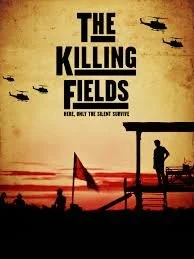
The Killing Fields (1984), directed by Roland Joffe, depicts the Khmer Rouge takeover of Cambodia and the genocide that followed, which resulted in the death of approximately 2-3 million people. The film is based on the experiences of New York Times journalist Sydney Schanberg (Sam Waterson) and Cambodian journalist Dith Pran (Haing S. Ngor). It provides a haunting depiction of mass violence as well as a moving story about these two colleagues and friends. In the wake of the 50th anniversary of the Khmer Rouge takeover of Cambodia, it is worth revisiting a film that is as powerful and relevant today as when it was released.

34:10 The ECCC and transitional justice in Cambodia
42:44 Journalists and international criminal proceedings
47:50 Haing Ngor and his tragic fate
53:26 Civil society endeavors to bring history to life
55:21 The fall of Phnom Penh
59:03 The failed attempt to get Dith Pran out
1:00:15 The risks facing journalists today
0:00 Introduction
2:16 The Khmer Rouge and Year Zero
6:04 The U.S. contribution to the Cambodian genocide
8:14 The role of journalists in Cambodia and conflict zones
17:34 The treatment of journalists under international law
18:46 The killing fields and the film’s impact
24:08 Sydney Schanberg and Dith Pran, and journalistic ethics
Timestamps
-
00;00;12;28 - 00;00;34;19
Jonathan Hafetz
Hi, I'm Jonathan Hafetz, and welcome to Law on Film, a podcast that looks at law through film and film through law. This episode looks at the Killing Fields, the 1984 drama directed by Roland Jaffe, which depicts the Khmer Rouge takeover of Cambodia and the genocide that followed, which resulted in the death of approximately 2 to 3 million people.
00;00;34;22 - 00;00;56;00
Jonathan Hafetz
The film is based on the experiences of New York Times journalist Sidney Shamberg, played by Sam Waterson, and Cambodian journalist this Pran, played by Hyung s Noor. It provides a haunting depiction of mass violence, as well as a moving story about these two colleagues and friends. We revisit a film that's as powerful and relevant today as it was when it was released.
00;00;56;03 - 00;01;31;26
Jonathan Hafetz
Joining me to talk about The Killing Fields is Alexandra Zander Meyers, Alexandra meyers joined the Northeastern University law faculty in 2001. Professor Mises research on sovereignty, statecraft, national security, and human rights stands at the intersection of policy and public and private international law. Previously, Professor Meyers spent over a decade in practice preventing and resolving international disputes, including in human rights litigation and treaty based international arbitrations and public international law forums, and designing and implementing legal reforms and human rights best practices.
00;01;31;28 - 00;02;02;04
Jonathan Hafetz
Her professional experience has spanned five continents, including work for the Pretrial Chamber of the Extraordinary Chambers in the Courts of Cambodia through the UN Assistance to Khmer Rouge trials for the U.S. Department of State and Post in Europe, and in international development in countries such as Yemen and Bosnia. Since the fall of 2023, Professor Mies has been serving as a visiting professor at the U.S. Army War College in Carlisle, Pennsylvania, where she's also the chair of the women, Peace and Security Studies Program.
00;02;02;06 - 00;02;05;25
Jonathan Hafetz
Professor Mies van der, it's great to have you on law and film.
00;02;05;27 - 00;02;08;29
Alexandra Meise
Thank you so much. I'm really excited about being here.
00;02;09;01 - 00;02;17;09
Jonathan Hafetz
So the movie centers around the takeover of Cambodia by the Khmer Rouge and its aftermath. What happened during this time period in Cambodia?
00;02;17;11 - 00;03;18;06
Alexandra Meise
Nothing short of a remaking and first undoing of Cambodian society. So during this time, we have an area that is coming out of the Vietnam War, at least US participation in it. But as the US involvement in Vietnam is ongoing, a civil war has developed in Cambodia. And ultimately, in 1975, the Khmer Rouge regime takes over in Cambodia and its leader, Pol Pot, resets Cambodian society when he calls for zero and he wants to return Cambodia to, as he describes it, a golden age of its agrarian roots and wants the people of Cambodia to return to farming, agricultural work, move out of the cities, and then remake their communities in this way, where it's the
00;03;18;06 - 00;04;07;15
Alexandra Meise
state as your family, as opposed to your family ties or other kinds of ties. And part of this involved severe shifts in the population out of urban areas. We see that in the movie that's depicted the beginning of this mass migration out of the city. We see it in the movie as well, where we see scenes of people in farming, small farming communities and things like this, but also part of what this regime did was have such an anti education, anti-establishment, anti the existing government system approach, that they targeted and persecuted anyone who is considered to be a professional or any kind of profession that had training, because this could be a threat to
00;04;07;15 - 00;04;19;07
Alexandra Meise
the regime and to the ideology they're promoting. So teachers, doctors, lawyers, journalists, government officials, you name it, they were targeted for persecution under this regime.
00;04;19;09 - 00;04;40;00
Jonathan Hafetz
Yeah, we can see that in the movie in multiple respects. Right. One despawn the clown character who is a right, the journalist. Right, who's working with New York Times journalist Andy Shamberg after he's effectively trapped in Cambodia in order to survive, he has to totally disavow and hide the fact that he was educated and working with a US journalism outlet.
00;04;40;00 - 00;04;59;15
Jonathan Hafetz
But but even in journalism itself. So he's like, pretending that he's a taxi driver and even ignore who plays the actor. The first role that he was in before he plays this pawn in the movie. He was a doctor, right? And so he has to hide that he's a doctor. I mean, in fact, that tragic consequences is his position.
00;04;59;18 - 00;05;24;14
Alexandra Meise
Absolutely, yes. This is just part of the heartbreaking story of his own personal life and what he had struggled through before he came to the United States. And yes, he was not only a doctor, he was, an obstetrician. And he and his wife hid through education, training and whatnot when they were, moved to one of these, agricultural, camps, if, if we'll call it that.
00;05;24;17 - 00;05;46;09
Alexandra Meise
His wife falls pregnant, she goes into labor. She has difficulties with labor. He knows how to help her. But it was decided between the two of them that he would not do so, because to do so would reveal his skills and then threaten the entire family. And so what an unbelievable tragedy to have your partner in life's life in your hands, and you can do something about it.
00;05;46;09 - 00;06;03;28
Alexandra Meise
And yet, for our greater utilitarian goal of surviving, you don't write. And that's the personal tragedy of this individual. And then he also plays this character, plays this also real life human who has great personal tragedy. So there's lots of connections there.
00;06;04;00 - 00;06;23;15
Jonathan Hafetz
The film talks, fair amount. And it's certainly suggested about the US role, which you touched on. And, well, what ultimately leads to the Cambodian genocide and the Khmer Rouge take over, you know, with the secret bombing of Cambodia under Nixon. So how did the U.S. contribute to what was happening in Cambodia or what happened to Cambodia?
00;06;23;17 - 00;06;50;15
Alexandra Meise
Well, many a PhD dissertation has been written about this. There is, you know, varying levels and debates as to how direct it was. But there's lots of agreement that, look, the U.S. is engaged in a conflict in Vietnam, Vietnam as Cambodia's neighbor. So that's already creating tensions between those two countries. The Khmer Rouge is aligning with one side of the fight in Vietnam.
00;06;50;17 - 00;07;23;19
Alexandra Meise
The U.S. has its alliances in Vietnam. You have the secret bombing campaign. So before Nixon publicly announces that we're going to take action in Cambodia, he's already bombing Cambodia. And estimates vary widely. But at a minimum, tens of thousands of casualties occur in Cambodia. And if you look at timing, right. But correlation may not be causation, but at least we'll look at timing as to the beginning of the Khmer Rouge starting to be active in political life.
00;07;23;19 - 00;07;49;10
Alexandra Meise
And then where it ends up and overlap that with U.S. involvement, bombing and whatnot. You can see that as the US bombs, more as there were more casualties. This does play into the narrative that Khmer Rouge is promoting, and Khmer Rouge does gain supporters so that, you know, by the time 1975 rolls around, which is as depicted in the movie, when, Arash takes over Panam Penh.
00;07;49;13 - 00;08;13;11
Alexandra Meise
The U.S., of course, is out of Vietnam by that point. But, you know, at a minimum, right? The chaos and the, secondary effects of some of our activities, you know, you can sort of draw this line as to how the Khmer Rouge, had a smoother path to power, or at least could remark on, what was going on next door and in their own territory.
00;08;13;13 - 00;08;32;14
Jonathan Hafetz
You know, it's very important in the movie, I think, for, the way the movie depicted, you know, Sidney Sheinberg did plan to depict to let like, America know what's happening. Right? And that's really there, that's sort of like, you know, their mission, right? You have Sheinberg, you have the Prime, and then you have the photographer Allen or Al Rakoff.
00;08;32;17 - 00;08;57;00
Jonathan Hafetz
That's the John Malkovich character. And so not only are they depicting what's going on before the Khmer Rouge takes over being on pen, but they are also among the handful of journalists who remain in Panama. And after it falls to the Khmer Rouge at great personal risk. There's one scene once even the movie shows that they were arrested when visiting a hospital by an angry company of teenage Khmer Rouge soldiers and were almost killed, just saved only by death.
00;08;57;00 - 00;09;04;11
Jonathan Hafetz
Bronze interventions. So what role did Shamberg and this prompt play in publicizing the atrocities?
00;09;04;13 - 00;09;30;06
Alexandra Meise
There's a reason why Schoenberg ends up winning the Pulitzer Prize right after he comes back to the United States. I believe it's in 1976, and it's for this reporting that he is engaged in as the country falls. And this is a very different time. Right. And so without the magic of our internet and Twitter and cell phones and whatnot, right, you could only get information if someone was physically there to see it and to report it.
00;09;30;09 - 00;09;48;03
Alexandra Meise
And we see in the movie some of the struggles about is the wire up, you know, the for the photographers. Can I, can I print a picture? How are we going to get this film out? You know, all of these sort of complications. And so for both Pran and Schönberg to stay as long as they did during the record, what was happening in photographs.
00;09;48;08 - 00;10;14;07
Alexandra Meise
But his contribution is not just the photographs. Right. And we see some of this in the movie. He helps Schoenberg navigate Cambodian society, get inside information, get into places where he probably otherwise wouldn't, and also get out of situations that he certainly otherwise would not have gotten out of without help. I think of it as it should be seen as a partnership rather than as one person being sort of relating Salieri to the other, but getting this word out about what was happening.
00;10;14;07 - 00;10;42;17
Alexandra Meise
Cambodia very important back in the United States, and the reporting about the bombing campaign, some of which Schomberg was the first to report on, as this information, you know, comes out in the United States, you can see connections between increase in protests in the United States about U.S. involvement in Cambodia, part of why we have a war Powers Resolution or War Powers Act.
00;10;42;18 - 00;11;02;28
Alexandra Meise
You know, people kind of come up with names, which calls upon the president to notify Congress when engaging in use of our armed forces and, you know, can only do so for a limited period of time before actually needing conditional approval. That construct comes out of Nixon's actions in Cambodia, and the fact that he hadn't reported the bombing.
00;11;02;28 - 00;11;35;10
Alexandra Meise
Right. How that information then comes out. So I think it's really interesting in the U.S., and I can speak for myself as someone who then worked in Cambodia, I did not know much about this as far as what I learned in public school or what I, you know, kind of knew growing up. And to find out about how many connections there are between things that happened in Cambodia around the time of this movie, right around this regime of the Khmer Rouge, and how this affected U.S. policy, particularly if we think of something like the War Powers Resolution, which is really important to the balance of power, is here.
00;11;35;17 - 00;11;38;10
Alexandra Meise
I think a lot of Americans would be surprised.
00;11;38;12 - 00;11;52;28
Jonathan Hafetz
Yeah. I mean, in another one it's a little bit earlier. But what are you talking about? Increases the rates, increased activity in the antiwar movement. It's what I think was the precipitating cause of Kent State. You know, a lot of this was the protest over the involvement in Cambodia as sort of a seminal moment. Yes. Yeah.
00;11;52;28 - 00;12;17;05
Alexandra Meise
Yes. There is that connection as well. So, you know, when you think about many Americans don't know much about Cambodia, you know, probably couldn't pick it out on a map, but there's just so many connections between significant points in our history and the seminal events that this movie is talking about and that preceded this movie. Right. Because, as I said, there was a Cambodian civil war was ongoing before the fall of Panam Pan.
00;12;17;07 - 00;12;43;21
Jonathan Hafetz
And so in order to kind of bring the story home, publicize what goes on, there's questions around access to war zones that Shamberg and Different are trying to get. There's one scene where they're pressing a U.S. major, played by Craig Nelson for information, about access to a village, in Cambodia that the U.S. had mistakenly bombed. They also seek access to information from the same U.S. official about the number of people killed.
00;12;43;24 - 00;12;46;06
Jonathan Hafetz
Shamberg. Demanding this kind of information.
00;12;46;08 - 00;13;06;27
Speaker 1
So how can I help you, Mr. Shamberg? I was wondering if maybe you could give me some information on why my airplane was delayed this month. The plane was delayed? That's right. I don't know, maybe it's bad weather or something, but your flight and commercial flights were them. I don't know anything about it. No, I don't, all right, in that case, I would like you to listen to something I've just been listening to.
00;13;06;27 - 00;13;33;12
Speaker 1
And then I would like a comment this morning, for reasons beyond anybody's control, I spent two hours in Bangkok staring at a seatbelt sign. Meanwhile, my sources tell me two Army helicopters are landing here just across the airfield, half the ambulances, and now I'm waiting there to meet them. And now my sources tell me that there's a rumor that the United States Air Force dropped a bomb or several bombs on the city of Newark.
00;13;33;14 - 00;13;43;00
Speaker 1
Locks. Come on, Schönberg, that's a rumor. Now, I'm not going to comment on a rumor. I don't understand you. I just want to know if that's the reason why my airplane was delayed.
00;13;43;02 - 00;13;49;18
Speaker 1
And no comment. How many killed? How many wounded?
00;13;49;20 - 00;14;01;24
Speaker 1
Thank you for your cooperation. Which was when I scraped this story out. I will no doubt be quoting you in full.
00;14;01;26 - 00;14;08;08
Jonathan Hafetz
The how significant a role did these correspondents play? And has this role changed kind of over time? And you kind of alluded to that.
00;14;08;10 - 00;14;33;12
Alexandra Meise
The role of journalists in conflict have in some ways been very similar and consistent across, frankly, hundreds of years. And in other ways they're different in the sense of the formality of who is a journalist and who is it, what kind of role they have. Are they even wearing a uniform? So if we just look at a snapshot of think about World War Two, I think about movies, probably some of which you've had, you've discussed on this podcast, right?
00;14;33;12 - 00;14;57;20
Alexandra Meise
There were lots of journalists that were embedded with military units, but their role was to be in the military unit. Right. They're wearing a military uniform. They are there to record events, but also to not just distribute them publicly, but they are gathering information that then is used for military purposes as well. Right. So there's just it's almost like you can't separate journalists, at least some of the journalists.
00;14;57;20 - 00;15;17;02
Alexandra Meise
And we're War two from military. There were certainly independent journalists as well. And what were you I mean, look at any major newspaper and whatnot. But my point is, you know, you had sort of lots of this embedding and kind of restrictions, at least as to what some journalists were reporting. Fast forward to the the time frame, the era around this movie.
00;15;17;05 - 00;15;44;03
Alexandra Meise
And there has been a big shift by the time we get to the Vietnam era, right. There are journalists who may accompany forces on operations, but they're not going to be wearing uniforms. Right? They see themselves as I you know, my paycheck doesn't come from the government. It's coming from some kind of news entity or whatnot. And is there still a balance there at being journalists you think should not be reporting on military operations that then could hinder those operations in the sense of put lives in jeopardy.
00;15;44;06 - 00;16;14;09
Alexandra Meise
But they are also independent. Right. And there's that shift. And then nowadays you look at some of the current conflicts, and journalists aren't necessarily formalized journalists anymore. In some ways, lots of regular people become journalists. If we look at the war in Russia, Ukraine, right, where almost everyone's got a cell phone, well, an instance, they can take pictures, they can take videos, they can upload them, you know, via some kind of social media platform.
00;16;14;09 - 00;16;35;05
Alexandra Meise
They may be providing information in real time. And yet are they journalists or not? And these are some of the really interesting questions that arise. Right. Different media outlets may have their own ethics rules and their rules as to how their formalized journalists should operate. When you have people who aren't working for some of these formal media outlets, things may change.
00;16;35;07 - 00;16;50;28
Alexandra Meise
So if we just look at the snapshot of 75 years of World War Two through now, there has been a lot of change in what journalists do, what kind of roles that they have, and what kind of relationships they have with those who are actively engaged in combat.
00;16;51;00 - 00;17;10;04
Jonathan Hafetz
Yeah, it's so interesting because, I mean, you feel like with the way Sidney Sheinberg and others, a rock photographer different that that they don't, you know, they don't get this out, the story out of what's happening, no one will know. Right. And they believe they'll change events by doing that. But if you fast forward right to I think really especially starting with the conflict in Syria.
00;17;10;04 - 00;17;27;29
Jonathan Hafetz
Right. And then certainly now in Gaza and Ukraine, you have with, you know, sort of the big data and cell phones and citizen journalist. Right. Reporting from conflict zones. It's become about what it means to be a reporter and the reporting, the information's, you know, very different. But in that sense, it seems, you know, like from a different era.
00;17;28;02 - 00;17;52;10
Alexandra Meise
It does. And yet in some ways, again, things are very similar. You know, in anticipation of talking to you about this, I was reading up on my an international humanitarian law, and we look at Geneva Conventions. Right. Media is not a protected class. Like let's say a medical professional is. They're supposed to be treated like civilians and they're entitled to then certain kinds of protections that a civilian would have.
00;17;52;17 - 00;18;14;05
Alexandra Meise
But then we look at situations that journalists find themselves and, and often it's not situations that your average civilian would fit in. And so there's really interesting questions that arise as to why should journalists be having security forces with them, especially if those are armed security forces? Does that change them into a combatant, like from the lawyer standpoint?
00;18;14;05 - 00;18;37;25
Alexandra Meise
Lots of really interesting questions. From a practical standpoint, though, as a journalist, also very interesting questions, because do you want to be able to move about freely? Do you want to be seen as someone who is independent, or do you want to risk perhaps being interpreted to be a combatant or not? And all the different implications of that?
00;18;37;25 - 00;18;46;01
Alexandra Meise
And we've seen problems with this. A CNN encountered some problems in Iraq about this, but there's many examples from different journalist outlets about it.
00;18;46;03 - 00;19;05;04
Jonathan Hafetz
There's sort of a break in the movie, right, when you know it's coming from the title, right after the US, you know, Shamberg is forced to leave and the other remaining Western journalists and diplomats, the French embassy is, I think, the the last sort of place that goes to plan and we talked about is trapped. He has to stay because he's Cambodian.
00;19;05;04 - 00;19;15;10
Jonathan Hafetz
And their plan to get him a false passport to get them out fails. And then it sort of like goes dark, right? Then it cuts to the killing fields, which is the term that this Pran coined.
00;19;15;10 - 00;19;55;18
Alexandra Meise
I believe he's credited with coining the term. And as he escapes Cambodia for Thailand, he, you know, foot and by crook goes 40 miles to escape to Thailand. And he describes multiple instances where he comes across literal fields that have bodies or other evidence of mass casualties, mass destruction. And so he describes these as killing fields. And then that's a term that yes, gets then picked up not just the title of this movie, but something that now is used regularly with regard to Cambodia.
00;19;55;18 - 00;20;05;29
Alexandra Meise
But people will often now use it when describing mass casualty events or other genocidal activities in other places as well. But yes, he's credited with the term.
00;20;06;01 - 00;20;25;16
Jonathan Hafetz
And how much did he and his account, you know, publicize what was happening? I mean, how much was really known because you have reporting about the war until, you know, the generals are kicked out and then you have the sort of start of the Cambodian genocide, the implementation of year zero. And there's presumably not a lot of of any reporting coming out of Cambodia.
00;20;25;16 - 00;20;30;05
Jonathan Hafetz
So what role was there at that point in terms of publicizing what went on at the time?
00;20;30;08 - 00;20;58;16
Alexandra Meise
I think the movie is absolutely essential and influential in getting international focus on what had happened in Cambodia. Absolutely. That cannot be understated, the power influence that has. And if we look at the timing, right, this movie comes out in the mid 80s. This is frankly right after the Khmer Rouge regime falls in 1979. This is very fresh.
00;20;58;18 - 00;21;23;25
Alexandra Meise
There are many people still in camps when they were filming this movie, the scenes in the camps in Thailand, there were still refugee camps in Thailand. Right? This is so this wasn't history. This was still very present. And yet the world did not know much about it. Why so many reasons? Geographic proximity being one of them. Again, different time with technology.
00;21;23;25 - 00;21;53;19
Alexandra Meise
But also I think it has to be noted that this is happening right as the Vietnam War is coming to a close. There has been so much press and coverage about that, its context within the Cold War, other tensions between the United States and the Soviet Union and whatnot. And so Khmer Rouge takes over. But I think that for some, at least in the international community, there's a perspective of, oh, this is limited, and it is somewhere over there.
00;21;53;21 - 00;22;22;21
Alexandra Meise
And I thought we were out of Vietnam. Like, like somehow this gets blended in people's minds. And then as far as the American public goes, there's a lot of tension, emotion, exhaustion and whatnot surrounding discussions of Vietnam. And because again, this is so dovetailed with that given the secret bombing, given that history with President Nixon and whatnot, I think there wasn't necessarily great interest in continuing to talk about Cambodia.
00;22;22;23 - 00;22;43;14
Alexandra Meise
And so then when you get this a few years later, right, there's been at least enough of a break that people have had time for a couple of breaths. Right? They haven't heard about it all the time. So then it does seem fresh when the movie comes out and the movie is so well done, and you have such a compelling human story of Pran, of the actor.
00;22;43;14 - 00;23;01;13
Alexandra Meise
Also, Noor, who plays Pran. Schonberg of course you can talk about his experience. He's won the Pulitzer, right? So there's new appetite in the public to hear about it. But this film was the opportunity for many people to learn about this conflict.
00;23;01;15 - 00;23;20;24
Jonathan Hafetz
And I'm thinking, as you mentioned, right. It's it's reporting. It's also films, right? There's this gap because out of Vietnam, you get in the late 70s, right? You get a series of really, you know, harkening, very popular or popularly seen, widely seen movies about the war continued or movies you got Deer Hunters 78 coming home around that time, Apocalypse Now 79.
00;23;20;24 - 00;23;32;17
Jonathan Hafetz
But this is 84, right? So it's like you had that sort of filmic focus in the late 70s, and then you have this movie about Cambodia, which was, as you said, much less was known about.
00;23;32;19 - 00;24;02;24
Alexandra Meise
And Apocalypse Now. Right. And some of those other examples talk a lot about the combat and the uniform person's experience. This movie, there is absolutely brutal violence. There are some scenes, of people in uniform and some of that kind of, action, but it's much more about the impact on civilians, and impact on noncombatants in a way that there certainly are some movies about Vietnam to talk about that.
00;24;02;24 - 00;24;07;05
Alexandra Meise
But I think it's a fresh take on the conflict in that space.
00;24;07;07 - 00;24;26;14
Jonathan Hafetz
We talked a little bit about journalistic ethics and journalists covering war zones. You can see some of these issues being teased out in the movie. There's also this sort of question which may have an ethical dimension between Shamberg and this themselves. Right. They're very close, as you said. You really have to view them, as a team. And it's one of the really powerful parts of the movie.
00;24;26;14 - 00;24;45;04
Jonathan Hafetz
It's a really kind of complex, rich relationship that it shows. And there's a question about whether this prawn stayed too long in Cambodia when it became too dangerous, when it was clear the Khmer Rouge were going to take over and it wasn't going to be safe. And whether Shamberg had some responsibility, at least by failing to encourage them to leave.
00;24;45;08 - 00;25;04;26
Jonathan Hafetz
And it's interesting because I think there's like a couple of layers here. One is Shamberg sort of needs prawns help covering the war. Right. And but he also says there's a sense where when Shamberg is saying maybe you should go different and sort of saying, hey, I'm a journalist to the right, and there's this sort of like a little bit of a kind of, you know, paternalism.
00;25;04;26 - 00;25;08;18
Jonathan Hafetz
I think between shamberg, the New York Times reporter and different.
00;25;08;20 - 00;25;30;17
Speaker 1
I was over at the American Embassy yesterday with, you know, not good. They say that when this place goes up, they think that a lot of people are going to get killed. A lot of. All right. I've arranged for the evacuation of you and your family. So now it's up to you. What do you want to do? Do you want to stay or do you want to leave?
00;25;30;19 - 00;25;57;00
Speaker 1
And how about you? That's none of your business. Do you want to stay or do you want to leave? I know you love my family. Stick with me. I'm reporter talking to. You know. I mean, all right, we don't have to decide this now. We don't have to decide right now. Take it easy, and we're going to have to make up our minds pretty soon, right?
00;25;57;02 - 00;26;17;17
Jonathan Hafetz
There's also this scene later, right? When it's clear that it was a bad idea. In the sense. Right? I mean, ultimately, this problem lives after four years in a torture camp, but it looked like he was going to, you know, he had died. He's he's taken by the Khmer Rouge. Disappears. And the photographer, al Rogoff confronts Sydney Shamberg, which, after Shamberg was winning and awarded, gives a speech at a press event.
00;26;17;19 - 00;26;24;23
Jonathan Hafetz
And Rogoff, John Malkovich character really dresses him down and criticizes him for putting prawns life in danger.
00;26;24;25 - 00;26;25;27
Alexandra Meise
00;26;25;29 - 00;26;44;29
Speaker 1
What are you doing? Bothers him. Bothers me that you my to stay in Cambodia because you wanted to win that fucking award and you needed him. I don't have any idea what was going on, but you didn't fuck you didn't. You did everything I could. I'm doing everything I can. Anyway, it's nice to see I'm on my way to Florida.
00;26;44;29 - 00;27;02;29
Speaker 1
I'm telling you, I'm doing everything I can. I'm sure you're laughing. I didn't realize you've been out there. Sam. Don't play games with me. I don't play stupid games. Nobody gets to go in there. If I thought I could, I would send out hundreds of photographs. Every relief part. Musician on the tight camp with James Boyd. It's got his.
00;27;03;02 - 00;27;16;03
Speaker 1
It's got his picture. If I saw one moment of hope, I got shot today. Thank God I did not fucking for this movie. I can't just get on a goddamn plane and make the whole world come out right. And I can't believe I'm hearing this from you.
00;27;16;06 - 00;27;21;22
Jonathan Hafetz
Are there journalistic ethics that speak to this, or is this just sort of like a sort of a moral quandary?
00;27;21;25 - 00;27;52;09
Alexandra Meise
Can I say yes? And, both I mean, both can be true. So I want to say movies are movies, and so movies take some creative license. And certainly not everything in the movie is exact to the book. Movies also like to tend to have good guys and bad guys and, and whatnot. I think things are a lot more complex, and they're necessarily shown, but I think to presume that Schomburg had the power to make him stay or go is paternalistic.
00;27;52;12 - 00;28;15;08
Alexandra Meise
Pran was an excellent photographer and reporter in his own right. Key in interviews many, many times after this movie came out, after his but after the book and then after the movie emphasized that it was his choice. So I do stand with the position that it is presume that he helped that he, you know, be Christian, say, or somehow made him stay is not fair to prom.
00;28;15;11 - 00;29;00;25
Alexandra Meise
However, I think let's take a step back and look at bigger journalistic questions about the relationships between reporters and their fixers, international reporters and their domestic colleagues in a particular location and situations like this movie. Right. This movie got a lot of attention, caused a lot of conversations in journalism circles. But there are examples in every conflict that you can look at where you have this, where there is this push then to recognize the importance of your local colleagues, the importance of those fixers, and to recognize the special dangers that those individuals are taking on if they're helping international folks.
00;29;01;00 - 00;29;21;29
Alexandra Meise
And this happens for folks in development, right? This happens in lots of different situations that involve people in a community where something is going on pre, during or post conflict, and international folks who are coming in and engaging in some kind of activity. Depending on what ends up happening, your affiliation with those international folks can have really negative consequences for you.
00;29;22;01 - 00;29;46;29
Alexandra Meise
And so this is where we get into certain formal media outlets have rules about this. There's certainly a push by lots of international journalistic groups to emphasize that, you know, these international entity should give health coverage and security, right, and support for their local colleagues, recognize them, give them credit when they're writing stories, things like this. But at the same time, there are so many of these discussions.
00;29;47;01 - 00;30;06;26
Alexandra Meise
We see certain mistakes or certain problems arising again and again. We can look at, you know, any conflict and at some point when certain people leave and those who live there have to say, what does that mean for them? And you know, that happens again in current conflicts as, as well. So there's a huge moral component to this.
00;30;07;04 - 00;30;38;04
Alexandra Meise
But I think there's also a professional component of this because you then get into the questions of should a journalist intervene or not? Is the role of the journalist to just report? Should the journalist take action, even if they don't intend to go in saying, I'm going to fight on this side or the other, what happens if you see an individual shot or I saw something happen to a child and I want to help this child, so should I drop my camera to then go help the child?
00;30;38;04 - 00;31;04;22
Alexandra Meise
These are the questions, right? And I think there's a really interesting anecdote that actually comes from the United States about this and Martin Luther King, because there was a freelance photographer who during one of the, more infamous civil rights, protests and then an associate of violence in the United States puts down his camera to rush to help a young demonstrator who's been injured who had been, beaten by police.
00;31;04;25 - 00;31;31;02
Alexandra Meise
And later, Doctor King says that he was much more valuable as a photographer than a participant. And so I think this is really important to keep in mind, and it's something that certainly journalists struggle with, because part of the power of journalism is the perceived independence, that you're getting a story that maybe isn't from either side, especially if we're talking about journalists who aren't right embedded or who aren't employed by, you know, a government.
00;31;31;04 - 00;32;01;24
Alexandra Meise
And so once you switch, right, once you start to be an actor, does that affect your reporting? And lots of questions arise from that. But once I heard that story, it always stuck with me, right? That there's this power of the journalist that transcends what might happen on a particular day, or that pull to intervene. But it is a really hard and, you know, morally taxing question that arises for many journalists who work in conflict.
00;32;01;27 - 00;32;24;08
Jonathan Hafetz
And with respect to shamberg and from the from the movie, I think does, you know, it's kind of a lot of what you were saying when they were finally reunited at the refugee camp, when Schomburg learned that I had escaped, there seemed to be the mutual understanding. There doesn't seem to be like animosity. I mean, and for what it's worth, I don't know if this is the reason, but I as I understand al-raqqa the photographer writers have produced a number of very powerful images of Cambodia.
00;32;24;08 - 00;32;32;18
Jonathan Hafetz
The John Malkovich director wasn't happy with the depiction in the movie. And me, I'm not sure that's because, he was the one who sort of criticized Shamberg.
00;32;32;20 - 00;32;56;05
Alexandra Meise
That last scene is actually the most criticized one in the movie, and there's it's not just, those who are there who criticize it because it seems to be some would say it's kind of a sanitation at the end, like, oh, look, this movie has had all of this, you know, really difficult and trying, storytelling. But we're going to have a happy ending in the sense of we're playing imagined by John Lennon.
00;32;56;05 - 00;33;08;02
Alexandra Meise
And so when you talk to people who have analyzed every aspect of this movie, experts on Cambodia, experts on many different aspects of the conflict, they'll talk about that. Shall we say the last scene is not their favorite.
00;33;08;06 - 00;33;09;11
Jonathan Hafetz
The reunion scene. Yeah.
00;33;09;12 - 00;33;31;10
Alexandra Meise
The reunion that that last scene where it's the reunion and, you know, that sort of all is forgiven. It kind of ties it up in two. Need of a bow. I think that when you listen to interviews with Schomburg, with Pran, they did the press tour for the movie right after, it came out, they were talking about it and you can see and you can hear in their voice that it's perhaps not that simple.
00;33;31;12 - 00;33;43;02
Alexandra Meise
They both have still a lot of feelings about, of course, what had happened, the trauma different trauma, but that each experienced and so it's it's not quite as simple as the last scene in the movie may wrap it up to be.
00;33;43;04 - 00;33;59;01
Jonathan Hafetz
Yeah, it does wrap it up in a bow. And then you have the had the placard at the end, you know, explaining as much accurate that, you know, Chandra continues on at the New York Times. So he begins a falling out with the publisher, but this time he becomes a photographer for the time. So it does sort of tied together, but it's inevitably messy.
00;33;59;01 - 00;34;07;23
Jonathan Hafetz
I mean, especially in the four years, that different had to survive and all the deaths that he saw and everything else is, you know, it's something you have to reckon with it.
00;34;07;25 - 00;34;08;27
Alexandra Meise
Absolutely.
00;34;08;29 - 00;34;33;06
Jonathan Hafetz
Since the film, there have been a number of developments in Cambodia, but I think it's the falls that come out rouge. One of them was the creation of a tribunal, the extraordinary Chamber in the courts of Cambodia, referred to, by those, by many as see which was established in 2001 by the UN at the request of the Cambodian government to try senior Khmer Rouge officials for genocide and other international crimes.
00;34;33;08 - 00;34;37;12
Jonathan Hafetz
So how was the scene formed and how did it work?
00;34;37;14 - 00;35;13;28
Alexandra Meise
So the See is formed through effort of the multinational effort of the United Nations. You mentioned in my bio that the CIA then you said, you know, United Nation, Khmer Rouge trials assistance, right? So this is part of an international effort. There was recognition that there could be should be some kind of accountability for the most serious offenses that had happened during that time period of the prime Khmer Rouge regime, so 1975 to 1979.
00;35;14;00 - 00;35;39;14
Alexandra Meise
And this comes about in the arts. So after we have an ICTy International Criminal Tribunal for the former Yugoslavia, after we get the International Criminal Tribunal for Rwanda, there was talk of should there be another special tribunal like that for Cambodia. And what was decided here was rather than having a pure international tribunal like those two examples were to do a hybrid.
00;35;39;16 - 00;36;08;29
Alexandra Meise
So the C part of this is really important, this court, this special tribunal that was designed to look at crimes against humanity, genocide. Right. The most heinous of acts during this time was an effort of the Cambodian government seated within Cambodian courts. And at each level of the court, you have Cambodian professionals and you have international professionals. So, for example, in the judicial chambers, right, there's the pretrial and trial level, and there's also the Supreme Court level.
00;36;09;01 - 00;36;42;22
Alexandra Meise
There was one more Cambodian judge than international judge at each of those levels. But decisions. Right. And verdicts needed a supermajority. So the idea was that you would not end up with just a divided vote of all the international judges or, you know, vote this way, and all of the Cambodian judges vote another way. And even in the staff of the court, people worked in parallel of Cambodian staff, international staff at each different stage, Cambodian prosecutor, international prosecutor, etc., etc. so it was really interesting approach.
00;36;42;25 - 00;36;54;18
Alexandra Meise
If you compare it to extr of embedding this kind of justice, right, retroactive justice system within a country's own legal system.
00;36;54;21 - 00;37;19;24
Jonathan Hafetz
The triple C did achieve several convictions, but there have been some critiques. One of which, to your point is that it's been critiqued for, having too much local influence, Cambodian influence, which skewed the process. Right. And there was some effort to protect former Khmer Rouge. And another critique is its treatment of in terms of the crimes of, of genocide and whether there were convictions for genocide.
00;37;19;26 - 00;37;42;09
Alexandra Meise
So when it comes to what kinds of cases the court took and why it didn't take more cases, the idea behind this tribunal and frankly, behind other international criminal tribunals, if you look at the ICC, right, and the Rome Statute, it these things are designed to go after the most culpable right, the ones with the most power over these situations.
00;37;42;11 - 00;38;11;06
Alexandra Meise
So this court was designed to do that as well. Most serious crimes, those most responsible. The first case was about the infamous prison to slang, where thousands of individuals were tortured for being seen as opponents of the regime. And I mentioned earlier, the focus on professionals focus on this. But to be clear, the Khmer Rouge also targeted those with religious affiliations, those with who seem to have family ties, anything that was not a tie to the state.
00;38;11;06 - 00;38;32;25
Alexandra Meise
Right. And so opponents of the state, so many were tortured and killed in that prison. And the person who led that prison was famously the first defendant in the first case, and then the second case broke up into other cases. And, yes, genocide was one of the components of that. And there were a lot of criticisms about when there was a genocide conviction.
00;38;32;25 - 00;38;56;25
Alexandra Meise
Why was it so narrow when you think about how many people died in Cambodia under the Khmer Rouge regime, figures vary, but there between 1.9 million and sometimes the figure goes up to 3 million. But this is somewhere between 20 and 25% of the Cambodian population at the time. And so how could you not think of this as a genocide?
00;38;56;25 - 00;39;21;19
Alexandra Meise
Because there was this targeting. This is what most people are sort of thinking had the approach to it. But genocide is a very specific crime with a very specific definition. And when you look at that definition, it's looking at whether there's intent to commit, intent to destroy, excuse me, in whole or in part, people on account of national, ethnic, racial or religious group affiliation.
00;39;21;22 - 00;39;45;21
Alexandra Meise
Political affiliation not on the list. Amount of education one has not on the list. Political pain, this kind of thing. And so the court in finding that there was genocide. That verdict focused on the killing of the Vietnamese minority and targeting of the Vietnamese minority by Khmer Rouge, and also the Chom, which is a muslim minority, group that's also president Cambodia.
00;39;45;23 - 00;40;08;11
Alexandra Meise
And so it is quite limited and people do get frustrated by that. But this comes up, again, not just in Cambodia, but in discussions of when and where to use the term genocide in other places as well. Under the law, massive killings, even if they are numerically hundreds, thousands, tens of thousands. That isn't necessarily a genocide. It depends on intent.
00;40;08;11 - 00;40;24;12
Alexandra Meise
It depends on this group. And so I think the frustrations with the Cambodian court actually are just reflections of frustrations with any court about what is genocide, who can be charged with it? What does that mean? What are the implications of that, etc..
00;40;24;14 - 00;40;36;13
Jonathan Hafetz
What role in the tribunal did feel the evidence gathering play? Right? This was one of the featured photos, videos, contemporary reporting. And what role does it play in other legal proceedings to address mass atrocities?
00;40;36;16 - 00;41;14;14
Alexandra Meise
Evidence gathering is really important in the Cambodian tribunal and I would say in a unique way compared to many other international tribunals, because in this instance, part of what the Khmer Rouge had done was en masse destroy records, destroy books and things like this. They may have kept records of their crimes, but as far as the history of Cambodia and cultural traditions and things like that, especially anything affiliated with modern religion and social life because they destroyed it, the court had to engage in what ended up being basically a worldwide effort to try and gather evidence.
00;41;14;14 - 00;41;42;22
Alexandra Meise
So things that people had kept when they fled, different historical documents or things that other governments had right, became part of the evidence in this court. And those working with the court, I think, really understood the importance of this evidence, not just for the legal proceeding, but whatever the outcomes were of the legal proceeding. This evidence was going to be important for the people of Cambodia and the future of Cambodia.
00;41;42;25 - 00;42;07;05
Alexandra Meise
The Cambodian court had a division that was the victims unit. It also had a very robust public outreach division and on a regular basis, schoolchildren from throughout Cambodia, because, of course, the court is going on decades after these tragedies took place. So a huge percentage of the Cambodian population at the time the tribunals going on were not even alive when the atrocities happen.
00;42;07;06 - 00;42;32;00
Alexandra Meise
So a school children regularly came to the court to learn about the history of this time period, to see different kinds of artifacts, if you will, that you would see in a museum right there, getting that information through the court. And as the court, especially as the court was closing down, there was this push to how many things can we declassify, how many things can we make public and put into a public record?
00;42;32;02 - 00;42;52;23
Alexandra Meise
Because whatever this is from a trial standpoint, this is also really important for the people of Cambodia and for history more generally. So, yes, I think the evidence is very important here. Journalist though if we take a step back and think, okay, what is their role maybe in other conflicts, what is their role in these kinds of processes?
00;42;52;23 - 00;43;15;16
Alexandra Meise
They can be really important. But as to whether the journalist individually has that relationship with the with the proceedings or the evidence or not is an interesting question, right? Journalists may take pictures, journalists may write stories. This is relevant for contemporaneous accounting of what has occurred. They have photographs, right? That's all well and good, but context is needed, right?
00;43;15;16 - 00;43;37;27
Alexandra Meise
A photograph alone, it may. You may think it tells a thousand words, but what happened around it. Right. When was it taken? Right. This all of these different pieces of information you need. So not just any piece of media reporting can be helpful on its own. Also, journalists have an obligation. One of the things most core, I think, to any journalist will be protecting their sources.
00;43;37;29 - 00;44;01;05
Alexandra Meise
And that's especially important of times of war in times of violent conflict, because people just even for talking to a journalist, could be subject to targeting from a government or from a fighting force. So journalists are often ruthless in protecting those sources. Then you have a situation where journalists may be asked, can I have your notes? Right. They may be even subpoenaed.
00;44;01;05 - 00;44;23;20
Alexandra Meise
Can I have your materials? Will you come in and testify in a court as to what you saw or, you know, some other kind of participation in the proceedings? And you see the journalistic community divide on this? Some journalists will say, yes. And for the crimes of this nature, for war crimes, for crimes against humanity, I have an obligation as a person.
00;44;23;20 - 00;44;42;10
Alexandra Meise
Right. Putting this is the person of the journalist that I am going to testify. We see this in the ICTy, but you also see journalists with the ICTy who say, no, I am not going to give you my evidence and I am not going to testify because journalists are supposed to be independent. I will report what I saw you can take when it was already been written, and do with it what you will.
00;44;42;13 - 00;44;53;26
Alexandra Meise
But I'm not going to come into your courtroom, and I'm not going to, you know, reveal that next layer down of my sources or other things like that, because I made promises.
00;44;53;29 - 00;45;04;11
Jonathan Hafetz
And so, I mean, here we both chamber again different do testify before the courts in some sense out of unusual but not necessarily something that always happens.
00;45;04;14 - 00;45;46;21
Alexandra Meise
It doesn't always happen here, though, I think more so than in other conflicts. Very important that they testified, because, again, we have a situation where there are very, very few records, from around this time, so many people who were there died in one way or another, often at the hands of the regime. So while them testifying before the E triple C was not unusual, I would say it doesn't always happen when it comes to journalists, and a lot of what they got into in their testimony was about context, context to the reporting that they had done, talking about the events that had taken place because they were firsthand witnesses and very few of the
00;45;46;21 - 00;46;14;02
Alexandra Meise
witnesses were still alive. Decades had passed. So many people who saw it mostly international individuals. When you think about the French embassy or other things like that, the perspectives from those places just were not around to testify. The records from that time destroyed a lot of them by the Khmer Rouge. Very few people had cameras or other kinds of equipment that could record what was happening, and were then able to take that material out.
00;46;14;08 - 00;46;25;10
Alexandra Meise
So the fact that these two journalists could talk about, yes, this is my reporting. This is what I said at the time, this is the pictures I took and then give context to them was particularly helpful in this case in these cases.
00;46;25;12 - 00;46;44;11
Jonathan Hafetz
And just to clarify that you we were talking before about genocide. That was one of a number of charges as important as genocide. And what the label signifies is all of this evidence would go to the other crimes which were there was even less, or there wasn't any real legal debate about crimes against humanity and war crimes, which were, the other crimes.
00;46;44;12 - 00;46;47;23
Jonathan Hafetz
It wasn't only genocide that was charged at the tribunal.
00;46;47;26 - 00;47;10;01
Alexandra Meise
Yes. Absolutely. Right. Crimes against humanity, war crimes. And then, as I said, there was genocide as well. But there is a a mix of charges. And you see this in many of these sorts of cases that emerge from heinous points of conflict. So when you look at case one, with regard to the prison, I mentioned, 21.
00;47;10;03 - 00;47;35;24
Alexandra Meise
So crimes against humanity that involve, for example, charges related to the execution of approximately 15,000 prisoners, war crimes, you have grave breaches of the Geneva Convention. Torture, of course, torture took place in that prison, right? That's also prohibited, under international standards. So, people tend to use the term war crimes to describe all of those things. They actually have very particular definitions.
00;47;35;26 - 00;47;49;17
Alexandra Meise
I know you've gone over this in other episodes of your podcast, but, while there can be some overlap in the sense of one set of incidents might come up under several of these buckets, they are different sets of charges.
00;47;49;20 - 00;48;12;11
Jonathan Hafetz
So as we mentioned before, the the, actor who plays death porn hung hunger. It was the first movie that he was in. He went on to be in additional films, but he was doctor and he, you know, experienced something. You know, roughly similar in general aspects to what different experience he was in a forced labor camp, as we mentioned, lost family, including his wife, who was tortured.
00;48;12;14 - 00;48;32;22
Jonathan Hafetz
He survived. He uses medical knowledge to survive, including by eating like scorpions, which is actually, you know, something that we see in the movie we see death from doing. But I think it's actually something else. But we take it maybe different that it but certainly was ignored in it. And he he goes on and also becomes an advocate for about what happened and for for justice and for, you know, publicizing what happened.
00;48;32;24 - 00;48;50;25
Jonathan Hafetz
His end is really to touch on his end is tragic. At post age, the movie writer wins an Oscar supporting the Oscar award. He goes on. He moves to Los Angeles, where he eventually lives in the U.S. and then he's killed in 1996 after having survived the Cambodian genocide by what was initially thought to be a bungled robbery.
00;48;51;02 - 00;49;12;07
Jonathan Hafetz
But there was evidence that it may have been a hit ordered by remaining members of the Khmer Rouge, including for or in retaliation for Anger's activism and exposure of Khmer Rouge atrocities. So I guess I don't know whether you've looked into that. It looks from my research it was sort of inconclusive. What happened. There was evidence. It was never proven, but there was evidence.
00;49;12;07 - 00;49;21;23
Jonathan Hafetz
But two, I guess. What does that say about I mean, that was in 96, but about the kind of tensions that endure within Cambodia from the Khmer Rouge era.
00;49;21;25 - 00;49;55;05
Alexandra Meise
So the tragedy of the end of Nora's life, I think as an example of life imitates art. Art imitates life, and tragedy is not limited to fiction, and it is not limited to reality. I mean, he devoted his life to his community after he came to the US. I mean, he famously still volunteered as a counselor of sorts to other refugees the day of the Oscars, asked his boss if he could have the day off to attend the Oscars.
00;49;55;09 - 00;50;27;24
Alexandra Meise
He was so devoted to that work with the community. As the story goes, he and his daughter got stuck in traffic. They made it into the ceremony very shortly before the Best Supporting Actor award came up. But he lived and breathed this till the date of his death. And that devotion to the community. When you look at where Cambodian refugees ended up, many, of course, went through Thailand, many came to the U.S., they went to other countries as well, in the communities in the United States where Cambodians ended up.
00;50;27;26 - 00;50;54;01
Alexandra Meise
Of course, there were also internal tensions. You have this when you look at refugee communities coming out of all different kinds of conflicts, right? Questions about who may have been aligned with somebody else. Did they stay too long? How did they get out first? Right. These sorts of things with Cambodia, you have the added complexity that the Khmer Rouge end up making a political comeback in Cambodia in a different form.
00;50;54;08 - 00;51;17;09
Alexandra Meise
Okay, Pol Pot is no longer their leader. But in the decades that follow and before his death in 1996, members of that regime end up in other positions within the government, or people at least, who had affiliated with the Khmer Rouge during, you know, some of these tense times in the past end up in the government. And so there then are some tensions in the communities here.
00;51;17;09 - 00;51;37;15
Alexandra Meise
And I think this is part of what breeds this suspicion. And then, you know, the conspiracy theories that sort of have promulgated, because it was known, of course, he's bringing attention to what happened in Cambodia. And as we said earlier, this movie, the Killing Fields, brought an international spotlight on Cambodia that nothing else had to that point.
00;51;37;17 - 00;52;02;15
Alexandra Meise
No amount of. Sorry, Schomburg, but your New York Times reporting brought the attention that this movie did, and there was at least one political leader in Cambodia with a Khmer Rouge affiliation who's said about Noor his death that this was because the Khmer Rouge wanted him gone, because he was bringing too much attention. So this is a conspiracy theory that doesn't come out of nothing.
00;52;02;19 - 00;52;07;23
Alexandra Meise
But to your point, there have been a lot of investigations and all of them have come up inconclusive.
00;52;07;26 - 00;52;13;11
Jonathan Hafetz
Yeah, there's some evidence about certain money or that wasn't money. You truly that wasn't taken up.
00;52;13;13 - 00;52;32;09
Alexandra Meise
Yes there was. Yeah. I was robbed in his driveway. There was some cash in the car is what was taken, but not something else. Teenagers were accused of the crime. And so people tend to point out like, oh, if they wanted money, they just could have taken it. Also, teenagers, perhaps not so experienced, maybe they just something happened and they shot him and they freaked out and left without taking it.
00;52;32;09 - 00;52;55;17
Alexandra Meise
There are so many different ways we could spend this and have strings on a board as to the conspiracy, but what I would take away from all this is just the tragedy that continued, because the tragedy of the communities in, the United States or elsewhere who are still dealing with the trauma of that conflict, the generational trauma that comes from it, the socioeconomic implications that relate to it and all of that.
00;52;55;17 - 00;53;02;01
Alexandra Meise
And I think that you can see that in then Nora's tragic death.
00;53;02;03 - 00;53;20;00
Jonathan Hafetz
And as you said, you know, it was 1986. So it was some years, but not so far away. Now it's 50 years since the takeover. How much have things changed? We now, you know, there are fewer and fewer people who are alive or, you know, there's still some, but but fewer and fewer people died in Cambodia at the time.
00;53;20;01 - 00;53;25;15
Jonathan Hafetz
And so, I mean, in terms of the larger transitional justice and reconciliation picture.
00;53;25;17 - 00;54;02;17
Alexandra Meise
Well, the loss of the E, triple C as the most formal mechanism, seemed to be the most independent mechanism is certainly a loss, for processes. But that doesn't mean that there cannot be civil society endeavors that continue to promote peace building, promote truth and reconciliation. And I'm going to emphasize the truth on that. I think, as I mentioned before, this idea of bringing history to life, having these documented, records and being able to share that with the Cambodian people is really important.
00;54;02;20 - 00;54;19;21
Alexandra Meise
As lawyers, we often think that justice has to come through a classroom and a bunch of people, a classroom, a courtroom, and a bunch of people in robes and a formal something, something at the end. But a lot of times justice comes through other ways, and there is justice in history telling. There is justice in having a narrative.
00;54;19;26 - 00;54;41;12
Alexandra Meise
There is justice and having a voice. And so just as when we look at the Holocaust and the importance of keeping those stories and memories alive and passing these on for generations as the people who personally experienced that are leaving us, right. They are all at this point very, very old. We can see that in Cambodia as well, that some of this is being passed on.
00;54;41;15 - 00;55;20;20
Alexandra Meise
Cambodia, however, is experiencing internal and has been experiencing in recent years internal government tensions. There certainly are some difficulties happening there with that. Cambodia also has had some great economic successes in recent years, and has been engaged in active international trade with U.S. and other companies and even internally different kinds of economic markets. So the Cambodia of 2025, I think, is very different than the Cambodia of 2007, when the see first started, and is certainly very different than 1984 when the Killing Fields came out.
00;55;20;23 - 00;55;49;09
Jonathan Hafetz
The other thing that struck me about were thinking about it from, you know, 50 years and this and the parallels with Vietnam was the pull out, the hasty withdrawal of the U.S., the French, the chaotic withdrawal. These are powerful scenes. And in the movie about the departures, the Khmer Rouge comes in, you know, I mean, there's a relatively recent sort of reminder about that was when the of the US pullout from Afghanistan, problematic, you know, with the ultimate decision was problematic and or had a lot of, you know, consequences.
00;55;49;11 - 00;56;09;13
Jonathan Hafetz
It was sort of striking to see that and to see, you know, the sort of parallels when you look at the way, the U.S. left Cambodia and the way it left Saigon, there's different. But I it really was kind of striking. I don't know if you had that, that sort of struck you, but just going back and watching because I had that was one thing when I rewatched this movie that I really, you know, stuck with me.
00;56;09;13 - 00;56;15;11
Jonathan Hafetz
It was about the way just sort of hasty pullout and, I don't know whether the U.S. was prepared for it, but it was striking.
00;56;15;13 - 00;56;39;10
Alexandra Meise
The first time I watched this movie, I anticipated seeing the helicopter on the roof of the French embassy. I know it was the French embassy, not a U.S. embassy. I know it's Cambodia, not Vietnam, but that's where my mind went, right? This similar sort of rushed pull out. One thing that the movie kind of take some license with is the Cambodian population versus the international population at the time.
00;56;39;10 - 00;57;02;03
Alexandra Meise
My understanding is, is that at some point pretty early on in that in the in this time when the French embassy becomes sort of the the last thing standing that the French government asked the Cambodians to be outside the fence, because there was anticipation that at some point the Khmer Rouge may want Cambodian citizens. So it's not quite clear in the movie, but that was my understanding is, is that the facts on the ground in real life?
00;57;02;06 - 00;57;23;01
Alexandra Meise
But there is this idea, right, of the fences that keep coming up, right, that there are those of you who are from here, and there are those of us who are not from here. What are the obligations of each to each other? Why didn't people prepare more? Why didn't they know? Right. And this is very easy, perhaps from our Monday morning quarterback chairs to look at.
00;57;23;06 - 00;57;56;11
Alexandra Meise
But we think of the US pullout from Vietnam. We think about what happened in Cambodia, you know, and information sharing was very different. Then again, people have examined these a lot as to, you know, intelligence information, other information on the ground and whatnot. But I think a point you made earlier is relevant here in that there were not many people left in Cambodia and a lot of not international, excuse me, not a not of international personnel left in Cambodia at the time that the Khmer Rouge takes over Panam Penh.
00;57;56;13 - 00;58;27;16
Alexandra Meise
And so that limited number of people, limited amount of information, a different information space than we have now, you do have these. You international reporters, but it's very easy for us to say in our modern times that they should have known better. But it was a difficult and different time. And you can look at many different points in many different conflicts where things go bad very precipitously and much faster than people anticipated.
00;58;27;18 - 00;58;52;04
Alexandra Meise
And so often experts will point to that with Cambodia. Is that as much as people thought it was going to be bad, they did not think it was going to be that bad that quickly. Easy to say and easy to analyze and criticize, with the benefit of hindsight. But this will probably not be the last time that something happens somewhere in a conflict on this planet where people wonder, why didn't you know?
00;58;52;07 - 00;58;55;12
Alexandra Meise
And why wasn't there more preparation?
00;58;55;15 - 00;59;02;06
Jonathan Hafetz
So any final thoughts or anything else you wanted to add about the movie and Cambodia?
00;59;02;08 - 00;59;20;24
Alexandra Meise
So movies taking creative license. You mentioned that the attempt to hide Pran in the French embassy or and be able to get him out under a different passport. That would be an example of one of the things that the movie doesn't get quite right. It's a very dramatic scene, of course. Can they develop the picture? Can they not develop the picture?
00;59;20;28 - 00;59;44;29
Alexandra Meise
How is this going to work? What is true is they absolutely did use a secondary passport of one of the other journalists and try and swap the picture. But the reality is, and I don't know if this is better or worse than the than than what the fictional version was in the movie, is that very quickly after they handed over that passport, it was spotted to be a fake, and so it was not quite as drawn out as you see in the movie.
00;59;45;01 - 01;00;27;08
Alexandra Meise
But many historians do praise the movie overall, right? Despite the fact that we could depict this and nitpick that for conveying many of the most important features of the fall of Panam Pan and conveying some of especially with emotion, frankly, the horrors of what then happens after the Khmer Rouge take over and what happens to individuals. So in this movie, there is a happy ending, to the extent one could even call it that, in that our two main characters survive.
01;00;27;13 - 01;01;11;06
Alexandra Meise
If that's happy, that is the outcome here that they survive. But today, internationally, journalists are at great risk. And if we look at some statistics, I mean, between this is according to Reporters Without Borders, between 2014 and 2022, 335 journalists were killed in active conflict zones. The dangers that reporters face when trying to cover armed conflict, particularly armed civil conflict, are immense, and it is something that the international community continues to wrestle with.
01;01;11;09 - 01;01;44;09
Alexandra Meise
And there have been some points of light that I think may have been overlooked by many who don't follow this space. In 2006, for example, the United Nations Security Council passed a resolution calling for an end to impunity on killing of journalists. And in 2012, the major UN agencies came up with a comprehensive action plan for the safety of journalists.
01;01;44;11 - 01;02;01;17
Alexandra Meise
And there are other examples that can be pointed to as well. But whatever the time frame, being a journalist in a conflict zone or being a journalist in a time of conflict, whether it's kinetic or not, it's a dangerous profession.
01;02;01;19 - 01;02;21;05
Jonathan Hafetz
And the movie very powerfully conveys that. I mean, as a general matter, especially in the context in which they operate. And so staying behind after the Khmer Rouge, I take it over. And there was just total uncertainty. But but, you know, ultimately was important. And the movie, I think, as you mentioned, was, you know, really had a, you know, a very important impact.
01;02;21;05 - 01;02;26;26
Jonathan Hafetz
It's very unusual for a film to have that kind of that kind of impact.
01;02;26;28 - 01;02;57;00
Alexandra Meise
There is a very recent movie that when I watched it, I kept playing in my head, The Killing Fields and the movie was Civil War, and it came out in 2024. And it's a complete fiction about a hypothetical U.S. Civil War and things that ensue. But the story of that film follows a team of journalists as they are trying to go to the to Washington, D.C., where the center for one of the sides in the Civil War is.
01;02;57;02 - 01;03;24;14
Alexandra Meise
And there were a couple of scenes in that movie that, to me, brought me back to the movie The Killing Fields. And I think if you look at movies about not just genocide, but movies about war conflict, movies that portray the human side, anything that's happened since 1984, I think owes something to The Killing Fields, because this was, as I said earlier, a movie that was unique in its approach to conflict and the stories told about it, or at least unusual, if not unique.
01;03;24;14 - 01;03;30;27
Alexandra Meise
And I think that many movies that have come after it oh, The Killing Fields for what it started.
01;03;31;00 - 01;03;38;21
Jonathan Hafetz
And I want to thank you for coming on the podcast. It's been great to talk to you about The Killing Fields and Cambodia. So great to have you on.
01;03;38;24 - 01;03;39;25
Alexandra Meise
Thank you so much.
Further Reading
Becker, Elizabeth, When the War Was Over: Cambodia and the Khmer Rouge Revolution (1988)
Brown, Mark, “Genocide Films, Public Criminology, Collective Memory,” 53 (6) The British Journal of Criminology (2013)
Chandler, David P., The Pol Pot Regime (1991)
Kiernan, Ben, Genocide in Cambodia (Revised ed. 2008)
Ngor, Haing (with Warner, Roger), Survival in the Killing Fields (1987)
Nunn, Nora, "Rose-Colored Genocide: Hollywood, Harmonizing Narratives, and the Cinematic Legacy,” 14(2) Genocide Studies and Prevention: An International Journal 65(2020)
Schanberg, Sydney H., The Death and Life of Dith Pran (1985)


Alexandra (Xander) Meise joined the Northeastern University School of Law faculty in 2021 as associate teaching professor in the Legal Skills in Social Context program. Professor Meise’s research on sovereignty, statecraft, national security, and human rights stands at the intersection of policy and public and private international law. Previously, Professor Meise spent over a decade in practice preventing and resolving international disputes, including in human rights litigation, in treaty-based international arbitrations and public international law forums, and in designing and implementing legal reforms and human rights best practices. Her professional experience has spanned five continents, including work for the Pre-Trial Chamber of the Extraordinary Chambers in the Courts of Cambodia through the United Nations Assistance to the Khmer Rouge Trials (UNAKRT), for the U.S. Department of State at posts in Europe, and in international development in countries such as Yemen and Bosnia. Since Fall 2023, Professor Meise has served as a visiting professor at the U.S. Army War College in Carlisle, Pennsylvania, where she is also the chair of the Women, Peace, and Security program.